In a nutshell
- 🍸 Vodka spray cleans grime fast, but typical 40% ABV vodka is not reliable for disinfection on its own.
- ⚗️ Alcohol kills by disrupting lipids/proteins; the sweet spot is 60–70% ethanol or isopropanol with ~30–60 seconds contact time.
- 🧼 Safe method: power off, remove batteries, mist a microfibre cloth (not the remote), keep surfaces visibly wet, then dry thoroughly.
- ⚠️ Risks: alcohol is flammable and may damage soft-touch coatings, printed legends, and adhesives—spot test first and avoid soaking.
- 🧪 Better options: use 70% IPA wipes, pre-clean with a tiny drop of soap, or consider 3% hydrogen peroxide on a cloth for sensitive finishes.
The humble remote control is a germ crossroads: a high-touch gadget passed between family members, guests, and hotel patrons. Enter the household hack many swear by: the vodka spray. Quick to mist, quick to dry, alcohol promises speed where soap and water feel fussy. But what exactly happens when ethanol hits plastic, and why does it seem to work so fast? Your living-room clicker is one of the most handled objects at home, yet one of the least cleaned. Here’s how alcohol’s volatility helps, why concentration is crucial, and what to do if you want a sanitising routine that’s brisk, practical, and kinder to your electronics.
Why Remote Controls Are Germ Magnets
Remotes accumulate a cocktail of skin oils, snack residue, and stray microbes from every hand that presses play. Crumbs and dust collect in seams, providing shelter for bacteria and some viruses. Studies of hotel rooms repeatedly flag high-touch surfaces—especially remotes—as hotspots for contamination, often rivaling bathroom taps. Unlike a phone, few people regularly wipe a remote, and its ribbed buttons and crevices complicate routine cleaning. Add communal use and occasional illness in the household, and you have a small but busy junction for microbes to linger.
Material matters. Many remotes are made from ABS or polycarbonate blends, sometimes with soft-touch coatings that hang onto grime. Labels and printed icons trap residue; silicone key mats can hide moisture. An alcohol mist can cut oils and lift grime swiftly, aiding hygiene by removing microbial hangouts. Yet speed can mislead: fast drying is convenient, but disinfection depends on concentration and contact time. That’s where the numbers behind alcohol really count.
What Science Says About Alcohol and Germs
Alcohol kills by disrupting lipids and denaturing proteins. The sweet spot for ethanol or isopropanol on hard, non-porous surfaces is typically 60–70 per cent. At this range, water slows evaporation just enough to prolong contact, while alcohol penetrates microbial membranes. Vodka is usually about 40 per cent ABV, which is below the level recommended for reliable disinfection. It can reduce microbial load and may inactivate some enveloped viruses, but it is not a high-confidence disinfectant on its own. “Instant” is a myth: even 70 per cent alcohol needs around 30 seconds to work effectively.
Evaporation is part of the appeal. Alcohol spreads thinly, dissolves oils, and dries residue-free, leaving fewer places for microbes to cling. But microbes don’t “evaporate”; they’re inactivated by chemistry, then physically removed. Drying too quickly can mean insufficient contact time. Balance matters: enough alcohol to kill, enough water to keep it in contact, and a technique that wets every button without soaking the electronics.
| Solution | Typical Outcome | Suggested Contact Time | Notes |
|---|---|---|---|
| 40% ethanol (vodka) | Limited reduction; unreliable disinfection | ≥60 seconds | Not recommended for high-confidence sanitising |
| 60–70% ethanol/isopropanol | Broad activity on bacteria + enveloped viruses | 30–60 seconds | Go-to range for hard plastics |
| 80–90% ethanol | Fast action but flash-off risk | ≈30 seconds (ensure saturation) | May stress coatings; test first |
| 3% hydrogen peroxide | Good broad activity | ≈60 seconds | Possible whitening; use on cloth |
How to Make and Use a Safe Vodka Spray
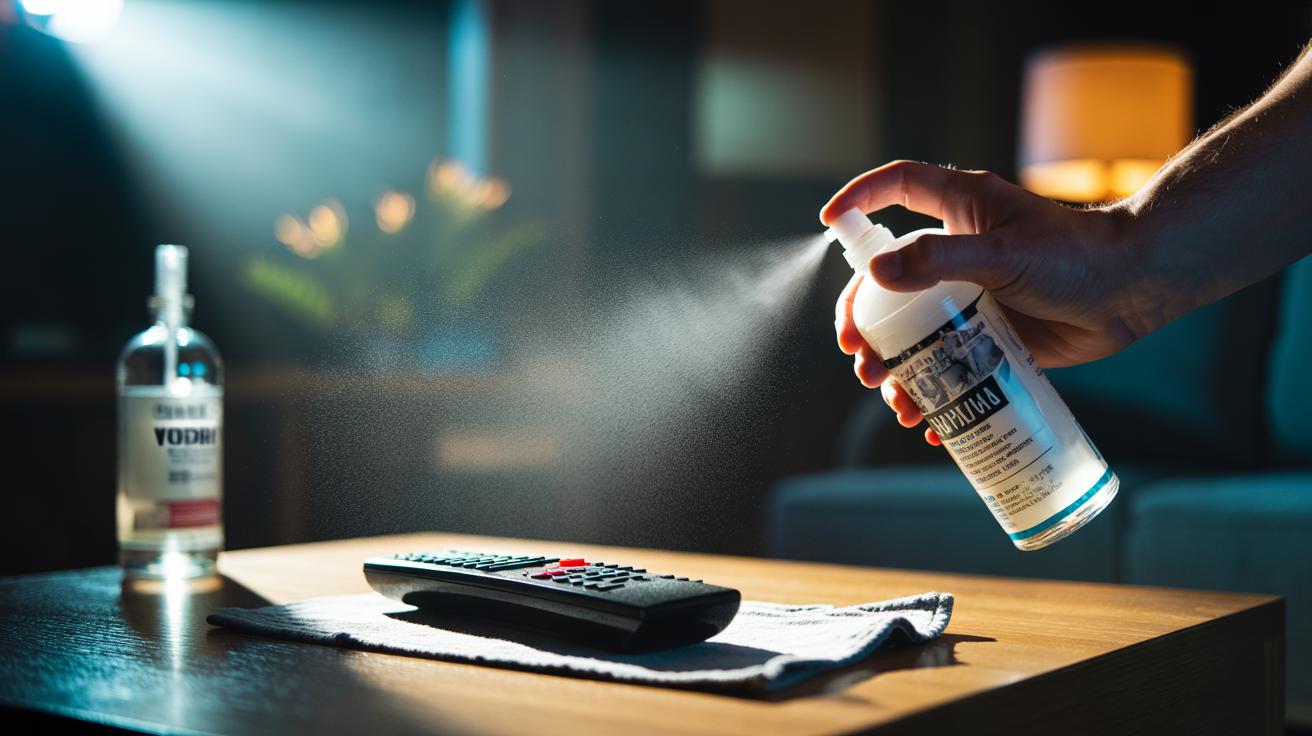
If vodka is what you have, it can serve as a quick cleaner that lifts oils and freshens a grimy remote. Decant into a fine mister and label clearly. Do not spray directly onto the remote. Instead, power the device off, remove batteries, and spritz a microfibre cloth until damp but not dripping. Wipe the case, then run the cloth along button edges. Keep surfaces visibly wet for as long as feasible; re-dampen the cloth to extend contact. Dry with a clean section of cloth and leave the battery compartment open for a few minutes.
For reliable disinfection, use 70% isopropyl alcohol (often sold as rubbing alcohol or cleaning wipes) or a prepared 70% ethanol solution. Overproof potable alcohol can be diluted to that range, but ordinary 40% vodka cannot be strengthened without distillation. Consider a tiny drop of mild dish soap in water for an initial clean, followed by the alcohol wipe. Avoid acetone, strong solvents, and soaking, which can fog plastics and compromise the remote’s membrane.
Risks, Materials, and Better Alternatives
Not all plastics are equal. Some soft-touch paints and rubberised coatings develop tackiness after repeated alcohol exposure. Screened-on legends may fade. Adhesives under keypads can weaken. Always test on a hidden area first. Keep liquids away from ports and battery contacts. Alcohol is flammable; ventilate, keep away from flames, and never saturate fabrics near heat sources. If a remote has a glossy lacquer or decorative film, opt for alcohol wipes with controlled moisture rather than free-pouring from a bottle.
For routine hygiene, 70% IPA wipes strike the best balance between efficacy and material safety. Clear, cover or replace heavily soiled silicone sleeves. UV-C boxes exist, but ensure certified devices and avoid eye/skin exposure. A damp microfibre with a drop of soap works wonders before any sanitiser, removing the bio-gunk that shields microbes. For sensitive finishes, a cloth lightly moistened with 3% hydrogen peroxide is a viable alternative—just spot test to check for blooming or fading. Consistency beats intensity: clean little and often.
Alcohol’s big advantage is speed: it spreads, disrupts, and dries fast, leaving less residue for germs to cling to. Yet the secret is not the sprint but the balance—the right concentration, sensible contact time, and a technique that respects delicate plastics. Vodka can tidy and freshen, but for dependable disinfection you’ll want 60–70 per cent alcohol in the mix, applied via wipe or cloth and allowed to linger briefly. Short, regular cleans outpace heroic deep-scrubs. What’s your go-to method for keeping remotes and other high-touch gadgets clean without slowing down your day?
Did you like it?4.6/5 (21)