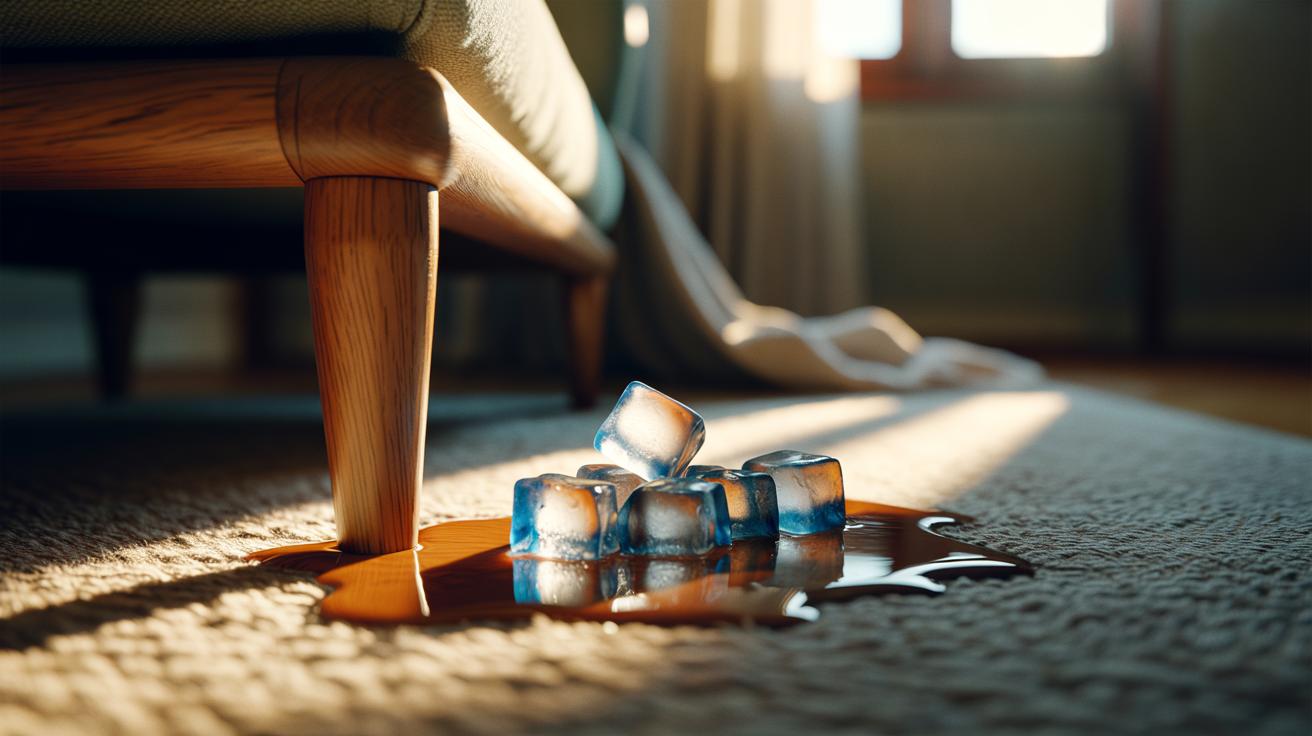
In a nutshell
- 🧊 Ice cube trick: Cold plus controlled moisture rehydrate and reset crushed fibres in wool and synthetics, delivering a gentle rebound with fewer risks than heat.
- 🛠️ How-to: Vacuum, place 1–3 cubes per dent, wait 30–60 minutes, blot (don’t scrub), tease fibres upright with a spoon/comb, use cool airflow, then a light vacuum; repeat once if needed.
- 🏠 Safety for UK homes: Limit water over wood floors or jute/felt underlay, spot-test for dye transfer, switch off underfloor heating, and ventilate well to speed drying and prevent wicking.
- 🔥 Alternatives: Warm iron + towel or light steam can lift stubborn dents but risk shine, scorch, or dye bleed; avoid moisture on sisal/seagrass and address crushed underlay when dents persist.
- 🛡️ Prevention: Fit wide furniture coasters, rotate layouts, groom the pile seasonally, and keep a simple kit—ice, white towels, spoon, fan—to tackle dents as soon as they appear.
Your sofa’s footprint doesn’t have to be permanent. The ice cube trick taps the power of cold and a slow release of moisture to coax a carpet’s pile back to life. Instead of hiring kit or blasting steam, you let meltwater rehydrate compressed fibres and ease the dent’s hard edges. It’s simple, cheap, and kinder to wool and synthetics than aggressive heat. In this guide, you’ll learn why cold works on flattened fibres, the exact steps to follow, and safety notes for British homes with wooden floors and mixed underlay. With a few cubes and a clean towel, dents that looked set in stone often lift in under an hour. Patience and gentle handling beat force every time.
Why Ice Works: The Science of Cold and Fibres
The humble cube combines two forces: temperature and hydration. When a heavy leg compresses the pile, fibres deform and hold a new shape. As an ice cube melts, cool water seeps into the carpet and padding. That moisture lets polymer chains in nylon or polypropylene relax, while the chill slightly stiffens them, resetting their “rest” position as they dry. In wool, hydrogen bonds attract water, swelling the fibre so the crushed area regains volume. The result is a gradual rebound rather than a harsh snap-back.
Slow melt is crucial. A steady trickle delivers moisture into the base of the dent, not just the surface tufts. Capillary action draws water along each filament, reducing friction and allowing fibres to separate. Once the water is blotted away, gentle airflow finishes the reset. Think of it as rehydrating a wrinkled shirt before a light press—only the carpet does the pressing for you as it dries.
Heat can work, but it risks glossing synthetics or shrinking wool. Cold carries fewer downsides and avoids dye run on sensitive carpets. The technique also respects underlay integrity, so you restore bounce without warping backing adhesives. Targeted moisture plus coolness is the sweet spot for dent revival.
Step-by-Step: Lifting Dents With Ice
Start by clearing the area and vacuuming the dent to remove grit. Place one or two standard ice cubes directly in each depression; for a deep gouge, use three smaller cubes spaced evenly. Leave them to melt at room temperature—about 30 to 60 minutes depending on pile depth and warmth. Do not crush or rub the cubes into the fibres. The meltwater should pool in the dent rather than flood surrounding yarns.
When the cubes have dissolved, press a clean white towel into the damp spot to absorb excess moisture. Always blot; never scrub. Next, tease the fibres upright using a spoon edge, a wide-tooth comb, or your fingertips. Work from the outside rim toward the centre so the pile stands without frizz. If needed, set a hairdryer on a cool or low-warm setting a foot away and waft air across the area while you continue to lift the tufts.
Finish with a light vacuum to align the pile. For stubborn dents, repeat once after full drying. If the carpet is particularly dense, gently “massage” the base with a soft toothbrush to free compacted yarns. Avoid high heat and aggressive brushing, which can distort fibres or create shine. Most dents improve substantially on the first pass, with full recovery after the second.
Troubleshooting and Safety for UK Homes
Check the backing and subfloor before you begin. Many UK properties have jute-backed carpets or original floorboards. Never saturate a carpet over bare timber or felt underlay—excess water can wick into boards and cause staining or cupping. Use fewer cubes and blot promptly if moisture risk is high. For wool, keep the process gentle; its natural crimp rebounds well, but over-wetting invites odour and slow drying in cool British weather.
Concerned about dye transfer? Spot-test an inconspicuous area with a damp white cloth first. If colour lifts, switch to a controlled alternative, such as a chilled, wrung-out microfibre pad instead of direct ice. Where underfloor heating is present, turn the zone off during treatment to prevent uneven drying. Good airflow is your friend: open a window, run a fan, and avoid trapping moisture under rugs or furniture.
If a dent barely changes, inspect the underlay. A crushed or degraded pad can anchor the depression. In rentals, you may be dealing with budget foam that’s lost resilience. Replacing underlay under a small section can outperform endless surface fixes. For antique or natural-fibre rugs (sisal, seagrass), skip water-based methods entirely and use dry mechanical lifting with a spoon and vacuum.
When to Use Alternatives and How They Compare
The cube method suits most synthetic and wool broadloom carpets where dents are recent and underlay still springy. Older, deep-set impressions or moisture-sensitive materials may respond better to controlled warmth or steam—applied with restraint. A warm iron through a damp towel can lift stubborn fibres but introduces scorch and shine risks. Light steam from a kettle held at distance softens yarns quickly, then a cool blast sets the loft. Always keep heat moving and off direct contact.
| Method | Best For | Key Steps | Risks | Time |
|---|---|---|---|---|
| Ice cubes | Most wool/synthetics; fresh dents | Place cubes, blot, lift fibres, cool-dry | Over-wetting on wood floors | 45–90 mins |
| Warm iron + towel | Stubborn dents on synthetic cut pile | Towel barrier, brief passes, lift pile | Shine, heat marks, fibre melt | 15–30 mins |
| Light steam | Dense twists; quick reset | Steam at distance, blot, cool set | Swelling, dye bleed on wool | 20–40 mins |
| Ice + vacuum | Large dented zones | Melt, blot, lift, slow vacuum finish | Wicking if not dried well | 60–90 mins |
Whichever route you choose, anchor future protection with wide furniture coasters, rotated layouts, and seasonal pile grooming. Prevention beats revival once underlay has collapsed. A small kit—cubes, white towels, spoon, fan—handles most marks without chemicals.
Carpet dents are a visual reminder of life lived, not a life sentence for your flooring. By pairing controlled moisture and cooling, the ice cube method restores loft with minimal effort and expense, leaving fibres refreshed rather than stressed. It respects delicate wool, avoids shine on synthetics, and suits UK homes where heat and humidity vary by season. Keep the process light, blot thoroughly, and give the pile a little encouragement as it dries. With the technique mastered, you can move furniture with confidence. Which room in your home will you revive first—and what layout change have those newly liberated fibres inspired?
Did you like it?4.6/5 (25)