In a nutshell
- ⚡ The triboelectric effect turns a rubber glove into a fur magnet, as static electricity lifts pet hair from fabrics—especially effective in dry conditions.
- 🧤 Choose wisely: Latex grips upholstery, Nitrile is allergy-safe and durable, and textured Silicone excels on stairs and boot liners; use dry vs. lightly damp depending on fabric density.
- 🛋️ Master the swipe: use short, overlapping strokes on sofas, S-curves on carpets, and trace seams in cars; empty the glove regularly and mist the glove (not fabric) if hair goes airborne.
- ♻️ Cut waste and costs: a reusable glove beats lint rollers, reduces packaging, and works quietly; rinse with mild soap, air-dry, and pair weekly with a HEPA vacuum for dander.
- 🚪 Practical wins: reaches seams, piping, and textured weaves where vacuums falter, offering a quick, quiet clean for sofas, carpets, stairs, and car seats.
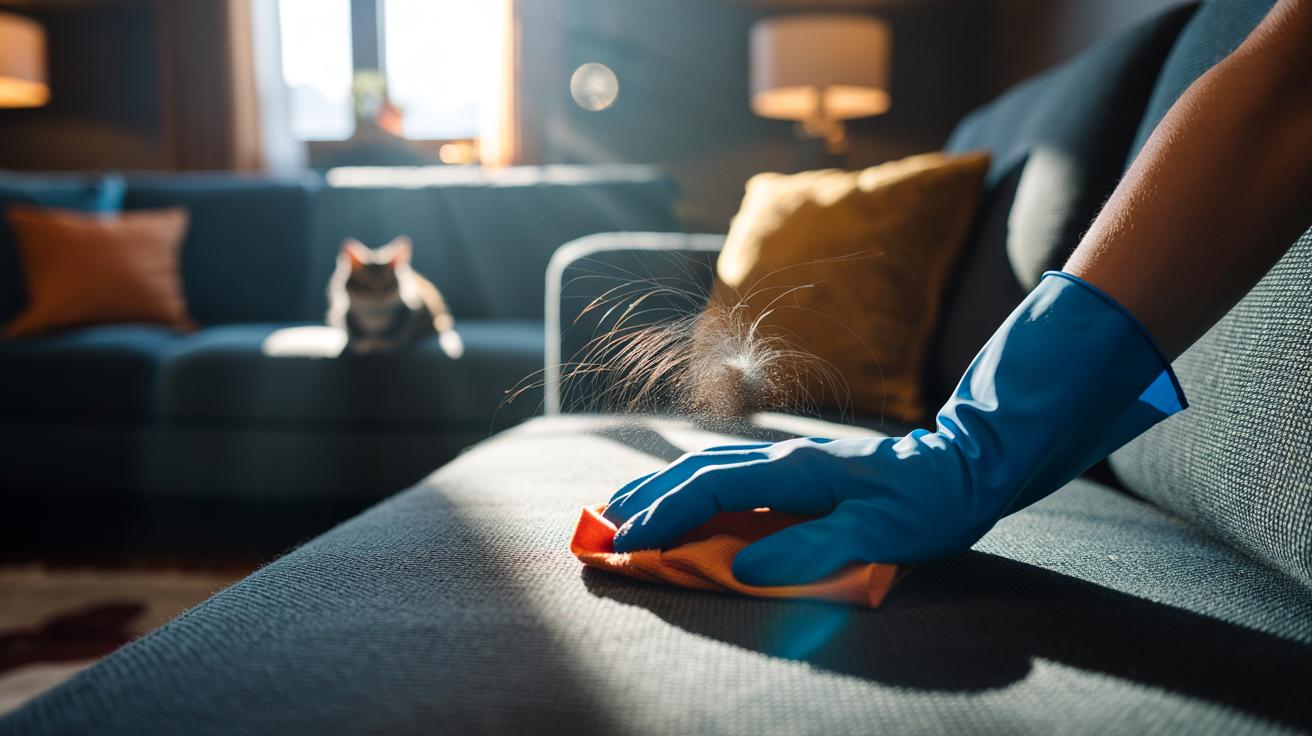
For pet owners weary of lint rollers and noisy vacuums, the simplest fix often lives under the kitchen sink. A humble rubber glove can lift fur from sofas, stairs, and car seats with startling efficiency, thanks to static electricity. Drag the glove across fabric and hair leaps to meet it, clumping into neat tumbleweeds you can pick off and bin. The trick relies on how different materials exchange charge when rubbed together, turning the glove into a fur magnet. Used correctly, it is quick, quiet, and surprisingly thorough, especially on woven upholstery and mats. Here’s how the science works, the best kit to use, and the swipe technique that makes it shine.
Why Static Makes Rubber Gloves a Fur Magnet
Run a rubber glove across fabric and you trigger the triboelectric effect: a swap of electrons that leaves the glove slightly negative and hair slightly positive. Opposites attract, so strands lift and stick. Fabrics that are poor conductors, such as polyester blends and microfibre, hold a charge, amplifying the pull. Dry conditions boost the effect, because moisture in the air helps charge leak away. That is why winter rooms and air-conditioned cars often yield the most dramatic results. The attraction is local but strong, so hair rises from crevices, piping and textured weaves that defeat many brushes.
Rubber’s high surface resistivity helps charge linger while you sweep. Short, brisk strokes build static faster than long, slow passes. The more friction you create, the more charge separation you induce, until clumps roll up like felt. Pet dander often tags along, reducing the dusty bloom left behind. If you hear crackle or feel a tiny snap, that’s the electric field collapsing as charges equalise—evidence the method is working.
Choosing the Right Glove and When to Dampen
Latex, nitrile and silicone all work, but with distinct personalities. Latex is grippy and highly elastic, giving superb contact on woven upholstery. Nitrile suits anyone with latex allergies and resists tears on abrasive carpets. Silicone washing-up gloves—especially the textured kind—excel on stair treads and boot liners where hair tangles with grit. Thickness matters: thin gloves conform to curves and seams; thicker gloves last longer but may transmit less micro-texture. Dry rubber generates the strongest static attraction in low humidity, while a light mist adds tack for stubborn fur.
Moisture changes the mechanism. A barely damp glove reduces static but adds adhesion, helping trap fine hairs and dust into rolls that lift as one. Use dry for airy throws and synthetic sofas; go lightly damp for dense weaves and mats where hair beds in. Always test on a hidden patch, and avoid harsh chemicals that degrade rubber. If you’re sensitive to latex, choose powder-free nitrile.
| Glove Material | Best For | Static Behaviour | Notes |
|---|---|---|---|
| Latex | Sofas, throws, curtains | Strong dry-charge build-up | Great grip; avoid if latex-allergic |
| Nitrile | Car mats, carpets, pet beds | Reliable charge, tough on abrasion | Good all-rounder; durable |
| Silicone (textured) | Stairs, boot liners, crates | Moderate static; excellent clumping | Easy to rinse clean; heat tolerant |
Swipe Technique for Sofas, Carpets, and Car Seats
Start dry. Put on the glove, then rub palms together to prime a charge. On fabric sofas, use short, overlapping strokes in one direction to make a fur “windrow”, then roll the line into a ball with the heel of your hand. Flip cushions and run along seams where hair anchors. For carpets, press a little harder and work in S-curves to lift threads from the pile. On stairs, sweep from riser to tread so clumps don’t tumble back down.
In cars, run the glove along seat bolsters and stitching where lint gathers. A crisp plastic card wrapped in the glove helps tease hair from tight piping. If hair goes airborne, mist the glove—not the fabric—so debris sticks rather than floats. Empty the glove regularly by pinching clumps into a bin; a loaded surface loses its charge and grip. Finish by wiping with a barely damp microfibre cloth to collect residual dander and settle any static sting.
Cost, Hygiene, and Environmental Upside
A reusable glove undercuts disposables. A pair of washing-up gloves costs £1–£4 and can last months; a household using lint rollers might burn through multiple £2–£5 rolls monthly, especially with long-haired breeds. The glove method saves adhesive waste and packaging, and it works where vacuums struggle—stairs, throws, the car—without the energy draw or the whine that spooks cats. For allergy management, the key is frequent, quiet removal rather than occasional heroic cleans.
Rinse gloves with mild soap after use, then air-dry away from sunlight to preserve elasticity. Avoid fabric softener residue on textiles; it can neutralise charge and smear hair. For hygiene, dedicate one glove to pet work and store it in a labelled bag. If your home is very humid, expect less static—switch to the light-mist approach or run a dehumidifier briefly. Pair the glove with a HEPA vac once a week to capture what you can’t see: dander and microparticles.
Static may sound like a party trick, yet it solves a daily nuisance with a single, washable tool. The rubber glove’s mix of triboelectric pull and tactile control makes it potent on stair edges, sofa seams and car upholstery where fur embeds and vacuums falter. Keep one by the door for post-walk clean-ups, another in the boot for the dog blanket, and you’ll spend less time chasing fluff and more time enjoying the pet that made it. What surfaces in your home would benefit most from a swift, static-charged sweep—and how might you adapt the technique to them?
Did you like it?4.7/5 (25)