In a nutshell
- 🧊 The ice cube trick revives compressed carpet fibres via slow-release moisture and mild temperature cycling, restoring pile bounce without harsh heat.
- 🧹 Step-by-step: vacuum first, place 1–3 ice cubes per dent, let melt fully, blot (don’t rub), tease fibres up with a spoon or soft brush, then vacuum to align; keep areas damp, not wet.
- ⚠️ Suitability and cautions: avoid on sisal, seagrass, jute and test for dye bleed; be gentle on loop piles, switch off underfloor heating, and never combine with a hot iron.
- 📊 Results vary by fibre: works well on wool, nylon, polyester, and cautiously on polypropylene; repeat once after full drying if needed—more than two cycles suggests permanent crush.
- 🛡️ Prevention tips: use furniture coasters, rotate rugs, shift furniture slightly, trim tufts (don’t pull), and maintain with a height-adjusted vacuum for lasting results.
Stubborn divots in your living room rug are often the ghostly footprints of furniture legs, leaving carpets looking tired and uneven. There is a surprisingly simple home fix: the ice cube trick. By letting ice melt slowly into compressed carpet fibres, you can coax the pile back to life without machines or harsh products. The method works on most modern synthetic and wool carpets, costs pennies, and demands little more than patience. Used correctly, it can restore texture and bounce in a single afternoon. Here is how the science stacks up, when to try it, when to steer clear, and how to make results last.
Why Ice Revives Flattened Pile
Carpet dents form when weight compacts the pile and, over time, bends or crimps individual strands. The ice cube trick uses slow-release moisture to rehydrate and swell those fibres, helping them regain their original shape. As the ice melts, water penetrates to the base of the pile and backing. The gradual soak is key: a slow melt avoids flooding, while giving fibres time to relax and lift. This is a gentle reset for the carpet’s “memory” without aggressive heat.
There’s also a thermal effect. Ice cools the compressed area, then room temperature warms it back up as it dries, a cycle that encourages spring in twisted yarns. With wool, keratin responds well to moisture, often bouncing back impressively. With polypropylene and nylon, the method helps reposition bent filaments. Results vary by pile height and density, but on domestic tufted carpets the improvement is typically dramatic—especially if dents are recent rather than years old.
Step-By-Step: The Ice Cube Method
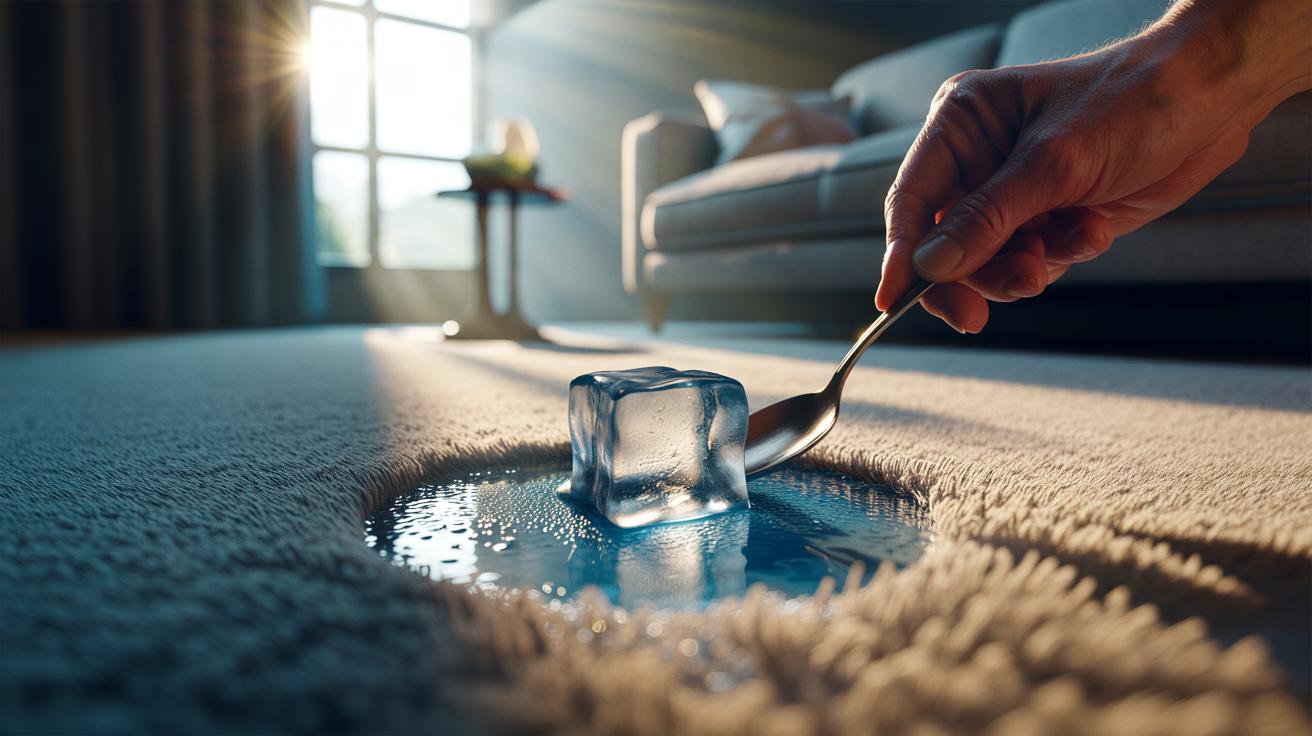
First, vacuum to remove grit that could scratch fibres when they move. Place one to three ice cubes directly in each indentation, sized to the dent. A deep divot from a sofa leg may need two standard cubes; a light chair mark may need only one. Let the ice melt completely—usually 45 to 90 minutes. Avoid speeding this up with hot air; the slow melt is part of the magic. Blot excess moisture with white, lint-free cloths, pressing rather than rubbing.
Now lift the pile. Use a clean spoon edge or a soft-bristled brush to tease fibres upright, working from the dent’s outer rim inward. If fibres resist, add a few drops of water and wait another 10 minutes before fluffing again. Finish by vacuuming with the pile direction to align yarns. If needed, repeat once after the carpet dries fully. Do not soak the backing; damp, not wet, is the rule. Proper drying prevents musty odours and protects adhesives.
When Not to Use the Trick
Natural floor coverings like seagrass, sisal, and jute dislike moisture and can stain, swell, or distort. On these, avoid the ice method and consult a specialist. In older woven Axminster or hand-knotted rugs, dyes may bleed if overwetted. If your carpet is glued to the subfloor, too much water risks softening adhesives. When in doubt, test a teaspoon of water in an inconspicuous corner and blot after five minutes. If colour transfers to the cloth, skip the trick.
Consider environment and construction. Homes with underfloor heating can accelerate drying unevenly and set moisture rings; switch heating off in the treatment zone. Loop pile styles can fuzz if agitated harshly, so tease gently. Pet odours may wick up with moisture; treat smells first with an enzymatic cleaner. And never combine the ice method immediately with hot iron-and-towel steaming, which can distort synthetic fibres—choose one approach, applied carefully.
Quick Reference: Fibres, Safety, and Timing
Use this guide to judge where the ice cube trick shines and where caution is wise. The times assume room temperature around 20°C and good ventilation.
| Fibre/Pile | Safe to Use? | Typical Melt/Dry Time | Notes |
|---|---|---|---|
| Wool, cut pile | Yes | 1–3 hours | Excellent bounce-back; blot thoroughly. |
| Nylon or polyester, cut pile | Yes | 1–2.5 hours | Tease fibres gently with a spoon. |
| Polypropylene, cut or frieze | Yes, cautiously | 1–2 hours | Avoid heat afterward to prevent shine. |
| Loop pile (all fibres) | Limited | 1–2 hours | Do not over-agitate; no brushing hard. |
| Sisal, seagrass, jute | No | — | Moisture can stain and warp. |
Good airflow is your friend. Open windows or run a fan to speed drying and reduce any water marks. If dents persist after complete drying, repeat once; repeated cycles beyond two are rarely effective and may signal permanently crushed pile or damaged backing.
Extra Tips for Lasting Results
Prevention beats repair. Spread load with furniture coasters under legs, rotate rugs quarterly, and move seating a few centimetres every month to avoid entrenched dents. Trim stray tufts with sharp scissors rather than pulling. For delicate revivals, a handheld garment steamer at a distance can warm fibres after they’ve dried from the ice treatment, but keep the nozzle moving and test first. Never apply a hot iron directly to carpet.
Vacuum with a height-adjusted beater bar to lift pile without scuffing. If you live in a humid area, schedule treatments on drier days to curb wicking and prevent must. For heirloom rugs or persistent compression near thresholds, a professional clean with pile-lifting tools may reset texture more deeply. Keep a few ice cubes in a freezer bag in the lounge for quick fixes after guests; the faster you tackle fresh dents, the better the rebound.
Used thoughtfully, the ice cube trick is a low-risk, high-reward way to refresh tired carpet fibres, blending simple science with household convenience. It won’t cure crushed backing or heavy traffic wear, but it can erase most furniture divots and lift a room’s look in under an afternoon. Keep moisture controlled, tease rather than scrub, and dry thoroughly for the best finish. If you try it this weekend, which dent-prone spots—under the sofa, the dining chairs, or the bedside table—will you revive first, and what results will you see?
Did you like it?4.5/5 (23)