In a nutshell
- 🧪 The lemon-and-salt scrub works through synergy: abrasion with coarse salt disrupts biofilms, while lemon’s citric acid lowers pH, denatures proteins, and compromises membranes; salt also adds osmotic stress.
- 🧼 Practical method: scatter coarse salt, scrub with a halved lemon, then allow 5–10 minutes of contact time, rinse hot, dry upright, and oil wood with food-grade mineral oil; it sanitises rather than sterilises.
- 🪵 Material matters: wood can self-heal and suits the lemon–salt routine; plastic traps scars but tolerates dishwashers—match cleaning to the board and replace when deeply gouged.
- ⚠️ Safety limits: not sufficient after raw poultry or for hardy microbes (e.g., norovirus, spores); use a food-safe disinfectant or a hot dishwasher cycle, and never mix bleach with acids.
- 🌿 Everyday benefits: a low-impact, odour-freshening approach for veg, bread, and cheese that keeps boards in good condition and supports a simple weekly maintenance rhythm.
There’s a reason cooks reach for half a lemon and a fistful of coarse salt when a cutting board smells or looks tired. The humble scrub is more than a folk fix: it’s a neat demonstration of physics and chemistry working together to tame kitchen microbes. Salt provides gritty abrasion that lifts grime and breaks biofilms; lemon delivers citric acid that lowers pH and disrupts bacterial proteins and membranes. Used correctly, this duo not only freshens a board but also meaningfully reduces microbial load. Understanding how the method works—and where it falls short—helps you deploy it with confidence in a busy home kitchen.
How Abrasion and Acid Disrupt Bacteria
At the heart of the lemon-and-salt scrub is a two-pronged attack. Coarse crystals of salt act as micro-sandpaper, scouring away organic residues and mechanically disrupting biofilms—the protective matrix many bacteria build to cling to surfaces. This physical removal is pivotal: once those films are torn open, bacteria lose their shield against detergents and acids. Meanwhile, lemon juice supplies citric acid (pH roughly 2–3), which acidifies the micro-environment, denaturing proteins and destabilising bacterial cell membranes. Trace lemon oils such as limonene contribute mild antimicrobial effects and help solubilise greasy residues.
Salt also exerts osmotic stress, drawing water out of cells, which inhibits growth. Critically, the scrub increases surface wetting so acid reaches crevices cut by knives. The synergy is the point: abrasion exposes, acid disables. While this won’t sterilise a board, it can bring down common culprits like E. coli and Salmonella to safer levels when paired with proper rinsing and drying.
The Step-by-Step Scrub and Why Time Matters
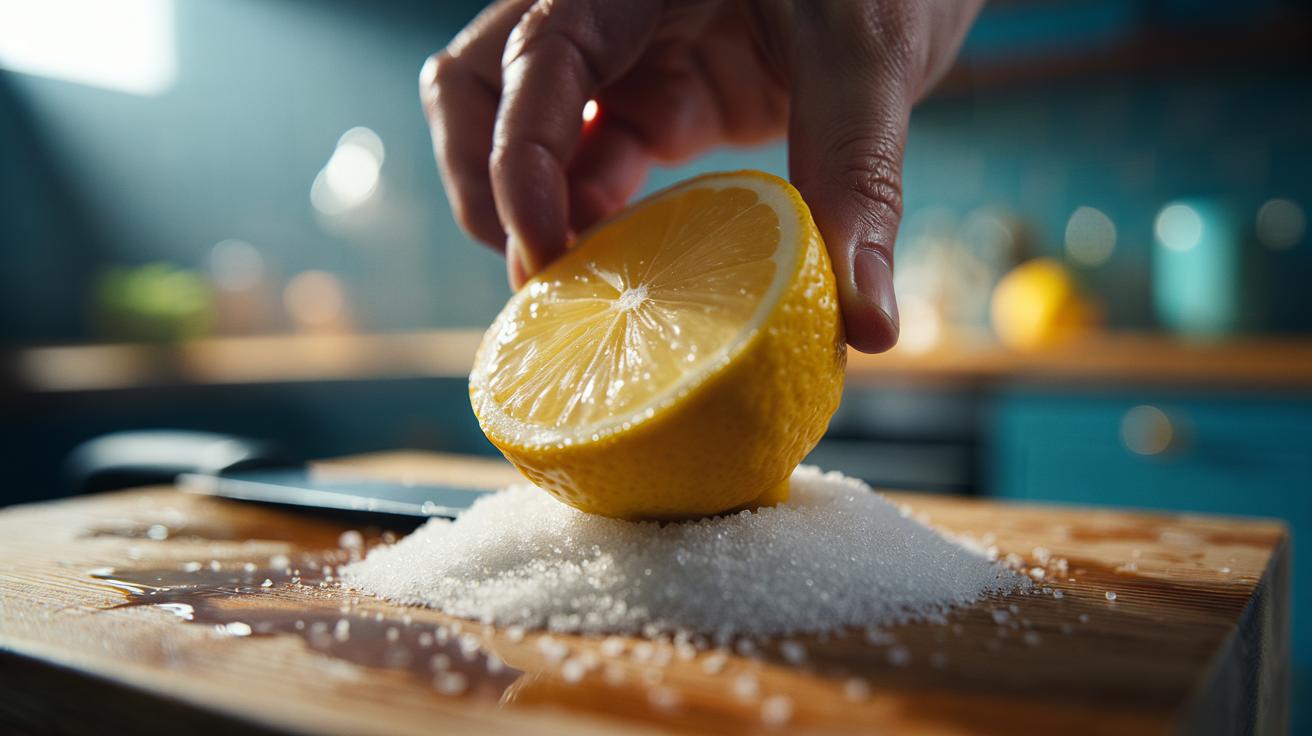
Use coarse sea or kosher salt—its angular crystals abrade better than fine table salt. Sprinkle a generous layer over the board (about one tablespoon per 100 cm²). Halve a lemon, squeeze lightly to wet the salt with juice, then scrub in firm circles, working with the grain on wood to protect fibres. The slurry will turn grey as it lifts oxidised fats, tannins, and fine debris.
When the surface looks uniformly wet, pause. Always allow at least five minutes of contact time so the acid can act on exposed bacteria. For stubborn odours, give it 10 minutes. Rinse with hot water, scrape off excess water with a bench scraper, then dry upright to encourage airflow. Finish a wooden board with food-grade mineral oil to resist moisture and staining. For routine maintenance after veg and bread, this method both sanitises and refreshes; for high-risk raw meats, see the limits below.
Wood Versus Plastic: What the Evidence Suggests
Wood and plastic behave differently under a knife and under a scrub. End-grain and tight-grained wood can “self-heal,” closing over shallow cuts, and its porous structure can wick fluids away from the surface where many microbes gradually die off. Plastic, by contrast, is non-porous but develops V-shaped scars that trap residues; it can, however, withstand dishwashers, which provide heat and detergent for robust cleaning.
Match your cleaning method to the material to get the best hygienic result. A lemon-and-salt scrub suits wood because it refreshes fibres without soaking them, while plastic often benefits from a dishwasher cycle or a brief soak in a food-safe disinfectant. Keep knives sharp to reduce gouging on both. Replace any board—wood or plastic—if deep grooves persist or odours linger after cleaning.
| Material | Hygiene Strength | Caution | Best Practice |
|---|---|---|---|
| Wood | Porosity wicks fluids; abrasion + acid effective | Not dishwasher-safe; can warp if soaked | Lemon–salt scrub; quick rinse; dry upright; oil monthly |
| Plastic | Non-porous; tolerates heat and detergents | Knife scars harbour residues | Dishwasher hot cycle; replace when scarred |
Limits, Safety, and When to Disinfect More Strongly
The lemon-and-salt method reduces bacteria, but it is not a universal disinfectant. Do not rely on it after raw poultry, shellfish, or when someone is clinically vulnerable. It is less effective against hardy organisms and lacks reliable action against viruses like norovirus and against bacterial spores. After high-risk tasks, first wash with hot water and detergent, then apply a food-safe disinfectant following the label’s contact time; plastic boards can go through a hot dishwasher cycle. Never mix bleach with acids such as lemon—this releases toxic chlorine gas.
On wood, avoid extended soaking or boiling, which raises the grain and causes cracking. If odours persist, repeat the scrub and allow longer dry time in a ventilated spot. Retire boards with deep fissures that trap residues. For day-to-day vegetables, fruit, bread, and cheese, the lemon-and-salt scrub remains a practical, low-impact way to sanitise while keeping surfaces in good condition.
The chemistry behind a lemon-and-salt scrub is simple, effective, and reassuringly sustainable: mechanical abrasion tears open biofilms, while acid suppresses survivors and helps lift stains. Used alongside hot water, good drying, and common-sense segregation of tasks, it keeps boards cleaner and kitchens calmer without harsh smells or plastic-heavy consumables. It is a smart routine for low-risk prep, not a silver bullet for every mess. How might you integrate this approach into a weekly cleaning rhythm—and where would you draw the line and opt for a stronger, labelled disinfectant instead?
Did you like it?4.5/5 (30)