In a nutshell
- 🍋 A simple lemon-and-salt scrub brightens chrome taps by pairing natural acidity with gentle abrasion to remove limescale quickly and safely.
- 🔬 The science: citric acid reacts with calcium carbonate, chelating calcium and releasing CO₂ fizz—clear signs the mineral crust is dissolving.
- 🧽 Method: halve a lemon, coat the cut face with salt, scrub in small circles, allow 3–5 minutes of contact, then rinse and dry with a microfibre cloth; soak clogged aerators separately.
- ⚠️ Safety: spot-test surfaces, avoid natural stone and delicate finishes, rinse promptly, wear gloves if sensitive, and never mix acids with bleach.
- 💡 Upgrades and prevention: use a 5–10% citric acid solution for stubborn deposits, skip harsh hydrochloric cleaners, wipe taps dry after use, and do a quick weekly refresh.
Hard-water households across the UK know the struggle: chalky rings around gleaming chrome taps, a dull film that shrugs off ordinary soap. The simplest fix sits on your chopping board. A lemon-and-salt scrub blends natural acidity and gentle abrasion, cutting through limescale and leaving metal bright. Behind the kitchen-witchery is sound chemistry: citric acid dissolves mineral deposits; salt grips grime and helps you scrub with control. This method is quick, inexpensive, and strikingly effective on everyday build-up. Here’s how and why it works, with clear guidance on technique, safety, and when a stronger solution makes sense for stubborn scale.
Why Limescale Clings to Chrome
The UK’s hard water is rich in dissolved calcium and magnesium. When hot water dries on fittings, those minerals crystallise into calcium carbonate—the familiar, crusty limescale. Chrome-plated taps seem smooth, yet under magnification tiny scratches and pits offer the perfect anchoring points. Those micro-edges trap droplets, which concentrate minerals as they evaporate, creating a rougher surface that catches even more deposits next time. Soap residue and body oils add a sticky film, bonding to mineral crystals and amplifying that cloudy look.
Left to thicken, the crust becomes tenacious, resisting neutral cleaners. The trick is to break the chemistry that keeps it clinging. Acids dissolve carbonates; gentle abrasives shear away softened deposits without gouging the plating. The lemon-and-salt pairing delivers both actions in a controllable way. Acid unlocks the mineral, while salt acts like a micro-sandpaper you can steer with precision. Get that balance right and you restore the original shine without damaging the finish.
The Science: Citric Acid Versus Carbonate Deposits
Citric acid, abundant in lemons, reacts with calcium carbonate in a classic acid–base exchange. As the acid meets the chalky scale, it chelates calcium ions and converts the deposit into soluble salts, water, and a puff of carbon dioxide—the fizz you see. That visible effervescence signals the mineral bond is breaking. Warmer solutions act faster, and a touch of mechanical pressure speeds removal once the crust begins to soften. Salt—ordinary sodium chloride—doesn’t dissolve the limescale; it supplies an ultra-fine, non-toxic abrasive that stays put on the lemon’s cut face, letting you scrub without scratchy pads.
Compared with acetic acid in vinegar, citric acid often works faster on bathroom scale because it both acidifies and chelates. Powdered citric acid solutions outperform lemon juice for heavy deposits, but the whole fruit is perfect for quick, small-area jobs on taps and spouts.
| Ingredient/Method | Primary Role | Action on Limescale | Typical Contact Time |
|---|---|---|---|
| Lemon + Salt | Acid + Gentle Abrasion | Fizzes, chelates calcium; scrubs softened crust | 3–10 minutes |
| White Vinegar | Weak Acid (Acetic) | Dissolves slowly; good for soaks | 15–30 minutes |
| Powdered Citric Acid (5–10%) | Stronger, Consistent Acid | Rapid dissolution; ideal for stubborn build-up | 5–20 minutes |
How to Make and Use a Lemon-and-Salt Scrub
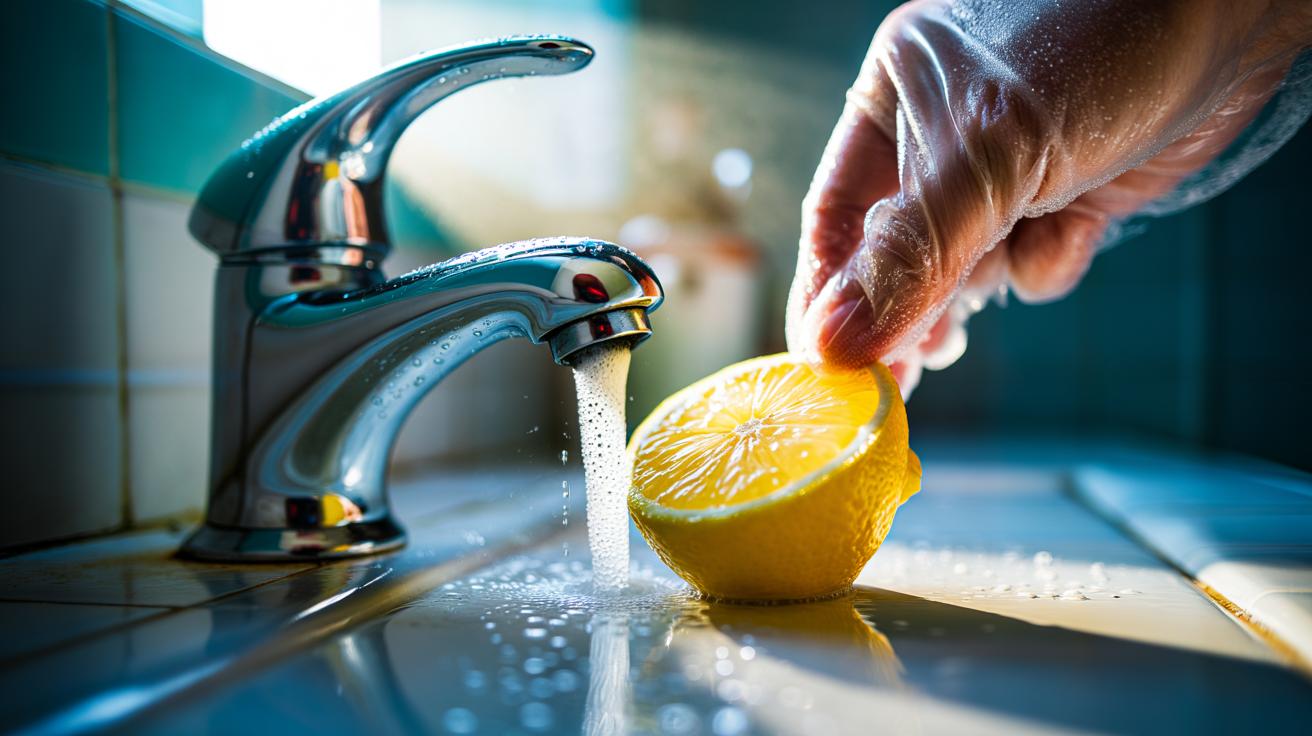
Halve a fresh lemon. Sprinkle a generous layer of fine table salt onto the cut surface. Dampen the tap with warm water, then apply the lemon like a sponge, pressing lightly to wet the metal with juice. Work in small circles from base to spout, refreshing the salt as it dissolves. For tight creases and the aerator, dip a soft toothbrush into salt and dab with juice. Let the acid sit for 3–5 minutes on crusty patches; you’ll hear a gentle fizz as the scale loosens. Do not leave acids drying on a surface—keep it visibly wet.
Once the fizz wanes, scrub lightly again, then rinse thoroughly with warm water. Wipe dry with a clean microfibre cloth to prevent new spots. For a photo-ready finish, buff with a second dry cloth in straight strokes. If the aerator is heavily clogged, unscrew it and soak in warm lemon juice (or 5% citric acid) for 10 minutes before rinsing and reattaching. Repeat the scrub on any surviving flecks rather than bearing down hard.
Safety, Surfaces, and When to Reach for Plan B
Always spot-test on an inconspicuous area. Acids can etch natural stone, concrete, and some enamel coatings, so keep the mixture off countertops and splashbacks made from marble, limestone, or cement. On soft or unlacquered metals—brass, copper, nickel—brief contact is fine, but rinse quickly and dry to avoid tarnish. For modern matte-black or brushed finishes, use minimal pressure and short contact times to protect the sheen. Wear gloves if you have sensitive skin, and keep the area ventilated.
Never mix acids with bleach or oxygen bleaches; acid plus bleach can release dangerous gases. If thick, aged scale resists the lemon method, step up to a warm 5–10% citric acid solution applied with a cloth, or a commercial descaler based on citric or sulfamic acid. Avoid harsh hydrochloric cleaners on plated taps—they strip finishes. To slow future build-up, wipe taps dry after showers and consider a tap-mounted filter in very hard-water postcodes. A quick weekly lemon swipe keeps shine without heavy chemicals.
The lemon-and-salt scrub is a small act with big payoff: bright taps, fewer chemicals, and a swift ritual that respects both the finish and your time. Chemistry does the heavy lifting—citric acid unlocks the mineral crust, salt steers the scrub—and your microfibre brings the sparkle home. With a few minutes of gentle care, even tired fittings look newly polished. Next time you spot that chalky halo, reach for the fruit bowl before the spray bottle. Will you try the lemon method this week, or do you have a favourite low-tox trick for keeping taps brilliantly clear in hard-water homes?
Did you like it?4.4/5 (21)