In a nutshell
- 🧪 The lemon-and-salt scrub works via citric acid chelation dissolving iron oxides, while salt adds abrasion and chloride ions that disrupt rust; rinse, neutralise, and dry promptly to prevent damage.
- 🧰 Step-by-step: dust off rust, apply coarse salt and lemon juice paste, wait 5–15 minutes, scrub lightly, rinse, neutralise with bicarbonate, rinse again, then dry and oil/wax to seal the surface.
- 🎯 Best for light–moderate surface rust on tools, tins, and chromed fixtures; avoid bare aluminium, galvanised finishes, delicate patinas, and treat stainless steel briefly to reduce pitting risk.
- ⚠️ Safety and limits: wear gloves/eye protection, ventilate, and keep acids off sensitive surfaces; for deep, scaly corrosion consider phosphoric gel, electrolysis, or mechanical methods.
- 💷 Cost and eco edge: typically under £1 per job, low odour, and biodegradable; a practical first-line fix before stronger, pricier alternatives.
There’s a pleasing audacity in raiding the fruit bowl to fix a corroded spanner. The humble lemon-and-salt scrub is a thrifty trick that’s slipping from folklore into mainstream DIY. It works because the pairing taps chemistry and texture in one go, loosening iron oxides while providing a gentle scour. This kitchen-ready method can lift rust and revive dull metal finishes without resorting to harsh solvents. Whether you’re reanimating garden shears, brightening a chrome tap, or freeing a frozen nut, this simple mix offers speed, control, and a cleaner conscience—particularly if you’re keen to cut the chemical load in your home.
The Science Behind Lemon and Salt
At the heart of the trick is citric acid, abundant in lemon juice. Rust is largely iron oxide; citric acid forms soluble complexes with iron through chelation, coaxing oxide layers to dissolve. Meanwhile, chloride ions from common table salt help disrupt the oxide lattice and improve wetting, allowing the acid to reach micro-crevices. The coarse salt crystals add mild abrasion, lifting loosened rust without gouging sound metal. Acid attacks rust faster than it bites into sound steel, which is why short, controlled contact can be so effective. Rinse, neutralise, and dry promptly to maintain that advantage.
Acidity (a lemon sits around pH 2) accelerates the process, yet restraint matters. Leave the paste too long and you risk streaking, particularly on thin plating and some alloys. Stainless steel deserves care: chlorides can promote pitting corrosion if the surface stays wet and salty. After treatment, rinse thoroughly and wipe with a diluted bicarbonate solution to neutralise residues, then dry until warm to the touch. A whisper of light oil or wax seals the refreshed surface by slowing oxygen and moisture ingress, encouraging a more stable finish over time.
Step-by-Step Method for Rusted Household Items
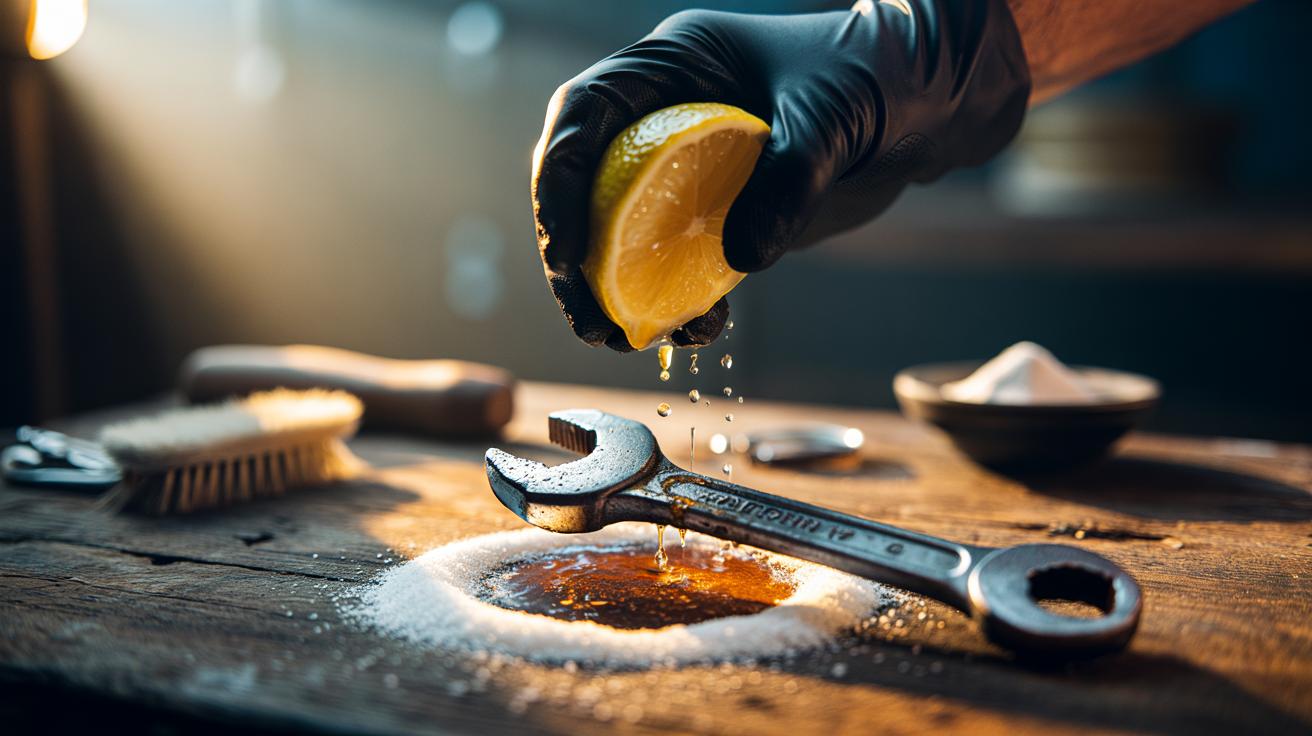
First, gather a lemon (or bottled juice), coarse salt, a soft brush, a nylon scourer, clean cloths, bicarbonate of soda, and a protective oil. Mask nearby finishes that dislike acid—natural stone and unfinished wood can stain. Dust off loose rust with a dry brush. Sprinkle salt directly on the affected patches, then squeeze the lemon to wet the crystals until they look like damp sand. Work in small zones so you can control contact time and avoid patchy results. For heavy bloom, refresh the salt and juice rather than pressing harder.
Let the paste sit 5–15 minutes, checking progress every few minutes. Scrub gently in circles; add a dash more juice if it turns muddy but sluggish. Once the orange-brown smear lightens to grey, rinse with warm water. Wipe over with a teaspoon of bicarbonate in a cup of water to quench lingering acidity, then rinse again. Dry immediately—use a hairdryer or warm airing cupboard for awkward joints. Finish with a thin film of mineral oil or beeswax on steel and iron to slow re-oxidation.
When It Works Best—and When It Doesn’t
This method shines on light to moderate, surface-level rust: garden secateurs, spanners, baking tins, chromed fixtures, and “tea staining” on stainless trims. The tactile feedback of a paste lets you stop the moment bright metal returns, avoiding aggressive over-cleaning. It’s ideal for one-off jobs where you need speed, low odour, and minimal kit. On chromed parts, keep strokes light to preserve the plating; on cast iron, aim to remove loose scale only, then re-season the surface with heat and oil to rebuild protection.
Severe, scaly corrosion with deep pitting may need escalation: phosphoric gels, electrolysis, or mechanical abrasion. Avoid bare aluminium and zinc-rich galvanised finishes—acids can etch them. Don’t use on blued steel, delicate antique patinas, or lacquered brass unless you intend to refinish. Stainless can tolerate a brief treatment but must be rinsed and dried meticulously to prevent chloride-related pitting. Electrical parts, knife edges with fine bevels, and precision tools demand caution; masking or alternative methods may preserve tolerances better.
Cost, Safety, and Environmental Advantages
The appeal isn’t just effectiveness; it’s economics and footprint. A lemon and a handful of salt typically come in under £1 per session, with no specialist disposal. Citric acid is biodegradable and relatively benign at household concentrations, while the low odour suits small flats and shared spaces. Gloves and eye protection still matter—acidic juice stings, and rust slurry can irritate skin. Ventilate, especially if you’re working at a sink with metal fittings that could be splashed and left damp.
Commercial removers work brilliantly on stubborn jobs, but many are stronger acids and demand stricter handling. Electrolysis is cheap for batches, yet it needs a safe power setup and careful monitoring. For the average home fix, the lemon-and-salt route is a responsible starting point that often solves the problem before harsher measures are necessary.
| Approach | Typical Cost per Job | Hazard Level | Best For |
|---|---|---|---|
| Lemon + Salt | £0.50–£1 | Low (acidic, use gloves) | Light–moderate surface rust, small items |
| Phosphoric Gel | £3–£5 | Medium (corrosive) | Heavier rust, awkward profiles |
| Electrolysis | £1–£2 (excl. setup) | Medium (electrical, alkaline) | Batches, complex steel parts |
The genius of lemon and salt lies in control: you decide where it goes, how long it stays, and when to stop. Used with a light hand—and finished with a rinse, neutralise, and dry—it offers a safe, low-cost way to reclaim tools and household metalware from the creeping grip of rust. Start gentle, check often, and protect the clean surface so your effort lasts. From a seized garden hinge to a dulled baking tray, it’s a small ritual that pays off quickly. Which neglected metal item in your home will you bring back to life first, and how will you protect it afterwards?
Did you like it?4.7/5 (29)