In a nutshell
- 🔬 Why stains stick: hot, oily sauces drive carotenoids into micro-scratches of PP/HDPE plastics, where pigments bond with residual oil and oxidise, leaving an orange cast.
- 🍋 How lemon works: citric acid lowers pH (~2–3), chelates metals, and helps surfactants lift pigment–oil films; warm water (about 40–50°C) speeds diffusion—never mix acids with bleach.
- 🧼 Simple method: rinse, add the juice of 1 lemon per 500 ml warm water plus a drop of detergent, soak 30–60 minutes, wipe with a soft sponge, rinse, and air-dry in indirect light.
- 🔁 Alternatives and prevention: use white vinegar or citric acid powder; avoid neutralising with baking soda during the soak; cool foods before packing, skip microwaving red sauces in plastic, and prefer glass for tomato-heavy meals.
- 🛡️ Care and lifespan: avoid abrasives that create micro-scratches, store lids off to reduce odours, and retire containers that are brittle, cloudy, or etched to prevent rapid restaining.
Tomato-lashed leftovers and turmeric-rich curries leave an unmistakable orange hue on lunchboxes, yet the cure can be as simple as a lemon, warm water, and a brief soak. The gentle chemistry of natural acids loosens oily pigments that cling to plastic, dialing back that stubborn tinge without harsh bleach or abrasive scrubbing. This citrus-led method appeals to anyone who prefers low-cost, low-tox cleaning that respects both surfaces and skin. Below, we explain why plastic stains so readily, how citric acid pulls pigments free, and the exact soak routine that restores clarity. We also flag smart alternatives and care tips for keeping containers bright for longer. A few minutes of soaking beats a lifetime of orange ghosts.
Why Plastics Turn Orange After Sauces
Most food containers are made from polypropylene (PP) or high-density polyethylene (HDPE), tough and light polymers with slightly hydrophobic surfaces. When hot, oily foods hit these plastics, fat-soluble pigments—including carotenoids like lycopene from tomato and curcumin from turmeric—migrate into superficial layers. Micro-scratches and gentle porosity provide footholds. The combination of heat, oil, and time drives diffusion, while residual metal ions from cookware can aid oxidation, deepening colour. Stains set when heat and oil push pigments into the polymer matrix. Once embedded, they resist ordinary washing because the pigments are not just on the surface; they are entwined with a film of oil bound within micro-roughness.
Dish soap removes surface grease, but it does little for pigments that have already migrated. That is why a targeted, mildly acidic soak works better than forceful scrubbing, which can worsen scratching. A controlled approach dislodges residues without abrading the container, preserving clarity and extending life.
How Lemon’s Natural Acids Lift Stains
Lemon juice’s cleaning power comes from citric acid, a weak organic acid with three carboxyl groups. In warm water it lowers pH to around 2–3, which helps in several ways. First, acidity protonates sites on pigment-associated molecules, loosening the interactions that hold carotenoids and oil films to the plastic surface. Second, citric acid chelates trace metals that can anchor stains or catalyse oxidation. Third, the solution increases wetting, allowing surfactants from a drop of washing-up liquid to emulsify residual oil and carry it away. This is a gentle, non-chlorine route to brightness.
Warmth speeds diffusion out of the plastic, so a soak around 40–50°C is ideal. Pairing lemon with a small amount of detergent creates a one-two: acid for metal and pigment interactions, surfactant for grease. The process is reversible and low-risk to food-contact polymers when done briefly. Never combine acidic solutions with chlorine bleach—dangerous fumes can form.
Step-by-Step Lemon-and-Water Soak
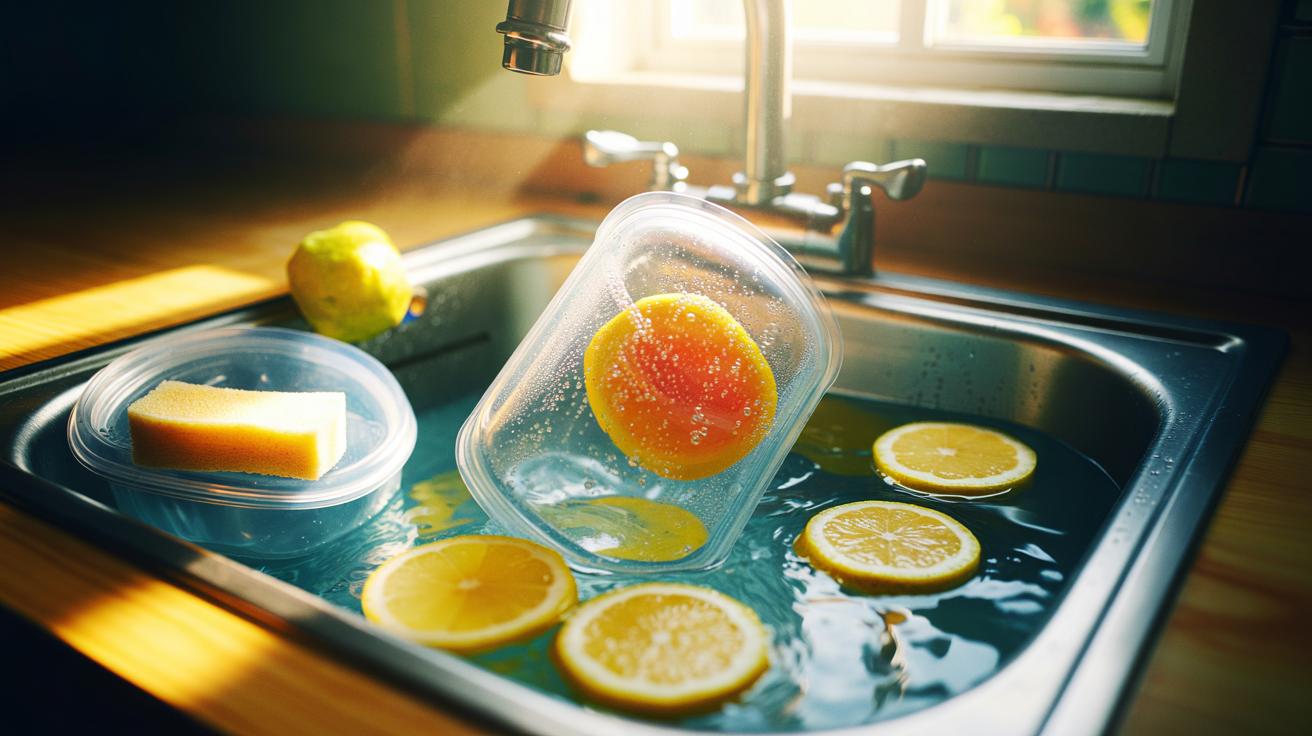
Rinse the container to remove loose sauce. Fill with warm water and add fresh lemon juice—about the juice of one lemon per 500 ml, or 2–3 tablespoons if bottled. A few thin peel strips add fragrance without affecting performance. Swish in a drop of washing-up liquid. Submerge lids and seals separately, ensuring stained areas are fully covered. Leave for 30–60 minutes, checking progress at the half-hour mark. For persistent marks, refresh with hotter water and a little more juice. Use warm, not boiling water, to avoid warping or deforming lids.
After the soak, empty and rub lightly with a soft sponge. Rinse thoroughly. Air-dry in daylight if possible; indirect sunlight helps mild photobleaching without overheating. Avoid abrasive pads that create micro-scratches, and skip harsh chemicals that can cloud plastic. For silicone gaskets, the same soak applies, but rinse longer to clear citrus oils.
| Acid Option | Mix (per 500 ml) | Approx. pH | Typical Soak Time | Notes |
|---|---|---|---|---|
| Lemon Juice | 1 lemon or 2–3 tbsp | 2–3 | 30–60 min | Fresh scent; food-safe; gentle on PP/HDPE |
| White Vinegar | 60–80 ml | 2.5–3 | 45–90 min | Good on mineral-linked stains; odour dissipates |
| Citric Acid Powder | 1 tsp | 2–2.5 | 20–45 min | Consistent strength; dissolve fully before use |
Smart Alternatives and Long-Term Care
When lemons are scarce, white vinegar provides similar acidity, though it can take longer and needs a good rinse to clear odour. Food-grade citric acid powder is reliable and economical; a teaspoon in half a litre of warm water yields a predictable bath. Baking soda is useful, but not at the same time: it neutralises acids. Use a soda paste afterwards to deodorise, then rinse. Do not mix acids with bleach or peroxide cleaners. For prevention, allow saucy foods to cool before packing; heat accelerates pigment uptake. Choose glass for long-term storage of tomato-rich dishes, and avoid microwaving red sauces in plastic.
If a container becomes brittle, cloudy, or deeply etched, stains will recur faster. At that point, retire it to non-food duties. New purchases labelled stain-resistant PP or with smoother interiors fare better. A quick pre-rinse with cold water before filling can reduce absorption. Store with lids off to prevent odour trapping, and keep a small stash of lemons—or citric acid—ready for a monthly refresh.
The lemon-and-water soak succeeds because it tackles the chemistry of stains rather than fighting them with force. By loosening pigment-oil films, chelating metals, and lifting residues with a mild surfactant, it restores clarity without harsh agents or elbow-grease theatrics. The method is inexpensive, fast, and friendly to the plastics that carry our lunches and leftovers. A little acidity, the right temperature, and patience are the trifecta for brighter boxes. What refinements will you try next—zest-infused soaks for fragrance, a citric acid jar by the sink, or a switch to glass for the sauciest meals?
Did you like it?4.3/5 (22)