In a nutshell
- 🍋🧂 Use a lemon half + salt to dissolve dull copper oxides instantly, with salt providing gentle abrasion for a fast, visible shine.
- 🔬 The chemistry: citric acid lowers pH to break oxides, while chloride ions aid removal; keep contact brief and rinse promptly to protect the base metal.
- 🧽 Steps: press the lemon into coarse salt, rub in small circles, rest 30–90 seconds, rinse, neutralise with bicarbonate of soda, then dry and buff for a streak-free finish.
- 🛡️ Safety: avoid lacquered pieces, treat tin-lined interiors gently, work over a tray to protect stone, and only clean cool pans to prevent blotching.
- ✨ Pro tips: tackle verdigris with targeted dabs, use a lemon–salt–flour paste for stubborn patches, and preserve glow with a whisper of beeswax/mineral oil and anti-tarnish paper.
In British kitchens, a gleaming copper pan signals both craft and care. When time is tight, one humble trick restores that signature blush in minutes: a lemon half dipped in salt. The citrus’s gentle acids topple dark copper oxides, while the crystals add just enough bite to lift grime without gouging. No need for fume-heavy polishes or long soaks—just a cut fruit, a sprinkle, and a short, satisfying rub. Keep contact brief and rinse promptly to protect the metal’s finish. Here’s how the chemistry works, how to do it safely, and the professional touches that lock in a long-lasting glow.
How Acid and Salt Strip Tarnish
Most tarnish on cookware is Cu2O/CuO, a thin film that dulls shine. Lemon juice’s citric acid lowers pH so hydrogen ions attack these oxides, turning them into soluble copper salts and water. At the same time, chloride ions from sodium chloride help form easily rinsed copper complexes, while the grains act as a mild abrasive to dislodge stubborn spots. Because the acid targets the oxide layer first, the base metal is exposed only briefly; that’s why the transformation looks instantaneous. Short exposure is the safeguard—work quickly, then rinse.
Two caveats matter. First, decorative pieces often carry a clear lacquer that prevents tarnish; acids won’t reach the metal and may cloud the coating. Second, some cookware is tin-lined inside—avoid aggressive rubbing on that surface. As a rule, reserve the lemon-and-salt trick for the exterior or for uncoated copper. Never use this method on lacquered copper unless the coating has been professionally removed.
| Surface Type | Use Lemon + Salt? | Notes |
|---|---|---|
| Bare copper exterior | Yes | Work fast; rinse and dry immediately. |
| Tin-lined interior | With care | Very light touch; avoid prolonged contact. |
| Stainless-lined interior | Yes | Safe, but polish mainly on the copper side. |
| Lacquered decorative copper | No | Remove lacquer first or use a lacquer-safe cleaner. |
Step-by-Step: The Lemon-and-Salt Method in Minutes
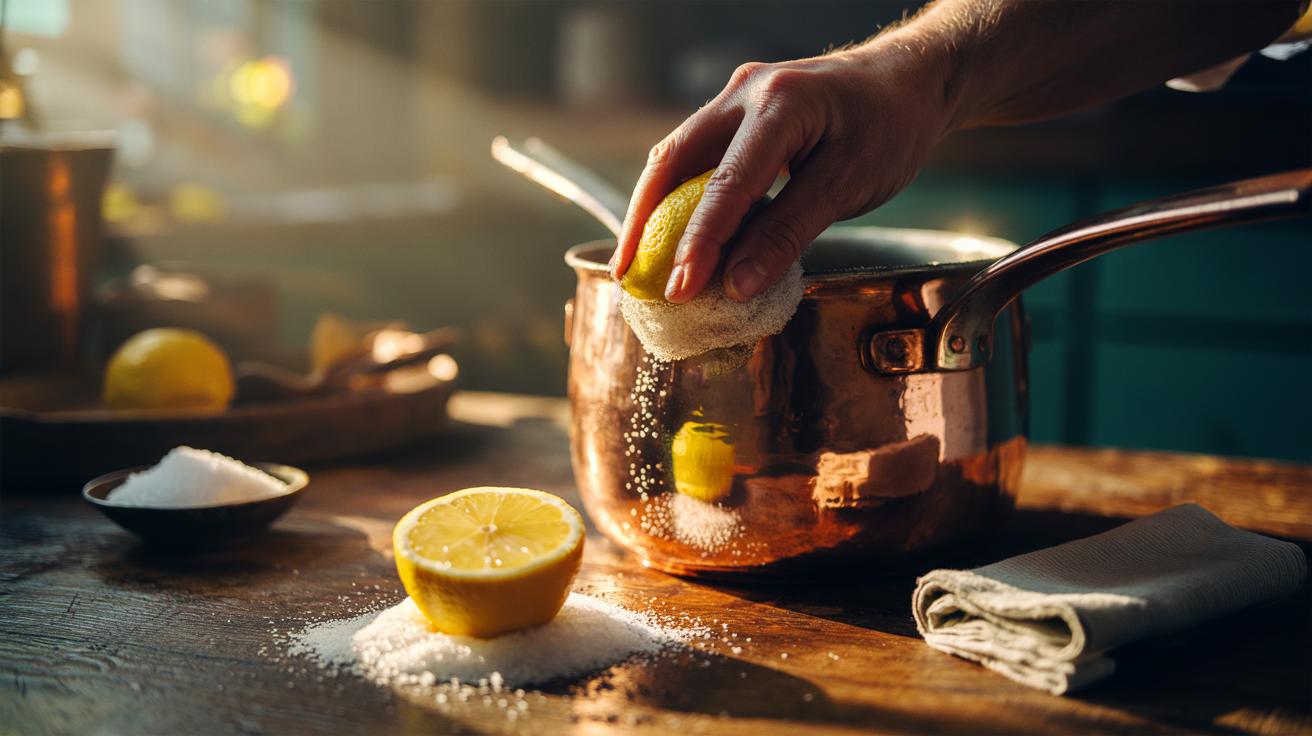
Assemble a half lemon, a dish of coarse salt, warm water, a microfibre cloth, and paper towels. Wipe away loose debris. Press the lemon’s cut side into salt until the surface glitters. Working on a cool pan, massage the tarnished copper in small circles, refreshing with more salt as grains dissolve. For seams or hammered textures, compress the lemon gently to push juice into crevices. Two passes beat a single heavy-handed scrub, so re-salt and repeat lightly rather than grinding.
Let the foamy film sit for 30–90 seconds, then rinse with warm water. To halt any residual acidity, swish the surface with a weak solution of bicarbonate of soda and water, then rinse again. Always dry copper immediately with a clean towel to prevent new spotting. Finish by buffing with a microfibre cloth. For slower re-tarnishing, apply a whisper-thin coat of beeswax or food-safe mineral oil to the exterior; this seals air and sulphur compounds away from the metal.
Troubleshooting and Pro Tips for Lasting Glow
Streaks usually point to uneven pressure or drying marks. Re-wet the area, add a fresh sprinkle of salt, and even out the motion. Greenish flecks—classic verdigris—often lodge in rivets; dab those with lemon juice on a cotton bud and rinse. If oxidation is thick, make a paste: 2 parts lemon juice to 1 part fine salt plus a pinch of flour for cling. Keep contact times short; the aim is to lift oxides, not bathe the metal. Avoid harsh pads that can score soft copper and create future dirt traps.
Mind your surfaces: acidic drips can etch natural stone worktops, so work over a tray. Let hot pans cool; heat accelerates reactions and can blotch finishes. For interiors, prefer a gentle wash: stainless linings tolerate brief acid contact, but tin is soft and easily worn—use only mild soap and a soft cloth. Dry thoroughly, then store with a sheet of anti-tarnish paper between stacked pans. A quick monthly buff preserves the glow and slashes the need for deeper cleans, keeping your copper ready for the spotlight.
The union of citric acid and salt delivers a fast, gratifying clean because it targets what tarnish is made of, not just how it looks. In minutes, chemistry does the heavy lifting and a soft cloth does the rest, leaving copper warm-toned and kitchen-proud. With mindful contact times, careful rinsing, and a protective finish, the shine endures without resorting to harsh polishes. Will you adopt the lemon-and-salt method as your go-to, or adapt it with your own tweaks to suit heirloom pieces and busy weeknights alike?
Did you like it?4.6/5 (27)