In a nutshell
- 🧪 The science: citric acid in lemon dissolves tarnish by breaking down copper oxides/sulphides and chelating ions; a pinch of salt adds chloride assistance and mild abrasion for faster shine.
- 🛠️ Method in minutes: halve a lemon, add salt (for unlacquered brass), rub, wait 2–4 minutes, rinse, optionally neutralise with bicarbonate, then dry and buff with a microfibre cloth.
- ⚠️ Safety first: test for lacquered or plated brass (magnet check), avoid marble and painted surfaces, keep contact time short, and protect historic patina if you prefer a mellow look.
- 🔍 Know when to pause: heavy corrosion, pitting, or very thin plating may warrant professional care; clean less, rinse sooner, dry thoroughly to prevent damage.
- 🧼 Long-term care: routine dusting, pH‑neutral soap for quick cleans, and a thin coat of microcrystalline wax to slow tarnish—ideal for humid or coastal homes.
It sounds like a folk remedy, yet a sliced lemon can restore a tarnished brass doorknob to a showroom gleam in minutes. The secret is citric acid, a gentle yet effective cleaner that dissolves dulling oxides without harsh chemicals or power tools. Rub, wait, rinse, buff: the approach is quick, low-waste, and brilliant for heritage fittings that deserve a less abrasive touch. Short contact time is the magic: enough to lift tarnish, not long enough to bite the metal. With a pinch of salt and a soft cloth, the lemon half becomes both chemical and applicator, ideal for busy households and renters alike.
Why Lemon Works on Brass: The Chemistry of Shine
Brass is an alloy of copper and zinc. Over time, oxygen and sulphur in the air form surface oxides and sulphides that scatter light, creating that brown or greenish haze we call tarnish. Lemon juice contains citric acid (pH ~2), a weak organic acid that donates protons to loosen these compounds and chelates metal ions, making them soluble so they wipe away. The key is that the acid targets the corrosion layer far more readily than it attacks the underlying alloy, especially when exposure is measured in minutes, not hours.
Add a little table salt and you multiply the effect. Chloride ions help disrupt stubborn copper oxides, while fine crystals add mild mechanical bite. Unlike aggressive polishing pastes, this is a low-risk, low-odour method that preserves crisp edges and engravings. A thorough rinse halts the reaction instantly. That’s why the lemon half is beloved by conservation-minded cleaners: it’s precise, fast, and kinder to the metal’s character than heavy buffing.
Step-by-Step: Using a Lemon Half to Revive a Doorknob
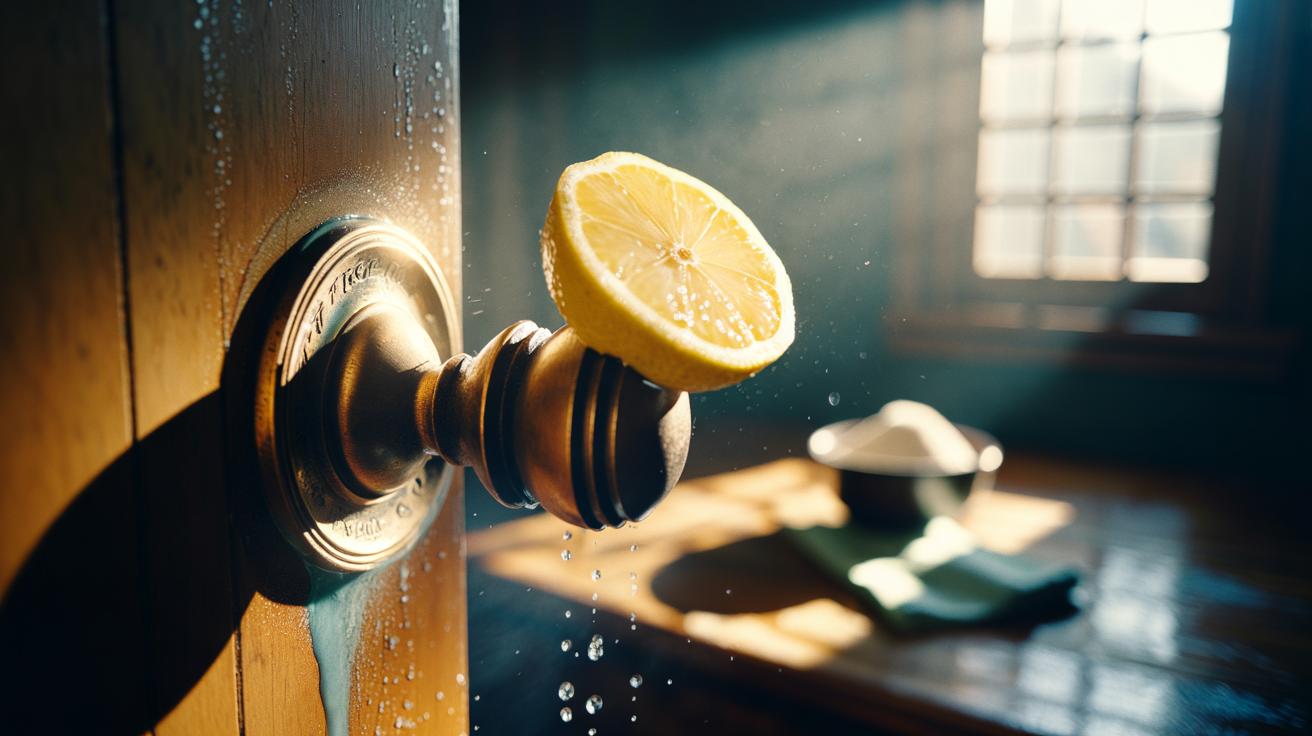
Start with a dry surface. Halve a fresh lemon and remove stray seeds. For unlacquered brass, sprinkle the cut face with a pinch of salt. Mask surrounding paint or wood. Press the lemon into the knob and rotate, refreshing the juice as you go. Work crevices with a cotton bud. Let the juice sit for 2–4 minutes, but do not wander off. Contact time controls brightness; longer is not better. Rinse with warm water, neutralise with a splash of diluted bicarbonate solution if desired, then dry thoroughly. Finish by buffing with a microfibre cloth for a mirror-like sheen.
For extra protection, apply a whisper-thin coat of beeswax or microcrystalline wax and polish lightly. If the knob is lacquered, avoid abrasives and skip the salt: use lemon juice on a cloth for spot cleaning only, and rinse promptly. If you can remove the hardware, it’s easier to clean evenly and keep acid away from door finishes. Always test a discreet area first, especially on antique or plated fittings.
| Method | Mix | Contact Time | Notes |
|---|---|---|---|
| Lemon only | Half lemon, no abrasives | 2–3 min | Best for lacquered or lightly tarnished brass |
| Lemon + salt | Lemon face dipped in fine salt | 2–4 min | Faster on heavy tarnish; avoid on plated brass |
| Neutralise | 1 tsp bicarbonate in 250 ml water | Immediate rinse | Stops acid action; prevents residue and spots |
Safety, Compatibility, and When Not to Use Acid
Not every “brass” knob wants a citrus bath. Many modern handles are brass-plated zinc or steel; the plating is thin and easy to over-clean. If a discreet magnet sticks, proceed with caution, as underlying steel often signals plating. Lacquered brass can cloud if the coating is compromised, so patch-test with juice on a cloth and avoid salt. If you prize an aged patina, remember that acid cleans deeply and will brighten the metal, potentially altering a cherished, mellow tone.
Protect skin with gloves if you have sensitivities, and keep lemon away from marble and other calcareous stone, which acid can etch. Mask painted doors and wipe drips immediately. Keep exposure brief to avoid dezincification on very old, porous brass. If the knob is heavily corroded or pitted, consider professional conservation rather than aggressive polishing. When in doubt, clean less, rinse sooner, and dry more. The discipline is simple: targeted application, prompt neutralisation, meticulous drying.
Maintenance and Long-Term Protection
A sparkling finish lasts longer with light-touch upkeep. Dust weekly with a soft cloth and finger-turn the knob using clean hands to limit skin oils. For routine cleaning, use a damp microfibre cloth and a drop of pH-neutral soap, then dry immediately. Reserve the lemon treatment for quarterly refreshes or before guests arrive; repeated daily use is unnecessary. Moisture is the enemy after cleaning—drying thoroughly is what locks in the shine and stops fresh oxidation lines from forming at edges and screws.
If your home is humid or coastal, a thin coat of microcrystalline wax provides an invisible barrier. Buff lightly to a satin glow; it slows tarnish without the artificial look of heavy lacquer. Avoid steel wool and gritty pastes that round crisp details. Keep a small “brass care” kit—lemon, salt, bicarbonate, cloth—in a labelled caddy so the ritual remains quick and consistent. Consistency, not force, is what keeps brass beautifully bright.
A lemon half turns kitchen chemistry into practical restoration, stripping oxides from brass and reviving its warm glow with minimal effort. The method is inexpensive, biodegradable, and easy to control, provided you respect contact time, rinse thoroughly, and dry until not a droplet remains. Add salt for speed, wax for longevity, and restraint for character. Clean just enough to reveal the metal, not erase its story. How will you adapt this citrus trick to your own hardware—quick touch-ups before visitors, or a seasonal spruce-up paired with a protective wax?
Did you like it?4.7/5 (20)