In a nutshell
- 🧊 The ice cube + plastic card method uses cold to harden spilled wax so it lifts cleanly without smearing or chemicals.
- 🧠 Wax is a thermoplastic; cooling makes it brittle and contracts it, weakening adhesion for easy, low-force scraping.
- 🪪 Step-by-step: bag the ice (30–90 seconds), test for rigidity, then use a plastic card at a shallow angle to chip and lift; avoid metal blades.
- 🛡️ Surface care: keep moisture off porous materials, use barriers on wood and stone, stabilise fibres on textiles, and handle delicate finishes with a cloth-wrapped card.
- 🧼 Aftercare: for residues and stains, use isopropyl alcohol on glass, pH-neutral soap on sealed surfaces, and a warm iron with paper on fabrics—always spot-test first.
There’s a humble, clever trick that saves floors, table tops, and soft furnishings from the mess of a toppled candle: a cold ice cube and a plastic card. Instead of smearing warm wax deeper into grain or fibres, you use cold to make it brittle and lift it away cleanly. When wax is chilled, it hardens, contracts, and releases its grip on the surface. The card then slides beneath and flicks it off in tidy flakes, no harsh chemicals needed. It’s fast, inexpensive, and safe on most materials with a few sensible precautions—precisely the sort of household fix that earns permanent residency in your practical toolkit.
Why Cold Turns Wax Brittle
Wax is a thermoplastic: at room temperature it’s solid yet slightly pliable; warmed, it softens; chilled, it becomes rigid and crumbly. Cooling draws wax molecules into tighter order and reduces surface tack. At the same time, wax and the material beneath it contract at different rates. That mismatch disrupts the bond at the interface. Cold converts tacky wax into a thin, brittle film that fractures cleanly under a gentle scrape. The result is controlled, low-force removal, rather than the messy smear you get when you rush in with heat.
The ice cube does two jobs: it robs the wax of heat quickly, and the slight pressure encourages micro-cracks. Prevent moisture issues by wrapping the cube in a food bag or a cloth to avoid condensation stains, especially on wood. You’re not freezing the surface itself—only the spill. Thirty to ninety seconds usually suffice. When the wax dulls and hardens, you’re at the ideal moment to slide in a card and lift.
Step-By-Step: Ice Cube and Plastic Card
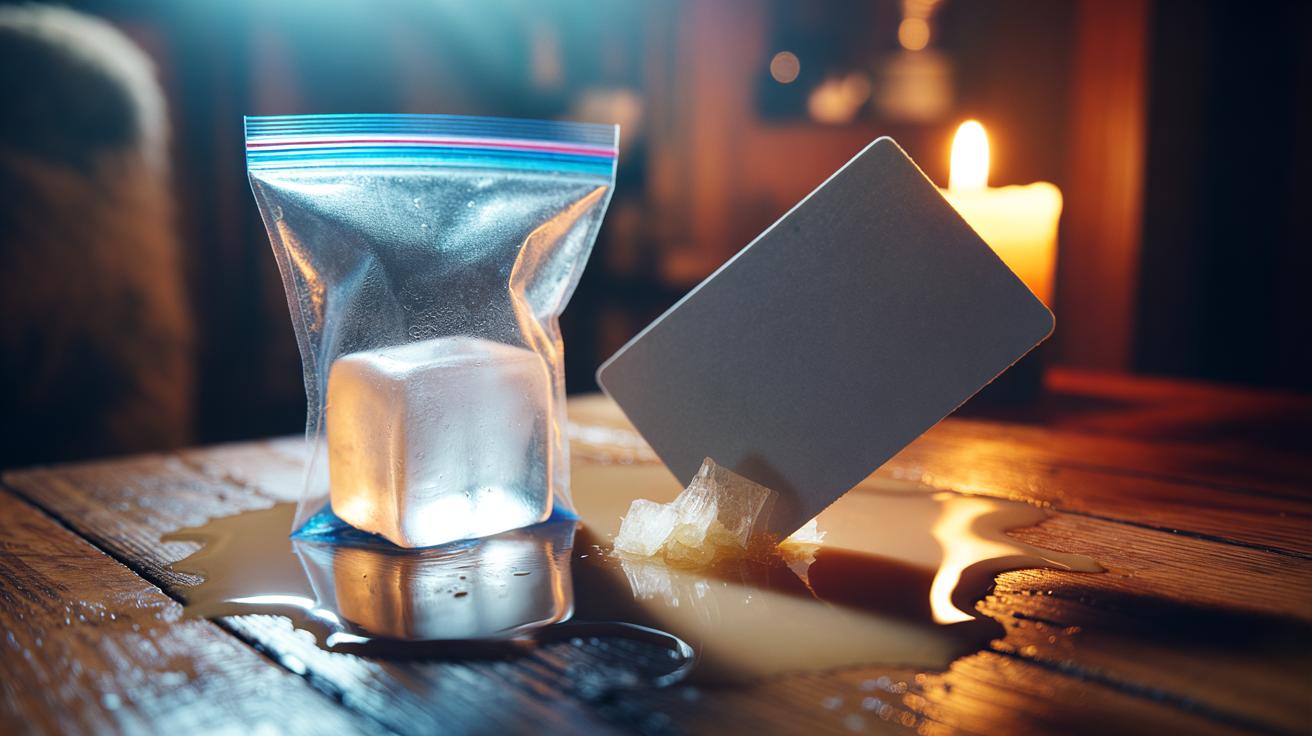
Start by isolating the spill. If the wax is still warm, let it cool until it’s not sticky to the touch. Encase an ice cube in a zip bag, then press it lightly over the wax. Work in short bursts, checking every 20 seconds. Stop as soon as the wax feels rigid—excess water or prolonged chilling isn’t helpful. Hold a plastic card (an old gift or loyalty card) at a shallow angle, and coax the edge beneath the wax. Think “chip and lift,” not “dig and drag.” The slab should fracture into flakes you can gather with a paper towel.
For thicker blobs, chill, chip the crown, then re-chill the base before the final lift. On fabric, place a bag of ice above and a folded cloth beneath to firm the fibres and prevent stretching. On intricate textures, a plastic teaspoon edge or fingernail gives better control than a wide card. Never gouge with metal blades—scratches outlast spills. Finish by vacuuming grains or brushing crumbs into a dustpan, keeping the area dry.
Protecting Different Surfaces
Different surfaces demand different levels of care. Sealed timber tolerates brief cold and a plastic card; raw wood, stone, and delicate finishes need more finesse. Keep water off porous materials to avoid rings and clouding. Use barriers—bags, cling film, or silicone spatulas—to deliver cold without drips. On carpets and upholstery, stabilise the pile with a fingertip while you nudge the card beneath the hardened edge so you lift wax, not threads. Gentle angles and light pressure are the golden rules across all materials.
| Surface | Prep Tip | Caution |
|---|---|---|
| Sealed Wood | Ice in a bag; blot any moisture immediately | Avoid water rings; don’t scrape across grain |
| Unfinished Wood | Chill briefly; lift gently with a card | Wax can embed; avoid wetting altogether |
| Stone (Granite/Marble) | Use bagged ice; dry as you work | Skip acidic cleaners after removal |
| Glass/Ceramic | Chill, then use a plastic scraper | Metal blades can scratch coatings |
| Carpet/Rug | Ice above, cloth beneath; lift flakes | Do not soak; protect backing from moisture |
| Upholstery/Cloth | Firm fibres with cold; flick off | Beware dye transfer from coloured wax |
For candle jars and holders, the same rule applies: chill the residue and pry it cleanly. If the holder is freezer-safe, a short stint in the cold compartment can help, but avoid sudden temperature shocks to thin glass. Where finishes are soft—French-polished tables, lacquer, or oiled wood—take your time. A card wrapped in a soft cloth spreads pressure and reduces micro-marring, leaving the surface ready for a light buff.
When Cold Isn’t Enough: Residue and Stains
After the brittle lift, you may see a faint sheen or coloured shadow from scented or dyed candles. That’s not wax structure—it’s oils and pigments. Treat residue according to the surface. On glass, a dab of isopropyl alcohol on a lint-free cloth removes oils swiftly. On stone or sealed wood, a tiny amount of mild, pH-neutral dish soap in warm water (barely damp cloth) breaks remaining film—then dry immediately. Always spot-test solvents in an inconspicuous area to prevent surprise dulling.
Textiles demand a lighter touch. Scrape first, then place brown paper or plain kitchen towel over the mark and pass a warm—not hot—iron briefly to wick up trace oils; keep the iron moving. For coloured wax on pale fabrics, use a small amount of oxygen-based stain solution, following the label and testing hidden seams. If wax has penetrated raw wood pores, a touch of mineral spirits on a cloth can help, but use sparingly and re-wax or oil the area to restore lustre.
Handled patiently, the ice cube and plastic card method rescues most surfaces with minimal fuss and zero harsh fumes. It leans on simple physics: cold makes wax brittle, contraction breaks the bond, and a gentle edge lifts it free. Keep a few retired gift cards in your drawer, use bagged ice to avoid moisture marks, and remember that soft finishes prefer softer pressure. Next time a candle misbehaves, will you reach for solvents—or put cold to work and scrape away the problem in satisfying, tidy flakes?
Did you like it?4.4/5 (25)