In a nutshell
- 🍋 How it works: steam hydrates dried splatters while citric acid and d‑limonene from lemon peel loosen grease and neutralise odours for an effortless wipe-down.
- 🧪 Step-by-step: Use 250–300 ml water with half a lemon (juice + peel), heat 2–3 minutes, let steam rest 3–5 minutes, then wipe with a damp microfibre cloth and dry to finish.
- ⚠️ Safety first: Choose a microwave-safe bowl, let lemon act as nucleation to reduce superheating, handle with gloves, and never mix acidic steam with bleach or use metal/sealed containers.
- 🌱 Eco and cost wins: Replaces chemical cleaners, relies on biodegradable citric acid, is energy-efficient, and you can reuse the spent lemon to freshen drains or simmer for fragrance.
- 🧽 Practical tips: Repeat the cycle for baked-on mess, twist peel to release extra oils, or swap in food‑grade citric acid; adopt as a quick post-reheat habit to keep deep cleans rare.
Sticky splatters, tomato specks, and lingering odours can turn a microwave into a reluctant cleaning project. There is a gentler, quicker fix: a cut lemon, a bowl of water, and a burst of heat that creates cleansing lemon steam. In minutes, droplets loosen residues, dissolve grease, and freshen the cavity, leaving just a simple wipe-down. This is an effortless routine that respects your time and your appliances. Below, you’ll find the science that makes it work, a precise method you can trust, key safety notes, and the eco case for choosing fruit over harsh sprays. Consider this your tidy, citrus-scented shortcut.
Why Lemon and Steam Work
Steam is a brilliant softener. As the microwave excites water molecules, hot vapour fills the chamber, condensing on cool walls and turntables. Those droplets rehydrate dried starches and proteins, while gentle heat expands and loosens splatters. Add lemon and you introduce citric acid, which breaks mineral films and weak food bonds, plus d‑limonene in the peel, a natural solvent that helps lift grease. It’s the trio of heat, moisture, and mild acidity doing the heavy lifting, so residue releases without heavy scrubbing or abrasive pads.
The process is surprisingly thorough because vapour reaches corners that cloths miss. As condensation forms, it drags dissolved grime downward, making the wipe stage swift. The lemon’s volatile oils also brighten odours, leaving a clean, not chemical, finish. Because the mixture is dilute and food-adjacent, it’s practical for daily use. Think of it as a low-effort reset button for a hard-working microwave, ideal after bubbling sauces or buttery leftovers.
Step-by-Step Method for Effortless Cleaning
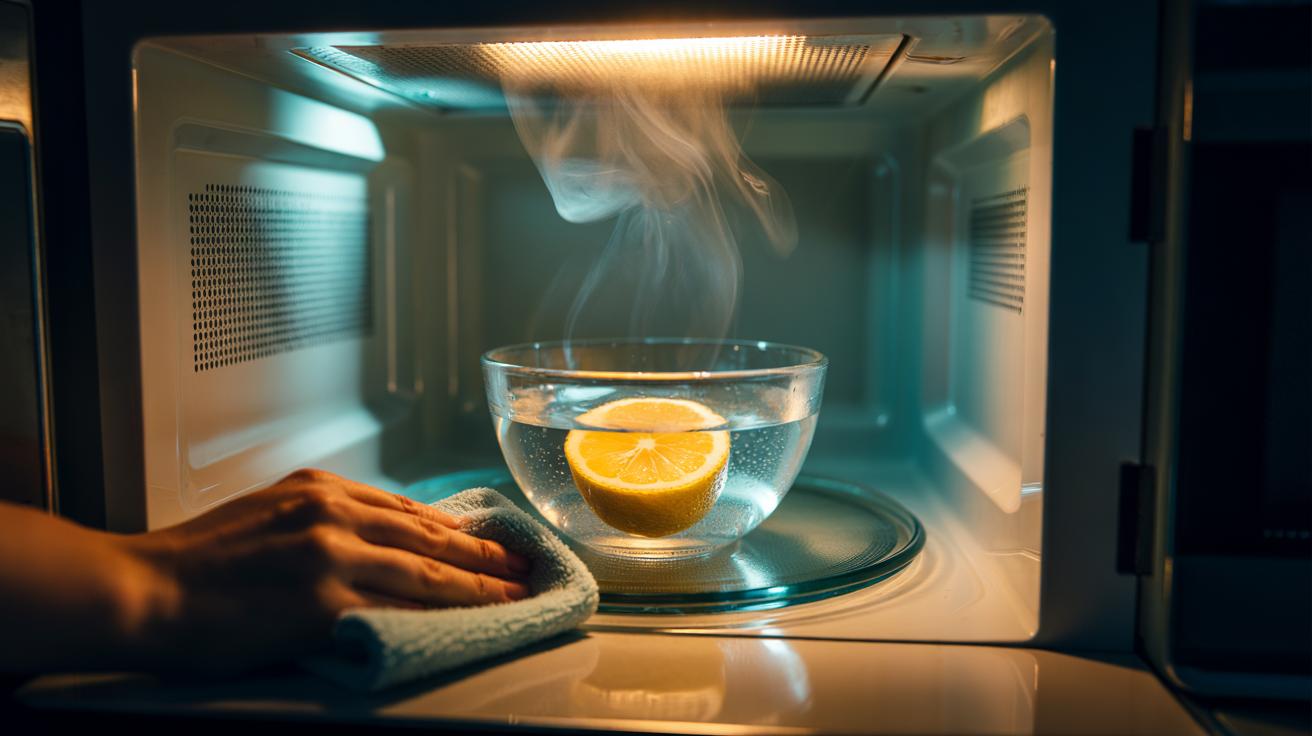
Place 250–300 ml of water in a microwave-safe bowl. Halve a fresh lemon; squeeze the juice into the bowl, then drop both halves in. Heat on high for 2–3 minutes until you see vigorous steaming. Leave the door closed for 3–5 minutes to let the vapour work. Open carefully, remove the hot bowl with mitts, and wipe every surface with a damp microfibre cloth. Pay attention to the ceiling and the door mesh, then lift the turntable to clean beneath. Let the steam rest; it saves you elbow grease.
For baked-on splatters, repeat the cycle once, or extend the resting period. Twist the peel to release extra oils before heating for added grease-cutting. If you’re short on lemons, a teaspoon of food-grade citric acid crystals works similarly. Finish with a dry cloth to prevent streaks. Never heat a dry lemon by itself; always use water to generate steam and prevent scorching of the fruit.
| Item | Quantity/Setting | Notes |
|---|---|---|
| Water | 250–300 ml | Enough to produce abundant steam |
| Lemon | 1/2 lemon, juiced + peel | Peel provides d‑limonene for grease |
| Power | High | Adjust time for lower-wattage models |
| Heat Time | 2–3 minutes | Stop when the bowl is visibly steaming |
| Rest Time | 3–5 minutes | Keep door closed to trap vapour |
Safety Notes and What to Avoid
Always choose a microwave-safe bowl with a broad base to prevent tipping. Add the lemon to provide nucleation points and reduce the risk of superheating. Use oven gloves to remove the bowl and open the door away from your face to avoid a rush of hot vapour. Keep metal, sealed containers, or tightly covered bowls out of this process. If your model runs very hot, shorten the heat time and extend the resting period. Safety first: steam burns are fast and unforgiving, so treat the bowl like a small kettle.
Do not combine acidic steam with bleach or strong alkalis; residue mixing can generate harmful fumes. Avoid abrasive scouring on enamel interiors or door seals; the lemon-steam method removes the need. Wipe the rubber gasket dry to protect against perishing. If odours persist from burnt food, repeat the cycle with fresh water and peel. When in doubt, dilute and ventilate—a cracked window and a second round usually solve stubborn smells without harsher chemicals.
Beyond Cleaning: Freshness and Eco Credentials
The lemon-in-microwave routine scores well on cost and sustainability. A single fruit and tap water replace bottled degreasers, plastic packaging, and synthetic fragrances. Citric acid is biodegradable, and the heat you use is tightly focused inside the cavity, making it energy‑efficient compared with long, hot wipe-downs. You can still use the spent lemon: drop it down a disposal for a freshened drain, or simmer it in a pan to scent the kitchen. Small, repeatable habits add up to meaningful waste reduction, especially in busy households.
There’s also the question of ambience. Lemon’s natural, odour-neutralising aroma clears last night’s curry without masking it in perfume. Prefer a twist? Add a clove or a sprig of rosemary to the bowl for a botanical note. Establish a rhythm—after any messy reheating, run a quick steam cycle, then wipe while warm. Regular, light maintenance keeps deep cleans rare, extending the life of seals, enamel, and turntables with almost no effort.
Used wisely, lemon steam turns a dreaded chore into a three-minute ritual that delivers a spotless, sweet-smelling microwave. The science is sound—steam loosens residue, citric acid disrupts build-up, and aromatic oils refresh the air—while the method is gentle on surfaces and kinder to the planet. Keep a couple of lemons to hand and a microfibre cloth near the appliance, and you’ve got a reliable fix for weekday mess. Will you adopt the citrus cycle as a post-reheat habit, or will you tailor the technique with other kitchen aromatics to suit your own home?
Did you like it?4.5/5 (21)