In a nutshell
- ✨ Lemon’s citric acid dissolves stubborn limescale on glasses, restoring sparkle without harsh chemicals.
- 🧪 Differentiate removable mineral film from permanent glass etching; only the former responds to acid.
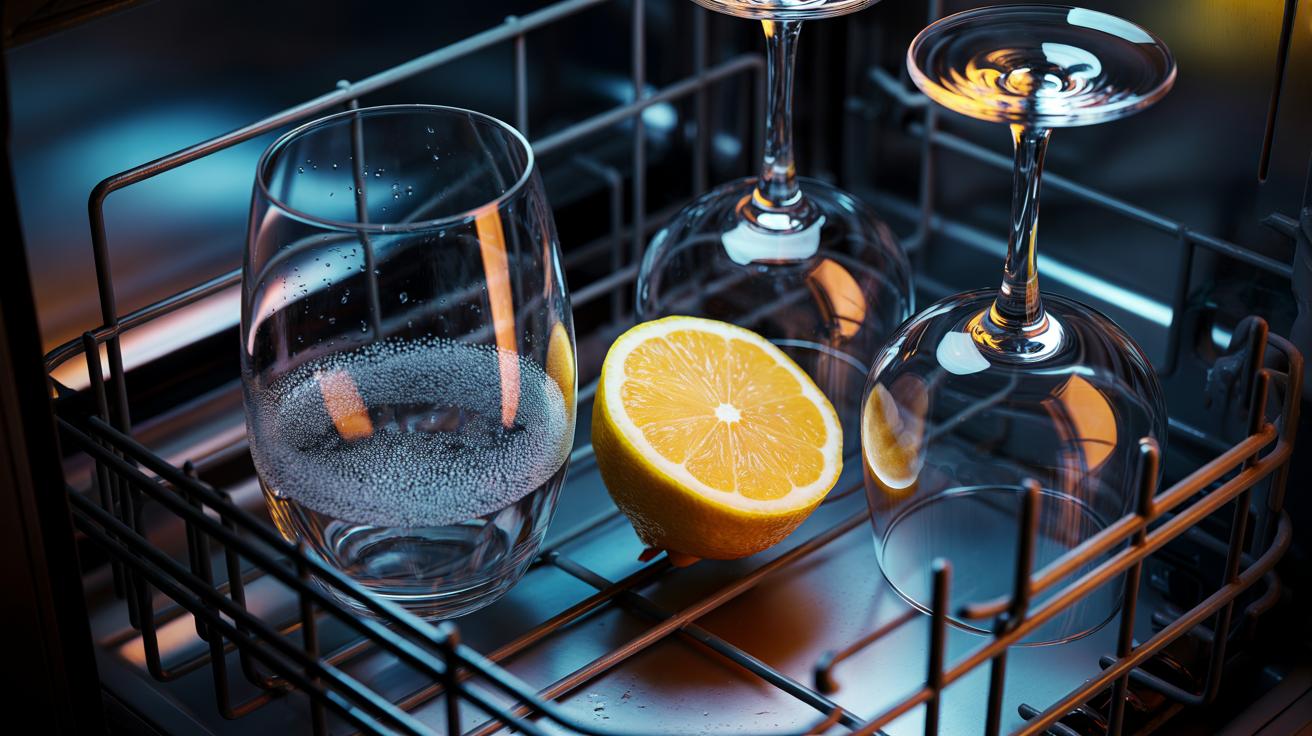
- 🧼 How-to: place a halved lemon on the top rack or in the cutlery basket, run a hot cycle with detergent, and keep rinse aid and salt correctly set.
- ⚠️ Safety: avoid aluminium and carbon-steel items, keep lemons away from heating elements, and don’t overuse acids; follow the manual.
- 💷 Alternatives & upkeep: use food-grade citric acid powder or vinegar, and combine with periodic descaling and correct softener settings.
Open your dishwasher after a cycle in a hard-water area and you often meet a disappointing sight: glasses dulled by a chalky film. The fix brewing on countless British kitchen counters is startlingly simple. A half lemon tucked onto the rack can lift deposits and restore brilliance, not through folklore but chemistry. Its natural citric acid tackles stubborn limescale without harsh odours or synthetic additives. The method is inexpensive, low-waste, and quick to try between busy weekday washes. Used correctly, lemon can make glassware sparkle while sparing the machine and your budget, but there are rules to follow—and limits that even nature’s acid cannot cross.
Why Hard Water Leaves Cloudy Glasses
Across large parts of the UK, mains water carries high levels of calcium and magnesium ions. When heated in a dishwasher, these minerals react with carbonates and precipitate as limescale—the white haze that clings to glass. Rinse water rich in minerals dries irregularly, leaving a crust that resists normal detergents. Modern tablets include water softeners, yet spikes in hardness, worn resin in the softener, or a skipped rinse aid setting let deposits win. That cloudy film is usually mineral build-up, not dirt, which is why scrubbing often fails to shift it.
It’s vital to distinguish mineral film from glass etching. Film sits on the surface and can be dissolved. Etching is microscopic corrosion from harsh chemistry or overly soft water, leaving a permanent milky look and rainbow streaks. No acid can reverse etched glass; the aim is prevention. If a fingertip or a damp cloth briefly clears a patch, you’re likely dealing with removable limescale rather than damage.
How Lemon Acid Breaks Down Limescale
Lemon juice contains around 5–7% citric acid, a weak organic acid that excels at dissolving calcium carbonate. At dishwasher temperatures, citric acid protonates the carbonate, releasing CO₂ and forming soluble calcium citrate complexes—effectively lifting the chalky film from glass. The fizz you sometimes see is the carbonate dissolving, not your glass being attacked. Because citric acid is buffered and biodegradable, it’s gentler than many descalers, yet strong enough to tip the balance during the hot rinse.
Chemistry is only part of the story. A lemon’s natural oils lower surface tension, helping rinse water sheet off rather than bead and deposit minerals. In tandem with a good rinse aid, this sheeting action reduces spots and speeds drying. The acid also helps clear internal spray arms and filters of thin scale films, improving flow. That said, acids accelerate corrosion on reactive metals. Keep high-carbon steel knives and bare aluminium out of acidic cycles, and rely on stainless-steel, dishwasher‑safe kit.
Step-by-Step: Using Lemon in Your Dishwasher
– Choose a fresh, firm lemon. Halve it; pick out seeds. For extra juice release, score the cut face with a knife. Place it securely on the top rack or in the cutlery basket, cut side up, to avoid slipping. Never rest a lemon on or near the heating element. Load only dishwasher‑safe glass and stainless steel. Avoid aluminium trays, carbon‑steel blades, and hand-painted glassware.
– Run a normal hot cycle with your usual tablet. Keep rinse aid and salt settings as recommended by the manufacturer; lemon supplements them rather than replaces them. After the cycle, discard the lemon or reuse once if still juicy. For heavy film, try a short prewash with lemon, then a full wash. Frequency guide: occasional households, monthly; hard‑water hotspots, every 5–10 cycles. If clouding remains after two tries, suspect etching, not limescale, and adjust detergent strength and water‑softening settings instead of repeating acid cycles.
Alternatives, Costs, and Safety
Not everyone keeps lemons to hand. Food‑grade citric acid powder (5–10 g in the detergent cup) provides consistent strength without the peel. White vinegar works, but acetic acid has a sharper odour and can be harsher on rubber over time. Commercial rinse aids excel at sheeting but don’t dissolve existing scale; they prevent new spots. Use manufacturer-approved descalers for deep machine maintenance every few months in very hard areas. Always check your glassware: delicate crystal and gilded or printed designs are safer washed by hand.
| Option | Main Acid | Typical Acidity | Pros | Cautions | Approx. Cost/Use (UK) |
|---|---|---|---|---|---|
| Lemon half | Citric acid | ~5–7% | Natural scent, low waste | Avoid aluminium; variable strength | £0.10–£0.25 |
| Citric acid powder | Citric acid | Controlled dose | Reliable, no peel | Store dry; measure carefully | £0.03–£0.08 |
| White vinegar | Acetic acid | ~5–8% | Cheap, available | Odour; potential seal wear if overused | £0.02–£0.05 |
| Rinse aid | Surfactants | N/A | Prevents new spots | Doesn’t remove old scale | £0.03–£0.07 |
When in doubt, consult your dishwasher manual before introducing acids. Keep doses modest, and don’t mix multiple acids in one cycle. If your area’s water hardness exceeds local averages, re-check the machine’s built‑in softener setting and replenish salt. Good filtration, regular filter cleaning, and periodic descaling will extend pump life and keep spray arms clear, so the lemon trick becomes a finishing touch rather than a firefight.
Used with care, a simple lemon can restore clarity, cut down on hard water haze, and freshen the machine in a single cycle. Its citric acid dissolves limescale efficiently, while aromatic oils help water sheet away and dry cleanly. Think of it as a smart hack, not a silver bullet: address softener settings, rinse aid, and loading habits to keep clouding at bay. The gleam you want is a partnership between chemistry and good practice. How will you fine‑tune your routine—lemon, citric powder, or a targeted descaler—to keep your glassware sparkling week after week?
Did you like it?4.4/5 (30)