In a nutshell
- 🧭 White vinegar masks and dissolves ants’ pheromone trails, cutting their navigation while doubling as a safe surface cleaner.
- 🧪 Mix a 1:1 solution of white distilled vinegar and water, optionally add a drop of washing-up liquid; do not mix with bleach or hydrogen peroxide, and test on natural stone.
- 🧰 Identify active lanes, spray and wipe, then lay scent barriers (2–5 cm strips) at entry points; reapply after cleaning or rain and keep vinegar away from bait routes.
- 🧩 Pair vinegar with sealing cracks, tight food storage, quick spill clean-ups, and external baiting for durable, low-tox ant control.
- 📊 Pros and alternatives: cheap and safe but needs top-ups; soap-and-water works briefly; essential oils vary; baits reach the nest but act slowly.
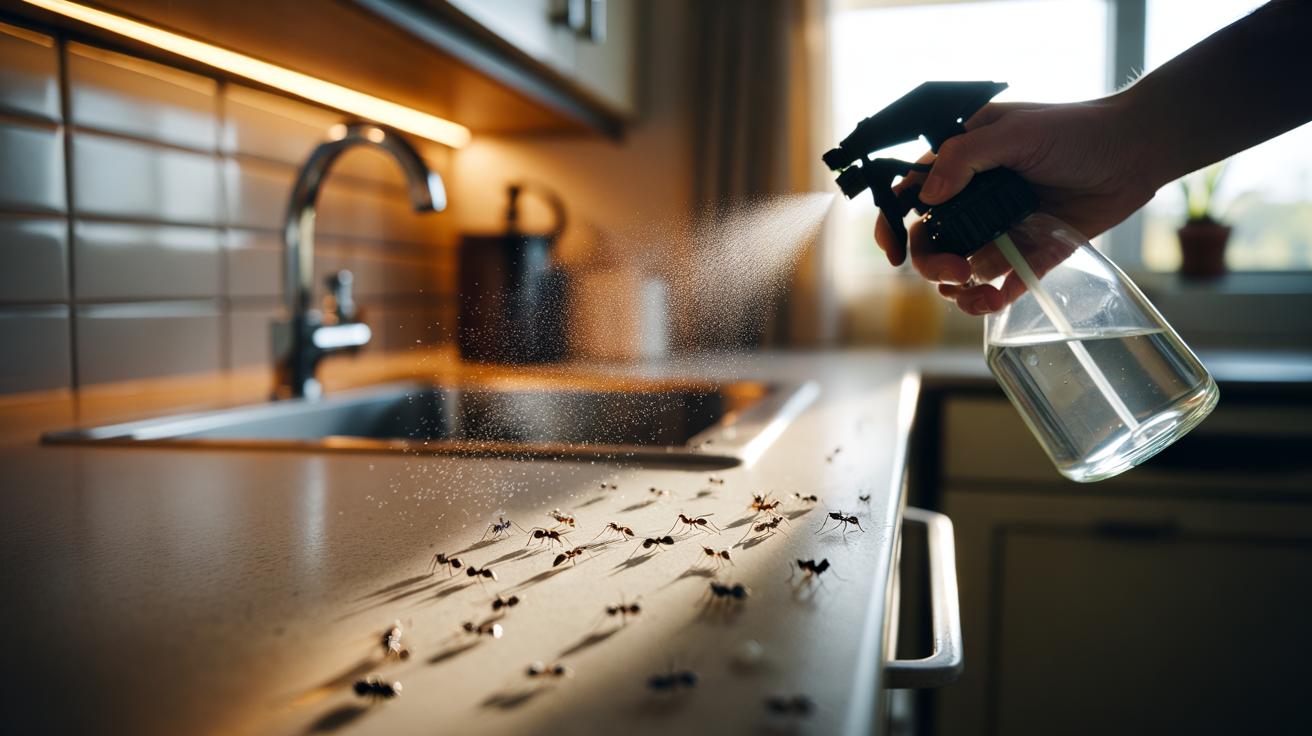
Ants don’t invade a kitchen at random; they follow invisible chemical signposts that lead straight to crumbs, bins, and pet bowls. A humble bottle of white vinegar can cut off those routes in minutes. Its sharp scent masks and deactivates the pheromone trails ants depend on, turning a busy highway into a dead end. Budget-friendly, non-toxic, and already in most cupboards, a vinegar spray tackles both the smell cues and the sticky residues that attract scouts. Used correctly, this simple solution breaks established trails and keeps new ones from forming, while doubling as a surface cleaner that leaves counters fresh and streak-free.
Why Vinegar Disrupts Ant Highways
Ants navigate using pheromones—volatile chemicals that mark food routes from nest to kitchen. The acetic acid in vinegar overwhelms those signals and dissolves the residue carrying them. When you wipe a trail with vinegar, the colony loses its map; workers wander, then abandon the route. It’s a scent-led intervention, not a poison, so you’re solving the problem by removing the guidance system rather than targeting insects directly. This makes vinegar a smart first-line defence in homes that want to avoid harsh pesticides, especially around food preparation areas and children’s spaces.
There are practical caveats. Acids can etch natural stone such as marble, limestone, and some granites, so use a diluted mix and test a discreet spot first. The scent barrier fades with time and cleaning, meaning periodic top-ups maintain protection. As a bonus, vinegar helps lift grease films that boost ant interest. Think of it as a dual-action clean: erase the smell trail and remove the food cues that started it. For most surfaces, it’s safe, economical, and highly effective when applied patiently and precisely.
Making an Effective Kitchen-Safe Vinegar Spray
Use standard 5% white distilled vinegar. Mix a 1:1 solution of vinegar and water in a clean spray bottle. For better cling and residue removal, add 1–2 drops of unscented washing-up liquid; it breaks surface tension so the spray wets the trail evenly. Optional: infuse peels of lemon or orange in the vinegar for a week; citrus oils may add extra repellency and a fresher aroma. Label the bottle clearly and store it out of direct sunlight. Do not mix vinegar with bleach at any time—this releases dangerous chlorine gas.
Choose a glass or HDPE plastic bottle, which tolerates acids well. If you use microfibre cloths, keep one dedicated to ant trails to avoid spreading scents around. A fine-mist nozzle helps coat skirting boards and window tracks without soaking them. To protect vulnerable surfaces, spray the cloth, not the counter, then wipe. Never combine vinegar and hydrogen peroxide in the same bottle, which can form irritating peracetic acid. Keeping the recipe simple ensures predictable results and a reliable scent barrier.
How to Apply: Breaking and Preventing Trails
Start by locating active lanes: ants often follow edges—worktop rims, grout lines, window frames—to a food source. Spray the trail lightly and wipe it away, paying attention to the final metres where pheromone concentration is highest. Then target entry points such as gaps under skirting, cable penetrations, and door thresholds. Lay a “scent barrier” by misting a 2–5 cm strip along those seams and letting it dry. Re-treat bins, pet-feeding areas, and the underside of appliances where crumbs collect. A follow-up pass after 30–60 minutes helps erase any lingering markers.
Maintenance is key. Reapply after mopping, heavy cooking, or rain if trails originate near doors. Seal cracks with silicone or decorators’ caulk to reduce future scouting. Keep sweet and greasy foods in sealed containers, and wipe spills promptly. If you use ant baits elsewhere, keep vinegar away from those paths; you want ants to reach the bait undisturbed so it’s carried back to the nest. Vinegar handles the kitchen perimeter, while baiting, sealing, and tidiness deliver lasting control.
Pros, Cons, and Alternatives at a Glance
Vinegar spray excels at rapid trail disruption, safety, and cost. It doesn’t kill colonies but buys time and cleanliness while you improve proofing. A simple soap-and-water wipe can remove some scent, though vinegar tends to perform better on greasy residues. Commercial baits address the nest but require undisturbed access. Some essential oils (peppermint, tea tree) repel ants, yet their effects vary and can irritate skin. The smartest strategy blends quick fixes with structural solutions: clean, block, and—if pressure persists—bait away from food zones. Choose tools that fit your kitchen’s surfaces, pets, and tolerance for odour.
| Method | How It Works | Pros | Cons | Longevity |
|---|---|---|---|---|
| White vinegar spray | Masks/removes pheromone trails | Cheap, safe, cleans as it repels | Needs reapplication; avoid natural stone | Hours to a day |
| Soap-and-water wipe | Physically lifts scent residues | Very mild, readily available | Less effective on stubborn trails | Short |
| Commercial ant bait | Workers carry toxin to nest | Targets source of problem | Slow; trails must remain intact | Weeks |
| Essential oils | Strong scents deter scouting | Pleasant smell, plant-derived | Variable results; potential irritants | Hours |
Pair vinegar with common-sense prevention: sweep crumbs, dry surfaces, and declutter splash backs and window sills where ants can shelter. If trails recur at the same spot, improve sealing and consider an external bait station placed away from kitchen doors. The aim is a layered approach: erase, deter, and deny access. That delivers a kitchen that stays quiet between treatments and a colony that loses interest in your home altogether. Keep the spray handy during warm spells when ant activity surges, and treat small paths before they become motorways.
Vinegar’s strength is simple: a powerful scent that resets the ants’ sat-nav while freshening the very surfaces they covet. It won’t topple a large colony on its own, but as a daily tool it breaks trails, blocks reformation, and complements smarter proofing. Keep it targeted, respect sensitive surfaces, and pair it with sealing and baiting where needed. The result is a clean kitchen that smells crisp and confuses scouts before they ever find the biscuit tin. How will you tailor your spray, barriers, and routine to keep ant highways permanently off your countertops?
Did you like it?4.5/5 (24)