In a nutshell
- 🍋 The lemon peel simmer releases citrus steam that helps neutralise odours from fish by softening amines (e.g., trimethylamine) with mild acidity and aromatic compounds like limonene and citral.
- 🔧 Method: Peel 2–3 lemons and keep a low simmer in water with the lid half-on; optional splash of vinegar; finish by wiping surfaces with the cooled citrus water to extend deodorising.
- 🌬️ Optimise with smart timing (start as you cook), good ventilation (extractor + cracked window), and strict safety (non-reactive pan, never unattended, top up water).
- 🍊 Variations: Use citrus blends (lime, orange, grapefruit) with a bay leaf or clove for warmth, add a teaspoon of vinegar for stubborn smells, and avoid essential oils.
- 🌱 Eco-friendly: Embrace zero-waste by freezing or drying peels, reusing the citrus water for quick cleans, and composting peels for a plastic-free alternative to synthetic sprays.
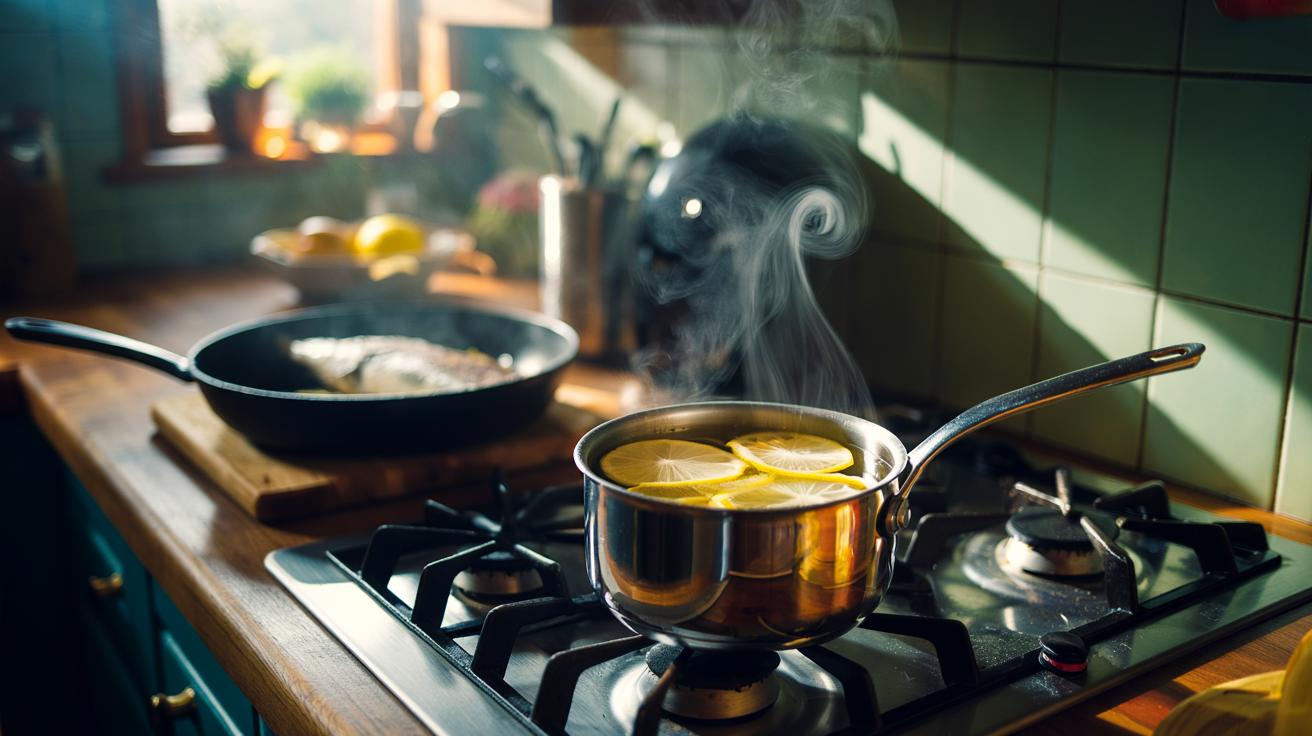
A frying pan full of hake or mackerel can leave a stubborn cloud of kitchen odour long after plates are cleared. An old cook’s trick—the lemon peel simmer—offers a clean, inexpensive answer: gently heating citrus peels in water so scented vapours circulate through the room. This simple ritual sends citrus steam aloft, tackling the volatile molecules responsible for fishiness without perfumed sprays or aerosols. Keep the heat low and the simmer steady for best results. The science is satisfyingly practical: acidity, aromatic compounds, and warm moisture combine to neutralise odours on the air and on nearby surfaces, leaving only a light, bright note that fades naturally.
Why Fish Smells Linger and How Citrus Steam Works
Fish odour clings because of volatile sulphur compounds and amines such as trimethylamine, which readily evaporate at room temperature and bind to fabrics, timber, and wall paints. Heating lemon peels releases a cocktail of aromatic molecules—chief among them limonene and citral—into warm moisture. These compounds don’t just mask smells; they interact with malodour molecules, while the mild acidity in citrus helps protonate amines, dulling their sharpness. Citrus steam softens and reshapes the odour profile rather than dousing it in heavy fragrance. The humidity also plays a role: water vapour captures airborne particles and encourages them to settle, while the citrus volatiles lend a clean, zesty veil that dissipates rather than lingering as a synthetic scent.
The result is a quick, gentle form of kitchen “air-scrubbing”. Start the simmer as you preheat the pan, and let it continue for a short time after washing up. A gentle simmer beats a rolling boil because it preserves fragrant oils and avoids scorched notes. In compact flats with tight ventilation, this approach offers an elegant, low-energy fix that complements extractor fans and open windows.
Step-by-Step Simmer Method with Lemon Peels
Begin by peeling 2–3 lemons, aiming for broad strips with as little white pith as possible to keep the fragrance bright. Place the peels in a small saucepan, cover with 750–1,000 ml of water, and bring just to a simmer. Do not boil vigorously; a quiet, persistent burble distributes aroma without bitterness. Keep the lid slightly ajar to trap some steam while still venting fragrance. Let it run while you cook, then 15–25 minutes afterwards. If you’ve grilled something particularly pungent, refresh with a fresh handful of peels. You can even add a few slices of the spent lemons from your prep board to boost acidity and fragrance.
| Item | Purpose | Guideline |
|---|---|---|
| Lemon peels | Primary aroma, mild acidity | Peels of 2–3 lemons |
| Water | Carrier for steam | 750–1,000 ml |
| White vinegar (optional) | Extra acid for amines | 1 tbsp per litre |
| Clove/star anise (optional) | Warm spice top-notes | 1–2 pieces |
| Lid position | Balance humidity/fragrance | Half-on |
| Heat level | Preserve volatile oils | Low simmer |
When you finish, let the pan cool and use the citrusy water to wipe down counters and the hob. This extends the deodorising effect to surfaces that harbour odour, and it’s kinder to the environment than harsh cleaners. Compost the peels afterwards.
Optimising Results: Timing, Ventilation, and Safety
Timing is decisive. Start the simmer the moment heat hits your fish pan, as this counters odours at their source rather than fighting them afterwards. Keep doors to bedrooms closed and windows cracked open to encourage cross-ventilation. An extractor fan on low, combined with citrus steam, outperforms either alone. Maintain a low flame: limonene and related terpenes volatilise best in a gentle thermal stream; overheating can scorch peels and create a bitter edge. For lingering smells in textiles, place the simmering pan safely under the cooker hood so vapours pass over tea towels and aprons. The light acidity helps reset fabrics without dampness.
Use a non-reactive pan—stainless steel or enamel—to keep flavours clean. Avoid bare aluminium if adding vinegar. Never leave a pan unattended, top up water as needed, and keep handles turned inwards. Pet owners should ventilate well; cats, in particular, are sensitive to concentrated essential oils, so stick to peels in water rather than neat oils. For stubborn cases after frying, repeat the simmer in a fresh pot for a second short session.
Beyond Lemon: Citrus Blends and Eco-Friendly Tweaks
While the classic is the lemon peel simmer, blending peels can fine-tune the fragrance. Lime adds a tart sparkle, orange rounds off harsh notes, and grapefruit offers a sophisticated bitterness that pairs well with oily fish. A bay leaf or a single clove adds warmth without overpowering citrus. Keep additions modest so citrus remains the dominant odour-neutralising force. If you’re battling residual fryer smells, a teaspoon of white vinegar in the pan increases acidity and tamps down amines quickly. Avoid bottled essential oils; they’re too concentrated for open simmering and may irritate airways.
Embrace zero-waste habits. Freeze clean peels in a bag ready for midweek cooking, or dry them on a radiator and store for later. The leftover citrus water makes an excellent wipe-down for chopping boards after fish prep. It’s a plastic-free, low-cost deodoriser that doubles as a light cleaner. When finished, pop the peels into the compost or food waste caddy. You’ll spend pennies and skip synthetic sprays, all while keeping the kitchen fresh.
The elegance of the citrus steam method is its simplicity: water, peel, and low heat working together to subdue strong kitchen smells without chemical fog. It complements good ventilation, shortens the life of lingering fish odours, and leaves a bright after-scent that fades naturally. Small rituals—lid half-on, heat low, peels ready in the freezer—turn weeknight cooking into a fresher experience. As energy costs and indoor air concerns rise, this approach earns its place beside the wooden spoon and tea towel. How will you adapt the lemon peel simmer in your kitchen—pure lemon, a citrus blend, or a signature spice twist?
Did you like it?4.4/5 (21)