In a nutshell
- 🐟 Why smells linger: fish releases volatile sulphur compounds and trimethylamine (TMA) that aerosolise in hot oil, then condense onto surfaces and textiles, so masking won’t work — you must neutralise and lift them.
- 🍋 How it works: citric acid in lemon peel converts amines into less volatile salts, while limonene (peel oils) dissolves greasy films that trap odours; citrus steam carries these actives into the air and onto surfaces for rapid reset.
- 👩🍳 Method in minutes: simmer peels from two lemons in about 750 ml water for 15–20 minutes, lid off, centrally on the hob; lightly ventilate, bathe utensils in the vapour, wipe nearby tiles, and avoid bicarbonate (it kills the acidity you need).
- 🧰 Variations and safety: grapefruit/orange peels and a dash of vinegar (not on marble/limestone) also help; add clove or bay for aroma; never leave unattended, watch water levels, and check extractor filters or soft furnishings if odours persist.
- 💷 Pay-off: a frugal, eco-friendly technique that uses kitchen scraps to neutralise fishy smells instead of masking them, leaving the room fresher and clean-up easier in a single, simple simmer.
Britain loves its seafood, but the lingering smell of last night’s pan-fried mackerel can test domestic diplomacy. Enter the simplest of culinary fixes: a gentle lemon peel simmer that clears the air without chemical sprays or cloying perfumes. By releasing citrus steam from the peel’s oils and natural acids, this stovetop trick quickly tames the volatile compounds behind fishy odours. It costs pennies, uses scraps you might otherwise bin, and works while you tidy the kitchen. The result is a fresher room and cookware that sheds stubborn aromas far more easily. Here’s how — and why — it works.
Why Fish Odours Linger in the Kitchen
Fish odour is stubborn because it is rich in volatile sulphur compounds and amines, especially trimethylamine (TMA), which is released as fish proteins break down. These molecules are light, mobile, and keen to hitch a ride on warm air currents. Hot oil aerosolises them; steam from boiling or frying carries them to walls, cupboards, and textiles. Once the molecules cool, they condense onto surfaces and fabrics, creating a reservoir that keeps releasing a faint smell. That’s why the scent can seem immortal even after the plates are washed.
Layout and airflow play a part. A busy hob under a shallow extractor can spread odours quickly, while wooden handles and open shelves absorb aromas. Residual oil on pans acts like glue, holding on to fishy compounds. High humidity slows dispersal, and closing windows traps the lot indoors. The fix requires more than masking: you need to chemically tame the offenders and remove their ride. That’s where a lemon peel simmer earns its keep, targeting both the air and the film on nearby surfaces.
How Citrus Steam Neutralises Odours
Lemon peel is a two-pronged cleaner. Its natural acids — primarily citric acid — help convert alkaline amines like TMA into non-volatile salts, cutting their ability to float. Meanwhile, the peel’s essential oils, rich in limonene and related terpenes, solubilise greasy residues that trap odour molecules. Heat turns peel into a slow-release diffuser, pushing active vapours into the same spaces the smell occupies. As steam hits cooler surfaces, it condenses, carrying those actives onto cupboards and tiles, where they loosen the film that feeds persistent odours.
The chemistry is gentle yet effective. You’re not masking with perfume; you’re changing the state of the culprits and washing them out of the air. The warm, clean scent is a by-product of the oils, not a cover-up. Keep a low simmer for sustained release and top up water to maintain vapour. A wider pot improves coverage. For deep-set smells, a second simmer after a quick wipe-down multiplies the effect.
| Component | Target | How It Works | Best Practice |
|---|---|---|---|
| Citric Acid (lemon) | Amines (e.g., TMA) | Acid–base reaction forms less volatile salts | Use abundant peel; keep a gentle simmer |
| Limonene (peel oils) | Grease-bound odours | Dissolves oily films that trap smells | Expose pith and zest; open cookware lids |
| Steam | Airborne particles | Carries actives; condenses onto surfaces | Simmer 15–20 minutes; ventilate lightly |
Step-by-Step: The Lemon Peel Simmer
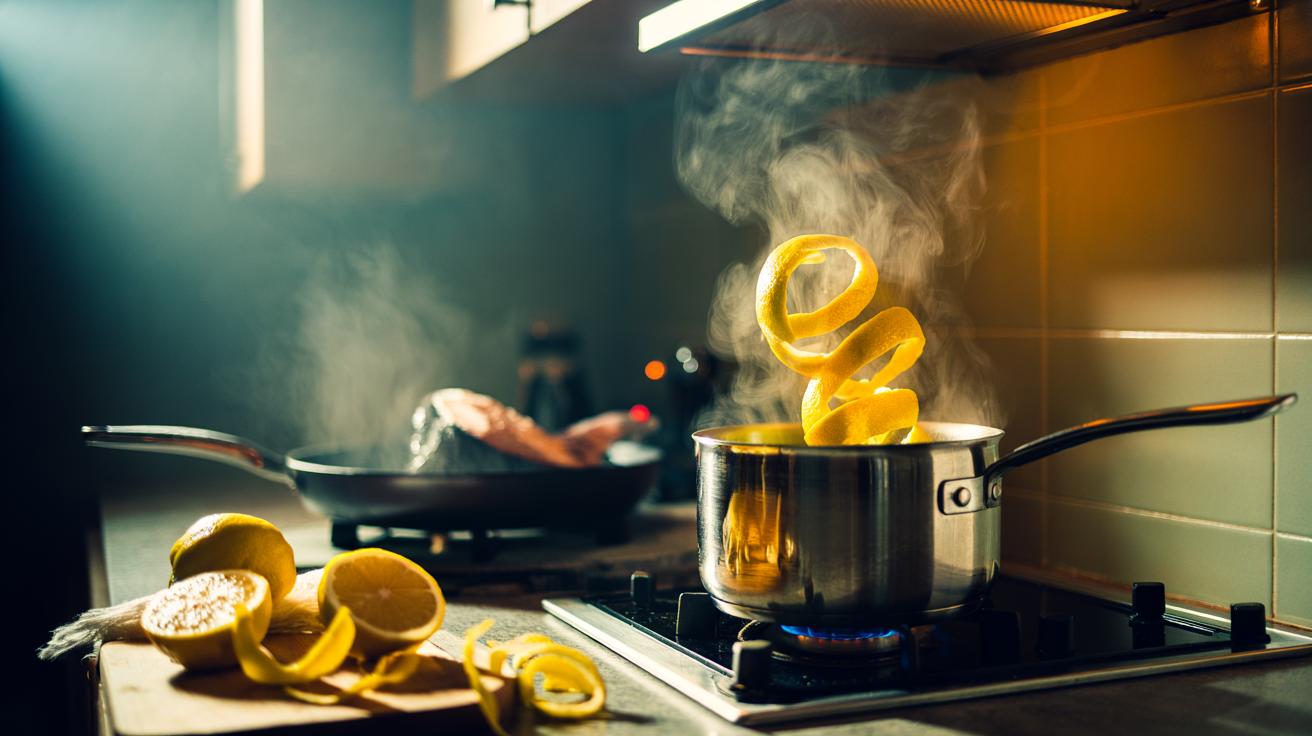
After cooking, gather the peels from two lemons — the zest and pith both help. Add them to a medium pan with about 750 ml of water. Bring to a brisk bubble, then drop to a steady simmer, lid off. Position the pan centrally, so the citrus steam rises where you cooked and where odours gathered. Give it 15–20 minutes, topping up water as needed to keep a visible vapour. Light ventilation is useful, but avoid a full blast: you want steam to mingle with the air before it escapes.
While it simmers, put open pans, wooden spoons, and chopping boards near the pot so the vapour bathes them. A quick wipe of nearby tiles with warm, lemon-scented condensate from the lid accelerates clean-up. For heavy odours, repeat with fresh peels. Do not add bicarbonate of soda; it neutralises the acidity you need. A splash of water at the end helps lift loosened grease. Dispose of peels in food waste; they’ve given up their best by now.
Beyond Lemon: Variations, Safety, and Evidence
Grapefruit and orange peels work too, but lemon brings the brightest acid and a sharper hit of terpenes. A teaspoon of white vinegar can be added if you’re short on peel, though the scent is harsher. Clove or bay lends a kitchen-friendly aroma without masking the action. Activated charcoal in a shallow tray absorbs lingering notes overnight, complementing the simmer. The key principle remains: use acidity to neutralise amines and aromatic oils to unsettle greasy films. Combining a short simmer with a swift surface wipe delivers the quickest reset.
Safety is simple: keep the simmer low, never leave it unattended, and watch water levels. Avoid polished stone splashbacks if you add vinegar, as acids can etch marble and limestone. Evidence comes from well-understood food chemistry: amines are tamed by acids; terpenes dissolve lipids; warm, moist air transports both. If odours persist after repeated attempts, check soft furnishings or filters in extractors, which often harbour the smell source. Changing a grease filter can be as transformative as the simmer itself.
The lemon peel simmer proves that clever chemistry can be both frugal and fragrant. By turning scraps into a targeted, citrus-powered cleanser, you neutralise the cause of fishy smells instead of hiding them. It’s a quick routine that fits neatly between setting plates to soak and wiping the hob, and the pay-off is a kitchen that smells as bright as it looks. One small pan, a handful of peel, and fifteen minutes can reset the room. Will you try the simmer tonight — or adapt it with your own citrus twist and report which blend works best in your kitchen?
Did you like it?4.4/5 (23)