In a nutshell
- 🍋 The lemon-steam method harnesses citrus oils and mild acid to lift cooking films, restoring shine to stainless steel without harsh chemicals.
- 🔬 Heat-driven steam volatilises limonene and terpenes while citric acid softens mineral traces; together they dissolve polymerised oils and loosen browned fond.
- 🧭 Steps: Simmer lemon peels in 1–2 cm water for 5–10 minutes with a lid; scrape gently with a wooden spatula; warm-pan buff with bicarbonate of soda and a microfibre cloth; rinse hot, dry, optional light oil polish.
- ⚠️ Care: Skip steel wool and bleach, avoid long acidic soaks; don’t use on aluminium or non-stick; for rainbow heat tint, wipe with warm water plus vinegar, then dry immediately.
- 🌱 Sustainability: Reuse peels as a biodegradable solvent, cut packaging and product use, prevent micro-scratches, and compost leftovers—saving time and money.
There’s a quiet revolution happening on British hobs: the lemon-steam method, a thrifty, low-impact way to restore the gleam of stainless steel pans without scouring pads or harsh chemicals. As the lemon heats, natural oils in the peel mingle with steam to loosen cooking stains, while a touch of citrus acidity helps detach stubborn films. The result is a fast, kitchen-safe clean that respects your cookware’s finish. This technique harnesses what you already have—citrus scraps, water, and heat—to do the heavy lifting. It’s not a miracle cure for deep pitting or warping, but for everyday burnt-on residue and greasy haze, it delivers a bright, polished pan with minimal effort.
How Lemon Steam and Natural Oils Work
When you simmer lemon slices or peels in a shallow layer of water, heat volatilises the peel’s limonene and other terpenes. These hydrophobic compounds act like gentle solvents, dissolving polymerised oils and loosened grease films that cling to stainless surfaces. At the same time, citric acid softens mineral traces and helps break down the bonds between browned fond and the pan. The combination of steam, mild acid, and citrus oils targets both greasy and sticky residues without scratching the steel. It’s chemistry, not elbow grease, doing the work.
Steam swells and rehydrates sticky layers formed by sugars and proteins, making them easier to release. The vapour carries micro-droplets of lemon oil into crevices, while heat accelerates emulsification, so residue lifts with a wipe. This process won’t reverse heat tint (that rainbow sheen from high temperatures), but it clears the veil of cooking film that mutes shine and causes streaking after washing. Think of it as a reset: remove the film first, then polish for a mirror finish.
Step-by-Step Guide to the Lemon-Steam Method
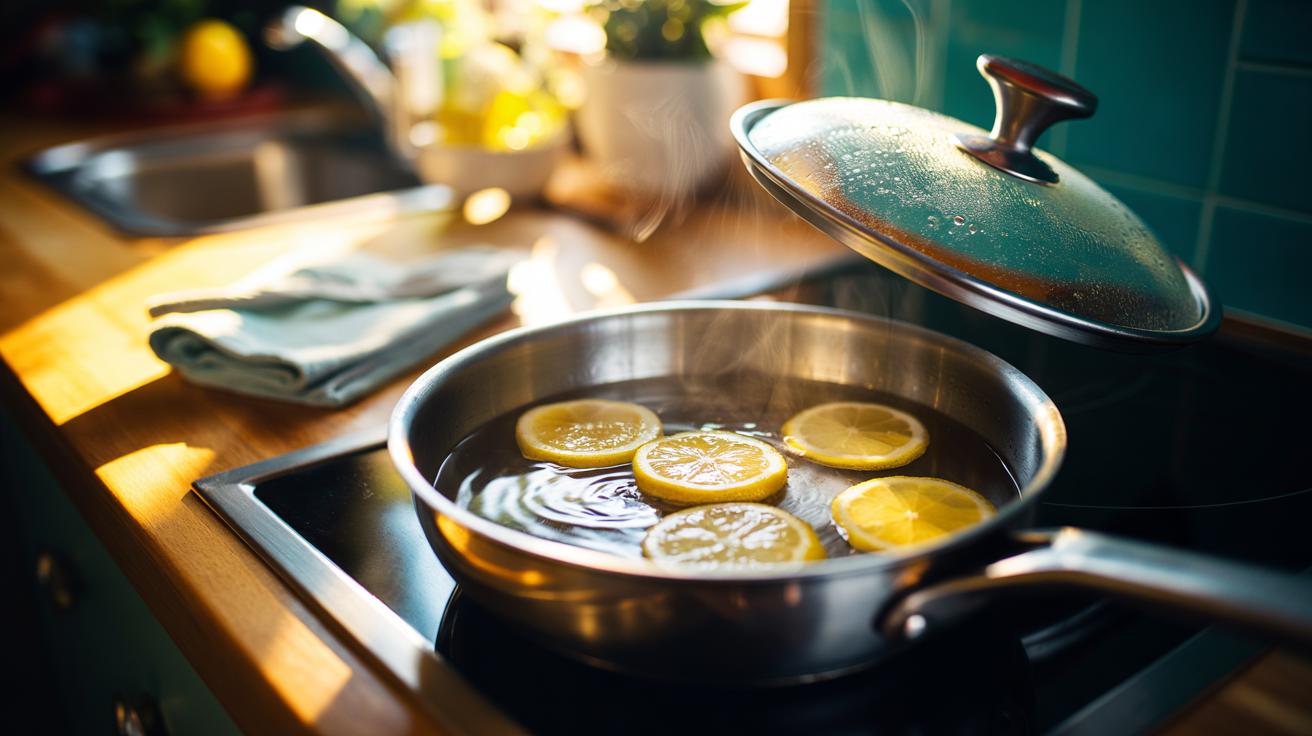
Lay used slices or peels from one lemon in the pan and add enough water to cover the base by 1–2 cm. Bring to a steady simmer with the lid on for 5–10 minutes; you want active steam, not a rolling boil. Lift the lid carefully, then use a wooden spatula to coax up loosened fond. Swirl the citrus water to reach the corners. Most of the greasy film will slip away at this stage, without pressure or abrasion. Pour off the liquid once browned bits and residue have released.
While the pan is still warm, sprinkle a little bicarbonate of soda and rub gently with a damp microfibre cloth, following the grain. This turns remaining oil into an easy-to-rinse slurry and neutralises lingering acidity. Rinse hot, then dry immediately with a towel to prevent water spots. For a final gleam, buff a drop of neutral cooking oil across the surface and wipe off. You’ll reveal the steel’s natural brilliance without scuffs or chemical odours.
| Item | Details |
|---|---|
| Ingredients | Water, lemon slices or peels (fresh or saved) |
| Heat Time | 5–10 minutes at a steady simmer with lid on |
| Tools | Lid, wooden spatula, microfibre cloth |
| Targets | Grease film, browned fond, light scorch marks |
| Not For | Aluminium pans, non-stick interiors, deep pitting |
Avoiding Pitfalls and Caring for Stainless Steel
Stainless steel rewards gentle care. Avoid steel wool and chlorine bleach, which can cause pitting or dullness. Don’t soak stainless for hours in acidic liquid; the lemon-steam method works quickly, so there’s no benefit to prolonged exposure. If you see rainbow heat tint, wipe with a cloth dipped in warm water and a splash of white vinegar, then rinse and dry. Always dry straight away to deter water spots and keep the metal bright. For stuck starches or caramel, repeat a short steam cycle rather than cranking up abrasives.
Take care with your wider cookware collection. Aluminium reacts with acids and may pit, so keep this method for stainless or enameled steel. Non-stick coatings don’t need citrus steam; use mild soap and a soft sponge instead. Salt can mark hot steel, so add it only after water boils during cooking. With light, regular maintenance, stainless will outlast trends and keep its showroom sheen.
Sustainability and Cost: Why This Hack Matters
This technique turns kitchen offcuts into a cleaning asset. The peel’s natural oils function as a biodegradable solvent, reducing reliance on specialty sprays and plastic bottles. You control the fragrance and potency, and there’s no harsh residue to rinse away. It’s a low-waste loop: eat the fruit, clean with the peel, compost what’s left. For households wary of irritants, citrus steam offers a gentler air profile than many perfumed detergents, while using only tap water, heat, and a fruit already on the shopping list.
There’s a budget case too. A single lemon yields multiple cleans, especially if you freeze peels for later. Stainless stays brighter for longer when films are removed promptly, which means less scrubbing, less water, and fewer micro-scratches that invite grime. Pair the method with routine drying and occasional bicarbonate buffing to maintain a showroom glow. Clean smarter, not harder, and your cookware—and bills—will show the difference.
From Sunday roast pans to weeknight pasta pots, the lemon-steam method restores clarity to stainless steel with minimal fuss. By blending heat, citrus oils, and a whisper of acid, it lifts the haze that detergents often leave behind and prepares the surface for a quick polish. It’s a simple ritual that respects both your cookware and your wallet. Give it a try the next time a pan looks tired after service, and adapt the steps to your kitchen rhythm. What other low-waste tricks could earn a permanent place beside your hob?
Did you like it?4.4/5 (21)