In a nutshell
- 🔬 Explains the science: acetic acid plus steam lowers pH, penetrates splatters, and latent heat softens residues—effective yet gentler than abrasives.
- 🧪 Step-by-step method: mix 60 ml white vinegar with 250 ml water (1:4), heat for 3–5 minutes, rest for 5 minutes, then wipe with a microfibre cloth.
- ⚠️ Safety and materials: use microwave-safe glass/ceramic, add a wooden stir stick to reduce superheating, avoid coloured vinegars, and keep clear of hot vapour.
- 🍋 Variations and extras: add lemon slices for scent, apply a bicarbonate of soda paste for stubborn marks, and use a brief second steam if needed.
- 🕒 Maintenance and odour control: clean seals and the turntable, air the cavity, use splatter guards, and repeat weekly for faster, chemical-light upkeep.
Microwave splatters have a way of cementing themselves to the walls, trapping odours and resisting the swipe of a damp cloth. There’s a simple, low-cost fix hiding in your cupboard: the vinegar-steam trick. When white vinegar is heated with water, it creates hot, acidic vapour that loosens grime, melts grease, and softens dried sauces without harsh chemicals or heavy scrubbing. This method relies on heat, moisture, and a gentle acid to do the heavy lifting for you. Below, you’ll find the science behind it, step-by-step guidance, and smart variations to tackle tough smells—so your microwave looks and smells like new in minutes.
Why Vinegar Steam Works: The Chemistry
White vinegar contains acetic acid (typically 5%), which drops the surface pH just enough to disrupt the bonds in dried food. Protein-based splatters, starchy sauces, and oily residues each cling differently, but the combination of heat and mild acidity helps break them down. In a microwave, water molecules energise rapidly, generating steam that diffuses acetic acid vapour across every corner of the cavity. The result is warm, moist acidity that dissolves residue and rehydrates crusted patches, so they lift easily with a cloth instead of scraping.
Steam is a delivery system with a bonus: as it condenses on cooler walls, it releases latent heat, warming and softening grime exactly where it sticks. That moisture seeps under dried edges, swelling and loosening them. A vinegar solution also cuts through light grease, helping it emulsify during the wipe-down. The process is kinder to enamel and glass than abrasive scouring pads. Most household microwaves tolerate this well, though it’s wise to avoid soaking vents and to test on older rubber trims before prolonged routines.
Step-By-Step: The Vinegar-Steam Clean
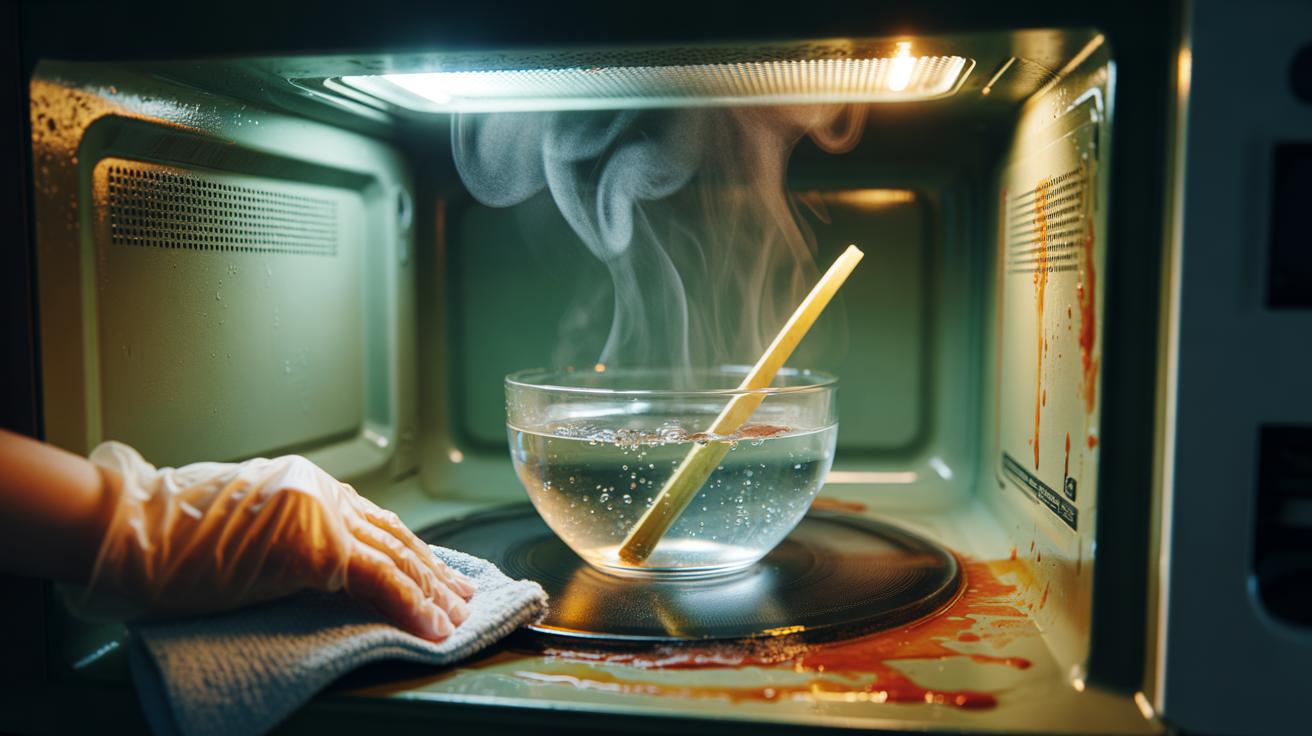
1) Fill a microwave-safe bowl or jug with 250 ml water and 60 ml distilled white vinegar (about 1:4). Drop in a wooden stir stick or bamboo skewer to minimise superheating. 2) Place it on the turntable and heat on High for 3–5 minutes, until it’s vigorously steaming. 3) Keep the door closed for 5 additional minutes to let vapour penetrate dried splatters. Do not rush this resting stage—the soak is where the softening magic happens. 4) Open carefully, remove the hot vessel with oven gloves, and lift out the turntable for easier access.
Wipe the interior with a soft microfibre cloth, starting from the roof and sides, then the floor. Stubborn specks usually slide off with a gentle pass; re-wet the cloth in the warm vinegar water as needed. For greasy corners, a second short steam burst (2 minutes) helps. Finish by drying surfaces to prevent streaks. Clean the door seal and latch area—they trap crumbs and smells. Repeat weekly in busy households to stop build-up before it bakes on, saving time and effort.
Safety, Materials, and Quick Variations
Use distilled white vinegar for neutral colour and predictable acidity. Malt or balsamic vinegars bring unwanted pigments and lingering fragrances. Always use a microwave-safe glass jug or ceramic bowl; avoid sealed containers that trap pressure. Let the vessel sit after heating so bubbles subside before you handle it, and keep faces and hands out of the immediate steam path. If your kitchen is small, crack a window while you wipe to dissipate tangy vapours. For a gentler scent, add a couple of lemon slices to the solution.
When time is tight, try a two-minute steam followed by a focused wipe on problem zones, then a 30-second top-up burst. For fresh spills, wipe immediately with a damp cloth and finish with a one-minute vinegar steam to prevent ghostly stains later. Where grease is heavy, a drop of mild washing-up liquid on the cloth speeds removal after the steam. Avoid abrasive pads; they scratch, making future residue cling more stubbornly.
| Item | Recommendation |
|---|---|
| Vinegar:Water Ratio | 1:4 (60 ml vinegar to 250 ml water) |
| Heating Time | 3–5 minutes on High, then 5-minute rest |
| Power Setting | High (900–1000W typical UK microwaves) |
| Optional Additions | Lemon slices for scent; clove for odour control |
| Safety Tip | Use a wooden stir stick to reduce superheating risk |
Tackling Tough Odours and Stubborn Stains
Tomato splatters and sugary sauces can polymerise into a glossy film, particularly on the roof. Do a full vinegar-steam cycle, then gently rub with a microfibre cloth. If residue remains, apply a paste of bicarbonate of soda and water, leave 10 minutes, and wipe clean; follow with a quick rinse wipe so no powdery film lingers. A second short steam often lifts the last shadowy halos. Remove and wash the turntable and roller ring—grease here keeps odours circulating even after the cavity looks clean.
For smoky or fishy smells, set a bowl with fresh vinegar inside the cool microwave for 10 minutes to absorb volatile compounds, then air it with the door ajar. Wipe the door seal channel and vent slots with a lightly dampened cloth, avoiding drips. Persistent funk may come from spattered grease behind the waveguide cover; if it’s stained or warped, consult your manual for safe cleaning or replacement. Keeping lids on bowls and using splatter guards dramatically reduces future clean-up time.
The vinegar-steam method is a small household habit with big payoffs: faster cleans, fewer chemicals, and a fresher kitchen. By combining heat, moisture, and mild acidity, it loosens grime where it clings and keeps odours in check. Once you master the ratio and timing, maintenance cleans take minutes and deep cleans become rare. Think of it as a weekly refresh that protects your appliance and your time. Will you try the classic white-vinegar steam, or will you experiment with citrus slices and a bicarbonate follow-up to tailor the routine to your kitchen’s toughest messes?
Did you like it?4.5/5 (28)