In a nutshell
- 🧽 The microfibre-rinse method pairs a damp cleaning cloth with a dry finishing cloth to control moisture, remove residue before it dries, and deliver streak-free glass.
- 💧 Hydrophobic polyester pushes water into the cloth while polyamide (nylon) wicks oils; split filaments thin the liquid film, preventing streak formation.
- 🛠️ Keep chemistry light: use a neutral detergent at 1–2 ml per litre, two buckets (clean/rinse), S-strokes, and finish within seconds; switch to distilled water in hard-water areas.
- 🧵 Choose tight glass-weave cloths: a 200–300 GSM finisher for low lint and a slightly higher GSM cleaner for controlled pickup and effortless polishing.
- 🧺 Care extends life: wash at 30–40°C with no fabric softeners, never with cotton, tumble low or line-dry, and retire cloths around 300 wash cycles to avoid haze and lint.
Streak-free panes are not sorcery; they are the outcome of controlled moisture, clean fibres, and a smart rinse routine. The microfiber-rinse method hinges on two principles: remove soil fully and prevent residue from drying on the glass. By pairing a damp, well-rinsed cloth with a dry finishing cloth, the window is cleaned and then immediately dewatered, denying streaks a chance to form. Use clean water, rotate to fresh cloth faces, and finish while the surface is still cool to the touch. Water-repellent fibres play a decisive role by managing how liquid behaves on the pane, guiding it into the cloth rather than letting it film across the surface.
What the Microfiber-Rinse Method Involves
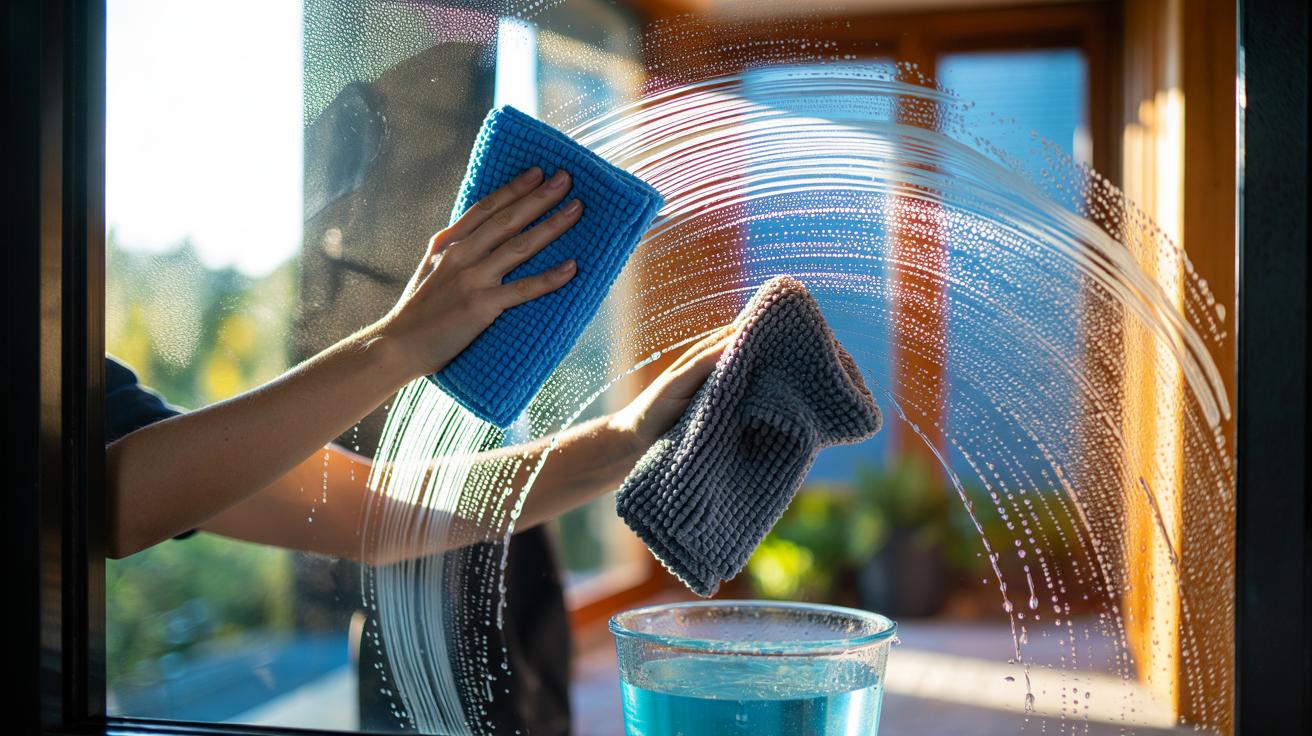
Start with two purpose-made glass microfibre cloths: one damp for cleaning, one dry for finishing. Lightly mist the pane or dampen the cleaning cloth with water containing a tiny dose of neutral detergent—around 1–2 ml per litre. Work the glass in overlapping S-strokes, keeping pressure even and edges tidy. After each small section, thoroughly rinse the cleaning cloth in a bucket of clear water to purge grit and surfactant, then wring well. Residue in your cloth equals residue on your window. Switch to fresh faces by folding the cloth into quarters, extending the time you’re wiping with a clean surface rather than redistributing soil.
Follow immediately with the dry finishing cloth. This step is the streak-killer: the low-lint, tight-weave glass cloth removes the last micro-film before it dries. Buff the perimeter first, where drips collect, then sweep across the central area with light, fast passes. Keep panes out of direct sun where possible to slow evaporation. Clean, rinse, and dry are three distinct actions—do not merge them if you want flawless results. Replace the rinse water once it clouds, and retire cloths at the first sign of linting.
Why Water-Repellent Fibres Cut Streaks
Microfibre is typically a split blend of polyester and polyamide (nylon). The polyester component is naturally hydrophobic, encouraging water to bead and move rather than sheet across glass; polyamide adds wicking and oil affinity. The split filaments create capillary channels that grab contaminants yet limit free water on the surface. By reducing the thickness of the liquid film at the glass–air boundary, hydrophobic fibres deprive streaks of the medium they need to form. The result is a controlled pickup: moisture is drawn into the cloth’s matrix, not left to evaporate into marks.
Fibre geometry and weave matter, too. Tight “glass-weave” cloths minimise lint and glide smoothly, generating gentle heat that accelerates evaporation without cooking residues onto the pane. A finishing cloth with lower GSM keeps drag down, so you polish rather than smear. Pairing a slightly more absorbent cleaning cloth with a fast-drying finisher exploits the fibres’ opposing behaviours—wicking and repelling—in your favour.
| Material/Feature | Property | Role in Streak-Free Results |
|---|---|---|
| Polyester (PE) | Hydrophobic, springy filaments | Limits surface water film; pushes moisture into cloth channels |
| Polyamide (Nylon) | Higher wicking and oil affinity | Lifts greasy residues that otherwise smear when dried |
| Glass-Weave Microfibre | Tight, low-lint construction | Polishes without shedding; reduces drag and haze |
Tools, Ratios, and Motions That Matter
Use two buckets if you’re working large areas: one for a light cleaning solution, one for clear rinse water. Keep chemistry minimal: a neutral detergent at tea-spoon levels per litre is enough to disrupt grease without leaving a film. If your tap water is hard, switch the final mist to distilled or deionised water or be scrupulous with the dry buff. More detergent does not mean cleaner; it means more residue to chase. Choose a 200–300 GSM glass cloth for finishing and a slightly higher GSM for initial cleaning where absorbency helps.
Technique prevents re-deposition. Fold cloths into quarters, rotate to a fresh face with each pass, and rinse after every pane or two. Work in an S-pattern with overlapping lanes; lead with the damp cloth, chase with the dry one within seconds. Detail the edges and frame seams first to stop dribbles. In warm weather, cool the glass with a light pre-mist to extend your working time. Speed plus sequence—not pressure—delivers optical clarity.
Care and Lifespan of Microfiber for Glass
Glass cloths thrive on the right laundry routine. Wash at 30–40°C with a liquid detergent free from fabric softeners and optical brighteners; avoid bleach. A second rinse helps purge surfactant that would later print on glass. Tumble dry low or line-dry; high heat can deform filaments and tame the split edges that do the work. Never wash microfibre with cotton—lint contamination is the fastest route to haze and specks. Store cloths folded, dedicated to glass only, in a sealed container or bag.
Treat equipment as consumables with standards. Retire cloths that shed, feel slick, or leave patterns, and audit them after about 300 wash cycles. To cut microfibre shedding into waterways, use a capture bag in the wash and skip aggressive spin speeds. Investing in higher-quality, tightly woven glass microfibre reduces lint and extends service life, keeping performance consistent from pane to pane and season to season.
Applied well, the microfiber-rinse method is quick, quiet, and kind to both glass and frames, delivering that crisp, high-contrast view without chemical haze. By exploiting water-repellent fibres to steer moisture and residues into the cloth—not across the pane—you make clarity repeatable in any light. Keep solutions lean, rinse religiously, and finish fast with a low-lint glass weave. Streak-free is a process, not a product. What will you change first—your detergent dose, your rinse routine, or the weave and GSM of the cloths you trust on your windows?
Did you like it?4.6/5 (24)