In a nutshell
- 🧪 Leaks are stopped fast by capillary action in intertwined cellulose fibres, whose porosity spreads drips horizontally to prevent pooling and punctures.
- 🧱 Optimal layering: a crumpled base for void space, 2–3 flat cross-grain sheets for all-direction wicking, and a top sheet up the sides; optionally add bicarbonate of soda for odour control.
- 🧩 Each layer has a role: the base as a shock absorber, middle layers creating capillary pathways, and the top for quick contact absorption—plus fibre filtration and liner protection.
- ⚖️ Compared with alternatives, newspaper balances speed, capacity, and cost; use a hybrid with corrugated cardboard for higher loads while keeping rapid wicking.
- 🌿 Sustainability and hygiene: modern vegetable-based inks often suit food-waste streams; replace layers with each bag change and clean monthly to cut odour and reduce plastic liner use.
In homes across the UK, a humble trick keeps kitchen bins from becoming sticky disasters: a few layers of yesterday’s paper laid neatly at the bottom. The idea sounds quaint, yet it uses serious physics. The fibres in newsprint create a sponge-like network that captures drips from food packaging, peels, and rinsed tins before they turn into odours. The result is fewer leaks, easier cleaning, and a bin liner that lasts longer. For households striving to cut plastic waste without compromising hygiene, lining with newspaper is a small, smart upgrade that works fast and costs nothing.
Why Newspaper Soaks Up Spills So Quickly
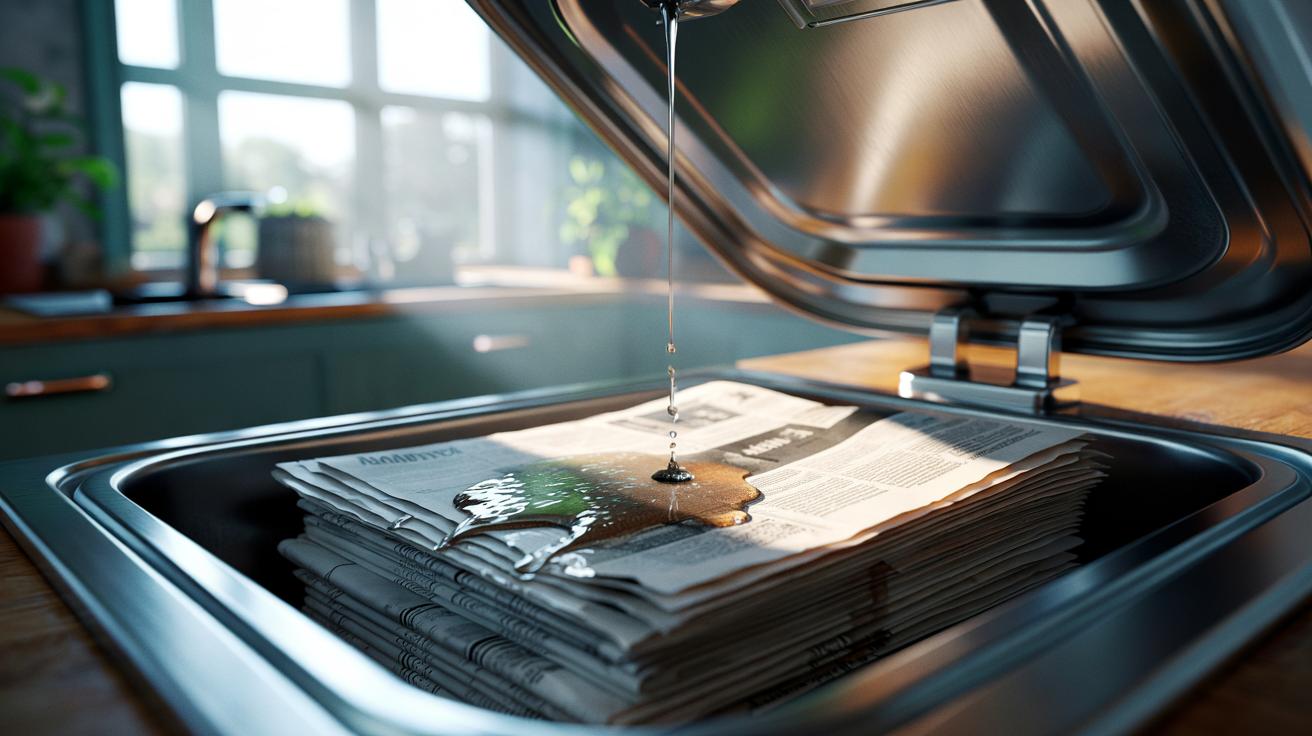
At the heart of the trick is capillary action. Newsprint is made from intertwined cellulose fibres with micro-gaps that pull liquid along their length, the same way a sponge drinks water. Those gaps create high porosity, offering space for droplets to spread and lock in. The sheet’s surface tension and the paper’s internal structure team up to wick fluids horizontally, so a small spill is dispersed before it can pool and escape. This rapid spread reduces pressure on any single spot and stops leaks early.
Another advantage is bulk without weight. Even a few sheets add thickness and resilience to the bin base, forming a cushion that resists punctures from sharp edges. Unlike kitchen roll, which tears in clumps, newsprint layers hold together when wet, buying time for the bin liner to do its job. By combining fast wicking with modest structural strength, newspaper offers an ideal first line of defence against messy bin liquids.
Layering Method: The Optimal Stack for Any Bin
Begin with a loose, crumpled sheet as the first contact layer. Those pockets of air create a void space that receives sudden drips, slowing their energy and guiding liquid toward absorbent fibres. Lay two to three flat sheets on top, rotated at right angles to create a cross-grain pattern that improves wicking in all directions. Finish with a final flat sheet that reaches slightly up the sides, forming a low splash barrier. This stack balances speed, capacity, and protection without adding bulk.
For busy kitchens, add a thin sprinkle of bicarbonate of soda between layers to neutralise odour and acidity. In households separating food waste, the same approach works in caddies: a crumpled base, a couple of flat sheets, and your liner on top. Replace the newspaper when you change the bag rather than waiting for a spill. Regular refresh keeps the system absorbent and prevents micro-leaks that can turn into hard-to-clean grime.
What the Layers Do: Filtration, Wicking, Containment
Each layer has a job. The crumpled base acts like a shock absorber, catching sudden leaks from packaging and creating channels that spread liquid sideways. The middle layers provide capillary pathways, drawing moisture away from the point of impact to reduce pooling. The top layer offers quick contact absorption while keeping the lower layers intact for backup. By distributing tasks across layers, the stack stays effective even under a heavy weekend clear-out.
There’s also a filtration effect. Fine fibres trap tiny food particles that would otherwise decay and smell, while the layered stack slows bacterial growth by reducing standing liquid. As a bonus, the added thickness buffers the bin liner from jagged tins or chicken-bone tips, lowering the risk of puncture. The net result is a calmer bin ecology: fewer leaks, fewer odours, and less abrasion on the liner.
How Newspaper Compares With Other Liners
Households often swap between kitchen roll, cardboard offcuts, and commercial absorbent pads. The differences come down to cost, capacity, speed, and disposal. Newspaper strikes a rare balance: fast action, decent capacity, and low or zero cost, with simple end-of-life options. Here’s a quick comparison to guide your choice:
| Material | Absorption Speed | Capacity | Cost | Disposal |
|---|---|---|---|---|
| Newspaper | Fast | Moderate | Free/low | Compost with food waste if accepted; not for paper recycling when soiled |
| Kitchen roll | Fast | Low–moderate | Ongoing | Often accepted in food waste; check local guidance |
| Cardboard | Medium | High | Low | Compostable if uncoated |
| Commercial pads | Very fast | High | Higher | General waste unless stated compostable |
| Cat litter (clay) | Medium | High | Moderate | General waste; heavy |
Newspaper’s edge is its availability and performance for everyday drips, not catastrophic spills. For persistent liquid waste, combine a newspaper base with a thin piece of corrugated cardboard to boost capacity without sacrificing speed. This hybrid approach handles both quick leaks and slow seepage while remaining low-cost and easy to dispose of responsibly.
Sustainability and Hygiene Considerations
From a sustainability perspective, newspaper helps you use fewer bin liners and keep them intact longer. Modern UK papers typically use vegetable-based inks, which are compatible with many council food-waste schemes when the paper is wet or greasy; always check local rules. Soiled paper should not enter the clean paper-recycling stream. If you compost at home, avoid layers heavily contaminated with oils or meat juices and opt for plant-based scraps instead.
Hygiene hinges on routine. Swap the newspaper with every bag change and after any noticeable spill. Wash the bin monthly with hot water and a mild detergent or diluted vinegar, then dry before relining. Reserve this method for ordinary household liquids—tea dregs, salad rinse, condensation from bottles—rather than chemicals or motor oils. Used sensibly, newspaper lining elevates day-to-day cleanliness while trimming plastic waste and unpleasant smells.
In a cost-of-living era, small domestic tweaks earn their keep, and the newspaper-at-the-bottom method is a rare case of free, fast, and effective. It harnesses simple physics, cuts odour, and stretches the life of your bin liner without adding clutter or faff. The principle is clear: smart layers catch liquid before it becomes a problem. How might you adapt this approach in your own home—mixing materials, adjusting the number of layers, or tailoring it to different bins—to build a cleaner, more resilient routine?
Did you like it?4.5/5 (26)