In a nutshell
- 🍋 Citric acid in lemon lowers pH (≈2–3), promotes limited hydrolysis of polymerised grease and chelates minerals, loosening burnt fat and scale that bind to hob rings.
- 🧽 Method: warm (not hot) hob, rub half a lemon with a pinch of salt for micro-abrasion, let dwell 5–10 minutes, scrub, then rinse with hot water and a drop of washing-up liquid; dry and polish with the grain on stainless steel.
- ⚠️ Safety: never mix acids with bleach or ammonia; test first on sensitive finishes and avoid prolonged contact on bare aluminium or natural stone.
- 🔁 Alternatives: use white vinegar for limescale or a controlled citric acid solution for soaking removable parts; pair acid loosening with detergent lifting—but keep chemistries separate in time.
- ♻️ Value: a lemon half is low-cost, low-waste, encourages regular maintenance, and often outperforms pricier sprays; for lacquer-hard carbon, follow a citrus cycle with a separate, rinsed alkaline degreaser.
As winter stews and weekend fry-ups take their toll, many of us confront the same kitchen eyesore: grimy hob rings mottled with burnt-on fat. There’s an old trick hiding in the fruit bowl. Rub half a lemon over the crust and the gunk loosens, releases, and wipes away. It feels like magic, yet there’s sober chemistry behind the shine. Acid cuts through residues that ordinary elbow grease can’t touch, especially when teamed with a pinch of salt and a warm rinse. Here’s how a simple citrus wedge outperforms pricier sprays, why it works, and when to reach for a different approach.
Why Lemon Acid Lifts Burnt Fat
The business end of a lemon is citric acid, a weak organic acid that drops surface pH to around 2–3 where microbes and mineral films struggle. On a greasy hob, two forces help. First, acid can promote hydrolysis of the ester bonds in cooking oil residues, particularly where heat has partially oxidised or polymerised them. While base catalysis is faster, acidity still destabilises the network, softening the crust so it can be dislodged. Second, citric acid is a potent chelating agent, binding calcium, magnesium, and iron. That breaks the grip of limescale and rust tints that glue polymerised grease to enamel and steel.
Then there’s physics. The lemon’s pulp delivers moisture and a trace of natural surfactants that help emulsify softened fats. A sprinkle of table salt adds fine abrasion, scuffing microcracks in the carbonised layer. Letting the juice dwell for a few minutes matters: diffusion needs time to work into pores and seams. Warmth accelerates both diffusion and reaction rates, which is why cleaning while the hob is just cool enough to touch often yields faster results and a brighter finish.
A Step-by-Step Method for Hob Rings
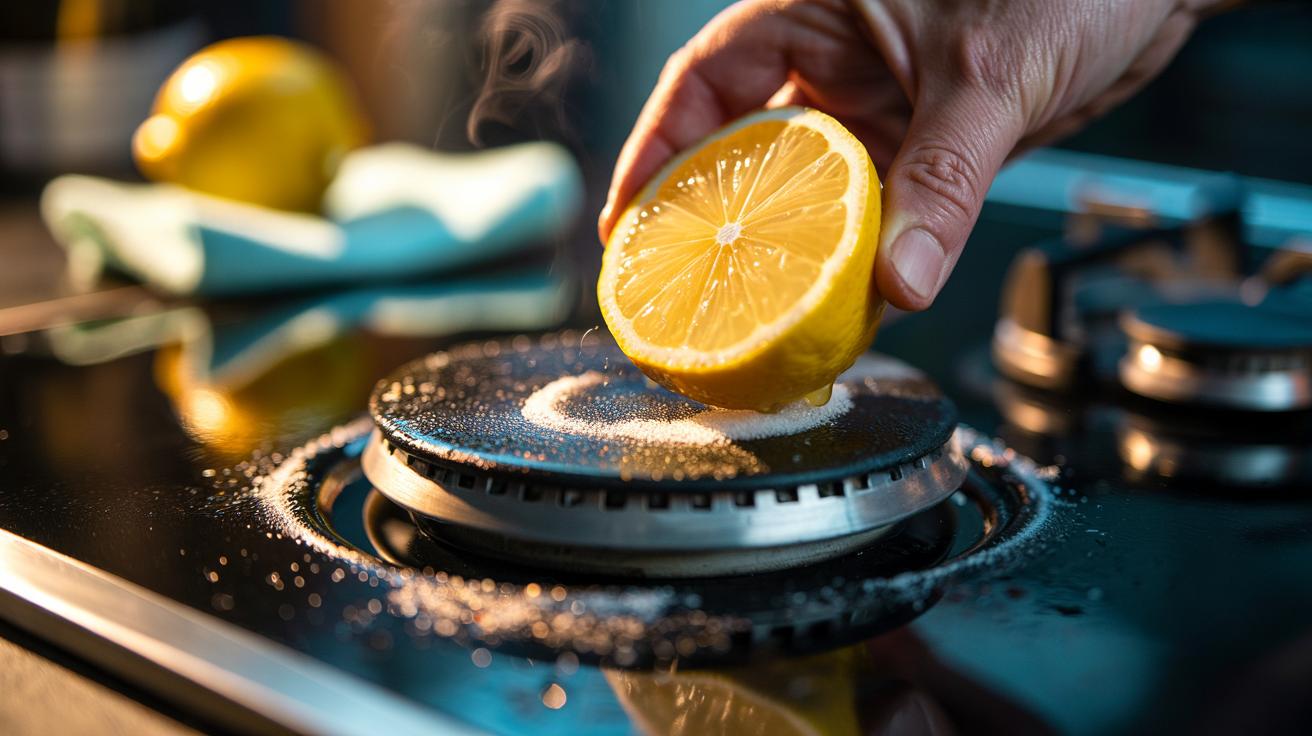
Start with safety. Turn off the gas or power and ensure the hob is warm, not hot. Halve a fresh lemon and squeeze lightly onto the ring, letting juice pool along stubborn rings of grease. Press the cut face to the surface and massage in small circles. For serious build-up, scatter a teaspoon of fine salt or bicarbonate around the ring. Do not mix with bleach. The salt provides micro-abrasion; bicarbonate adds gentle lift without neutralising all the acidity if used sparingly and sequentially.
Leave the acid to dwell for five to ten minutes. Re-scrub with the lemon, then use a non-scratch pad to loosen the last scraps. Rinse with hot water, or wipe with a cloth dipped in very warm water mixed with a drop of washing-up liquid to emulsify any remaining fat. Dry with a microfibre cloth to avoid water spots and iron streaks. On stainless steel, polish with the grain. Test any method on an inconspicuous patch first, and avoid prolonged contact on bare aluminium, where acids can blemish the surface.
When a Lemon Is Not Enough: Alternatives and Pairings
Some burnt residues cross the line into lacquer-hard carbon. In those cases, repeat lemon cycles or escalate thoughtfully. White vinegar (acetic acid) offers similar de-scaling power, especially on mineral rings welded by boiling pasta water or spillovers. Food-grade citric acid powder dissolved in hot water makes a stronger, controlled solution for enameled parts soaked in a bowl. Pair acids with a tiny amount of detergent after the dwell time: acid loosens, surfactant lifts, and heat disperses. Never combine acids with bleach or ammonia; harmful gases and corrosion can result.
The guide below compares common kitchen acids and where they excel. Note the cautions for natural stone worktops and bare aluminium components. Follow up any acidic clean with a thorough rinse to neutralise residue and protect metal trims from dulling.
| Cleaner | Typical pH | Best For | Avoid On | Notes |
|---|---|---|---|---|
| Lemon (Citric Acid) | 2–3 | Grease softening, light scale, odour | Bare aluminium, natural stone | Let dwell 5–10 minutes; add salt for abrasion |
| White Vinegar | 2–3 | Limescale rings, soap scum | Natural stone, cast iron seasoning | Follow with detergent rinse |
| Citric Acid Solution | 2–3 (adjustable) | Soaking removable parts | Bare aluminium | Rinse and dry thoroughly |
Sustainability, Cost, and Kitchen Pragmatism
In a cost-of-living squeeze, a half lemon is both frugal and effective. You’re not buying a specialist product, you’re finishing a piece of fruit. Lower packaging, fewer volatile solvents, and a biodegradable acid make it a tidy swap for many jobs. It also encourages little-and-often maintenance, which prevents grease from polymerising into the truly stubborn films that demand harsher agents. Still, thrift should not trump safety: wear light gloves if you have sensitive skin or cuts, and ventilate the kitchen when wiping down large areas.
For the toughest rings around gas burners or enamel that’s started to craze, choose pragmatism. A citrus cycle loosens; a measured application of an alkaline degreaser (used separately, then rinsed) may complete the job. Keep acids and alkalis apart in time and space, and never mix cleaning chemistries in the same bowl. The practical rule is simple: pre-soften, lift, rinse, dry. Done right, you preserve finishes, avoid harsh fumes, and keep the hob sparkling for the next meal.
There’s satisfying clarity in this small domestic alchemy: acid dismantles the bonds holding burnt fat and scale in place, and a warm rinse carries the rubble away. A lemon half won’t fix every kitchen battle, yet it punches above its weight when deployed with patience, salt, and a good microfibre cloth. After your next fry-up, try the citrus route before reaching for a chemical cocktail. What stubborn patch on your hob are you most curious to challenge with a simple wedge of lemon?
Did you like it?4.5/5 (21)