In a nutshell
- 📰 Newspaper works fast thanks to cellulose fibres and capillary action, creating a moisture gradient that wicks liquid and vapour from shoe interiors without heat.
- 🧰 Step-by-step: remove laces/insoles, crumple strips, pack snugly (not crushing), then swap the paper after 30–45 minutes and leave overnight with light airflow for optimal drying.
- 🔄 Method comparison: newspaper offers the best balance of speed, cost, and safety; direct heat risks cracking and glue failure, while fans and desiccants are slower or better for maintenance.
- 🛡️ Care and prevention: act quickly to deter bacteria and mould, line pale leather to avoid ink transfer, use bicarbonate of soda for odour, and store in ventilated spaces.
- 🌧️ Practical tweaks: repeat for heavy boots, pair with gentle airflow, rotate footwear, avoid glossy inserts, and never use direct heat to protect materials.
It sounds like folklore, yet the old newsroom trick is backed by elegant physics: stuff damp shoes with newspaper and they are often dry by morning. The mix of cellulose fibres, capillary channels, and large surface area turns yesterday’s headlines into a rapid moisture wick. In a cost-of-living era, that’s not quaint—it’s practical. Because paper pulls liquid and vapour simultaneously, shoes dry faster without harsh heat. From trainers sodden after a downpour to leather brogues splashed on the commute, the method works quietly while you sleep. Here’s how and why the “newspaper in wet shoes” fix outperforms pricey gadgets—and how to do it safely.
Why Newspaper Draws Water So Quickly
Newspaper is built from interlaced cellulose, a material that is naturally hydrophilic. Each fibre bristles with microscopic sites that attract water molecules. When you tightly pack sheets into a shoe, you create a dense forest of capillaries. Liquid water and humid air migrate into these channels, then spread across the sprawling internal surface area. This capillary action is the same phenomenon that pulls coffee up a paper towel. The more intimate the contact between paper and the shoe’s damp lining, the faster the transfer. That intimacy is why properly stuffed paper beats air-drying alone.
There’s also a vapour dynamic at play. Wet shoes create a pocket of humid air; dry paper lowers the local vapour pressure, encouraging moisture to move from shoe materials into the paper. As the outer layers of paper saturate, inner layers keep pulling, maintaining a moisture gradient. The result is sustained wicking without heat, which protects adhesives and finishes that can suffer on a radiator. Low cost, low risk, high throughput: peak home science.
Step-by-Step Method for Stuffing Shoes
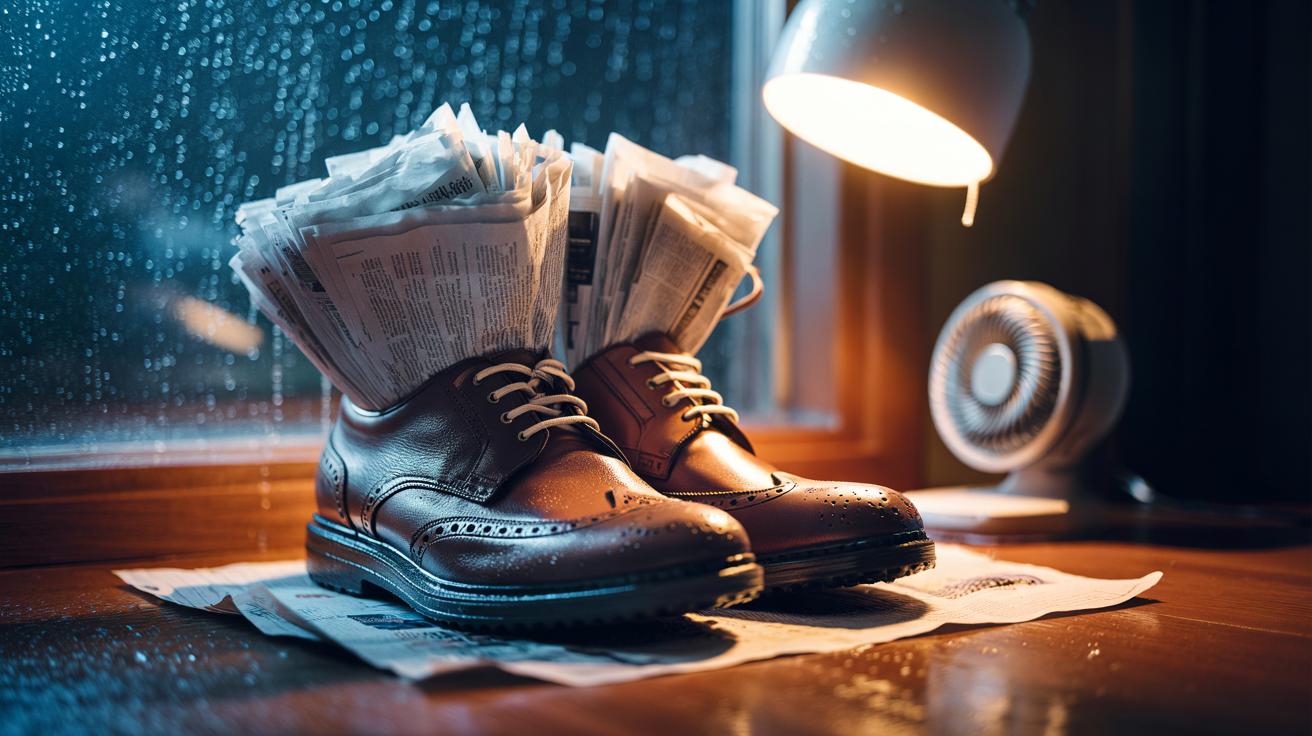
First, remove laces and insoles. Pat away standing water with a clean cloth. Tear newspaper into hand-sized strips—avoid glossy inserts that resist water. Loosely crumple the first layer to increase surface area, then pack the toe box firmly, working backward to the heel. Add a second layer that presses against the upper, tongue, and collar. Good stuffing should feel snug, not crushing. For light leathers, place a sheet of plain kitchen roll between the shoe and the paper to prevent ink transfer.
Change the newspaper after 30–45 minutes—this first swap removes the bulk of free water. Re-stuff densely, then leave overnight in a ventilated room. Place shoes on their sides to expose the outsole vents and speed airflow. If you own a small desk fan, set it to a gentle breeze across the shoes; moving air helps carry off evaporated moisture without the risks of direct heat. By morning, most fabrics and many leathers are dry to the touch.
For persistent damp (heavy hiking boots, winter linings), repeat the cycle once more. You can boost hygiene by sprinkling a teaspoon of bicarbonate of soda on the insole after drying, then tapping it out later. Never rush with hairdryers or radiators—glues can soften and leather can crack. The newspaper method is patient but protective.
Comparing Drying Methods at Home
Not all drying is equal. The best approach balances speed, cost, and safety for the material. Newspaper sits in a sweet spot: it’s cheap, fast enough for overnight results, and kind to adhesives and leather. Heated radiators promise speed but risk warping and cracking. Fans are gentle but slow without an absorbent partner. Desiccants like silica gel excel for maintenance rather than rescue jobs. The table below summarises typical outcomes.
| Method | Speed | Cost | Risks | Best Use |
|---|---|---|---|---|
| Newspaper stuffing | Overnight | Very low | Ink transfer on pale leather | General drying without heat |
| Radiator/direct heat | Fast | Low | Cracking, glue failure, warping | Emergency speed (not for leather) |
| Fan-only airflow | Moderate | Low | Slow on heavy materials | Supplement to newspaper |
| Rice in a bag | Slow | Low–moderate | Dust, limited capacity | Small items, light damp |
| Silica gel packs | Moderate | Moderate | Insufficient for soaked shoes | Ongoing moisture control |
If it’s raining for days, pair newspaper with gentle airflow. That combination creates constant evaporation plus capture, preventing the clammy cycle where shoes feel dry outside but stay humid inside. For athletes, consider rotating pairs: while one dries with paper, the other is ready to wear. The same physics explains boot-stuffing with unprinted packing paper or brown kraft—both are cellulose-rich and work well when ink is a concern.
Preventing Damage, Odour, and Mould
Damp interiors invite bacteria and fungi, the culprits behind shoe odour and those dark mould freckles. Speed matters: stuff shoes as soon as you come in. Remove insoles to dry separately; many contain foam that traps water. If shoes were in muddy puddles, wipe the exterior first to stop grit from abrading the leather as it dries. For pale or delicate materials, line with plain tissue or kitchen roll before the newspaper to avoid marks. Choose newsprint pages over glossy magazines—the coating repels water and slows wicking.
After drying, let shoes breathe for an extra hour. Then condition leather lightly to restore oils lost to water exposure; avoid over-conditioning, which softens structure. To deter odour, use a pinch of bicarbonate of soda or a cedar shoe tree between wears. Store in a cool, ventilated space—never sealed plastic—which prevents trapped humidity. If a musty smell lingers, repeat the newspaper cycle and add a short fan session. Quick action prevents lasting damage, and this low-tech routine keeps footwear fresher for longer.
Old news turns into new utility when you need dry shoes by dawn. By combining capillary action and smart airflow, the newspaper method wicks liquid, lowers vapour pressure, and protects materials that hate heat. It’s inexpensive, widely available, and surprisingly fast—often the best balance of care and convenience for everyday footwear. The secret is firm stuffing and a timely paper swap. As winter rain and summer downpours keep testing our wardrobes, what’s your go-to drying set-up—and which tweaks have made your overnight results reliably crisp by morning?
Did you like it?4.5/5 (26)