In a nutshell
- 🔥 Heat + acid synergy: a hot vinegar cloth softens pressure‑sensitive adhesives, reducing viscosity so residue releases quickly.
- 🧪 Chemistry in brief: acetic acid (5%) disrupts polar interactions, while heat (≈60–70°C) boosts diffusion and weakens the glue’s interface.
- 🧰 Method: soak, wring, apply 2–5 minutes, rub gently, use a plastic scraper, then soap-and-water rinse; test first.
- 🛡️ Surfaces: excellent on glass, tiles, and stainless steel; moderate on sealed wood; avoid natural stone and electronics with wet cloths.
- 🧼 Alternatives & safety: use a hair dryer, citrus cleaner, or oil where vinegar isn’t suitable; keep contact brief and avoid metal blades.
Sticky labels on jars, price tags on glass, and film left by tape can turn a tidy home into a tacky mess. A simple fix is the hot vinegar cloth—a household trick that harnesses heat and acetic acid to loosen and lift adhesive residue in minutes. When applied correctly, it works fast, it’s inexpensive, and it beats abrasive scrubbing. Warmth softens the glue’s grip; vinegar weakens the chemical bonds, leaving the surface clean without scratches. This guide explains the science, the method, and where to use it safely. Keep a kettle and a cotton cloth to hand: you’re about to turn a sticky problem into a straightforward wipe-away job.
Why Heat and Acid Disarm Sticky Adhesives
Most sticker glues are pressure-sensitive adhesives (PSAs), built to be tacky at room temperature. They rely on viscoelastic polymers that flow slightly to wet the surface and then hold. When you add heat—around 60–70°C—those polymers become more mobile. Heat reduces viscosity and relaxes the bond, so the adhesive can’t cling with the same strength. At the same time, PSAs often contain tackifiers and plasticisers that soften further under warmth, encouraging the glue to lift cleanly rather than shear into stubborn smears.
Vinegar helps for a different reason. Household white vinegar (5% acetic acid) is mild, yet it can disrupt polar interactions and begin to solvate residues, especially those with resin or acrylic components. Acid interferes with the glue’s surface energy and bond chemistry, weakening the interface so the softened adhesive wipes away. Heat also speeds diffusion, so the warm vinegar penetrates faster than a cold solvent alone. The net result is a quick, low-risk way to break the glue’s hold without harsh chemicals.
Step-by-Step: The Hot Vinegar Cloth Method
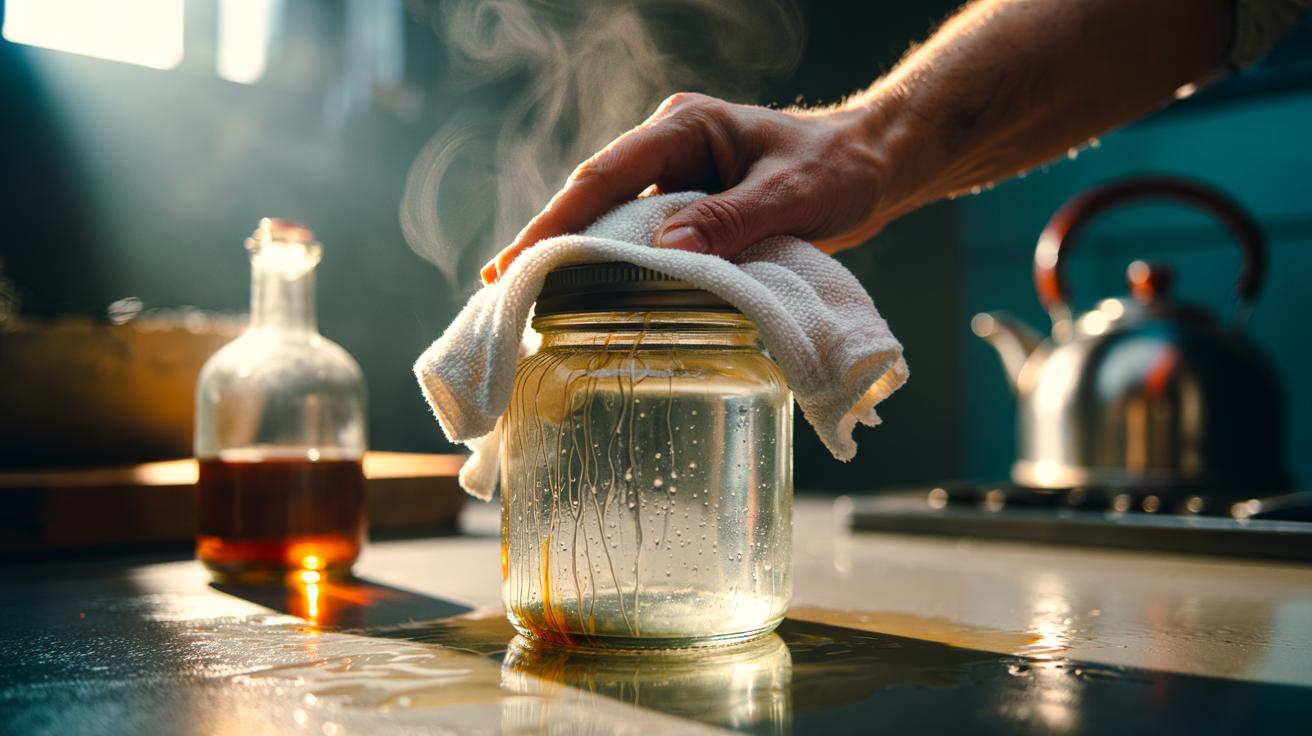
Start with distilled white vinegar. Heat a cup in a microwave-safe jug or on the hob until hot but not boiling (target 60–70°C). Soak a clean cotton cloth, then wring until damp, not dripping. Always test on an inconspicuous spot first. Lay the hot cloth over the residue for 2–5 minutes. The warmth softens the adhesive while the acetic acid begins to loosen it. Lift the cloth and gently rub in small circles. Most residue will smear and then release; add fresh hot vinegar if the cloth cools too quickly.
For thicker labels, peel what you can first. Reapply the hot cloth and use a plastic scraper or an old bank card to coax the remaining film away at a low angle. Do not gouge or use metal blades on delicate surfaces. Wipe with a clean, vinegar-damp cloth to collect the softened residue. Finish by rinsing with warm water and a drop of dish soap to neutralise any acid trace, then dry with a lint-free towel. If a ghostly outline remains, repeat once; persistence beats force.
What Surfaces Welcome Vinegar—and Which Do Not
The method shines on glass, glazed ceramics, stainless steel, and many plastics because these materials tolerate heat and mild acid. Painted metal and sealed wood are often fine for brief contact, provided you don’t scrub aggressively. Unsealed wood, natural stone, and sensitive coatings can react badly to acid, so reduce temperature, shorten contact time, or switch to a hair dryer alone. For electronics, never apply a wet cloth directly; warm the sticker with dry heat and spot-clean with a barely damp cotton bud. When in doubt, a quick test patch protects the finish.
| Material | Hot Vinegar Suitability | Notes |
|---|---|---|
| Glass, glazed tile, stainless steel | Excellent | Full temperature range; 2–5 min contact safe. |
| HDPE/PP plastics, PET | Good | Use moderate heat; avoid warping thin plastics. |
| Painted metal, sealed wood | Moderate | Short contact; test first to avoid softening finishes. |
| Marble, limestone, terrazzo | Poor | Acid etches stone; use dry heat and pH-neutral cleaners. |
| Unsealed wood, electronics | Avoid | Risk of swelling or ingress; use dry heat and minimal solvent. |
If you must skip vinegar, a hair dryer or low setting on a heat gun often frees labels without chemicals. Where adhesive remains, try a drop of cooking oil to lift oily residues or a citrus-based cleaner for resinous glues. Keep ventilation in mind and avoid mixing solvents. Whatever the surface, the safest path is measured heat, gentle tools, and a patient wipe-down rather than heavy scraping.
Used with care, the hot vinegar cloth turns the fiddly job of sticker removal into a quick household win. Heat softens the adhesive’s backbone; acetic acid loosens its grip; a clean cloth does the rest. Minimal effort, minimal risk, maximum payoff. The technique is frugal, low-tox, and repeatable, and it preserves finishes that sandpaper or blades might ruin. Next time a price tag or tape residue dares you to pick and scratch, reach for the kettle and the vinegar first. What surface in your home is begging for a careful test of this method, and how will you adapt the steps to suit it?
Did you like it?4.5/5 (28)