In a nutshell
- 🔊 Squeaks come from movement and friction between boards and the joist; map hotspots by slow walking and marking the precise squeak line.
- 📰 Rolled newspaper shims are compressible fibres that expand contact area and dampen micro‑movement, offering a cheap, tunable, reversible fix.
- 🛠️ Method: locate the epicentre, roll and tape newsprint, insert from below or ease a board to slide it in, then test; avoid hidden pipes/cables and use light PVA only if needed.
- 🌦️ Best in dry conditions; humidity shortens life. Paper suits fine gaps, while card, timber, or plastic wedges fit larger, stable gaps and last longer.
- 🏗️ When paper isn’t enough, use pilot‑screwed fixes, groove adhesive, timber shims, or add noggins; treat paper as a diagnostic to confirm movement before structural work.
There’s a wonderfully thrifty British fix for floors that groan like a vintage bus: the rolled newspaper shim. It sounds eccentric, yet it works because noisy boards are rarely about ghosts and always about movement. When timber dries, swells, or loosens around fasteners, it starts rubbing against its neighbour or the joist below. The rolled paper, tucked into that tiny gap, damps the movement and spreads pressure. This is a reversible, low-risk intervention that costs pennies and often buys years of quiet. Whether you’re in a Victorian terrace or a 1970s semi, understanding why a simple paper shim muffles the squeak gives you control over a problem that once seemed inevitable.
Why Floorboards Squeak and Where the Noise Starts
Every creak begins with two surfaces slipping: board against board, board against joist, or a loose nail shaft rubbing within a hole. Seasonal shifts alter humidity inside timber fibres, creating micro-gaps. Furniture loads and footfall act like bellows, flexing boards ever so slightly. That imperceptible slide creates friction, and friction produces sound. Historic floors often hide a patchwork of repairs, mixed fasteners, and pipes notched through joists, each one an invitation to micro-movement. A squeak is movement, not mystery—remove the movement and the noise goes with it. Identify where pressure triggers the sound by walking slowly, heel-to-toe, chalking suspect spots as you go.
Common hotspots sit along the edge where boards meet a subfloor bearer, around radiators where heat cycles are strongest, and near stair landings where traffic is concentrated. In tongue-and-groove floors, worn tongues click against grooves; in plank floors, edges nibble at each other. Older cut nails can loosen, then sing in their holes. Even in plywood overlays, staples can fret. The quickest relief comes from targeted shimming—slipping a material into the gap to stabilise the interface and create broad contact. That’s where the humble newspaper roll earns its reputation.
Paper Shims Explained: The Science Behind the Silence
Rolled newsprint is a compressible, fibrous wedge. By compacting sheets tightly, you create a dense cylinder that still has micro-give. Pressed into a gap, it increases the contact area and acts as a tiny shock absorber. That dual action—spread and damp—kills the squeak. The fibres deform under load, reducing the slip that causes noise, and then rebound, keeping the joint snug. Paper shims work by turning sharp, squeak-making edges into cushioned interfaces that dissipate energy. Because the material is cheap and disposable, you can tune it: add a wrap to thicken, remove one to fine-tune. It’s surprisingly robust when kept dry.
Critics worry about longevity, and the answer lies in conditions. In a ventilated void with stable humidity, a well-packed paper shim can last for years. In damp cellars or bathrooms with persistent steam, it may soften. That’s why placement matters: target the exact gap, keep it out of standing moisture, and avoid compressing soaked wood. Where gaps are variable, paper’s adaptability beats rigid wedges, which can create new pressure points. For clarity, here’s how it stacks up against other quick shims:
| Shim Material | Approx. Thickness per Layer | Compressibility | Expected Longevity | Best Use |
|---|---|---|---|---|
| Rolled Newspaper | 0.2–0.4 mm per sheet | High | 1–5 years (dry areas) | Fine gaps, tunable fit |
| Cardboard/Cardstock | 0.3–1 mm per layer | Medium | 1–3 years | Moderate gaps, quick packers |
| Timber Shim | Fixed | Low | 5+ years | Larger gaps, structural bedding |
| Plastic Wedge | Fixed | Very Low | 5+ years | Permanent, dry stable gaps |
How to Use an Old Newspaper Roll as a Shim
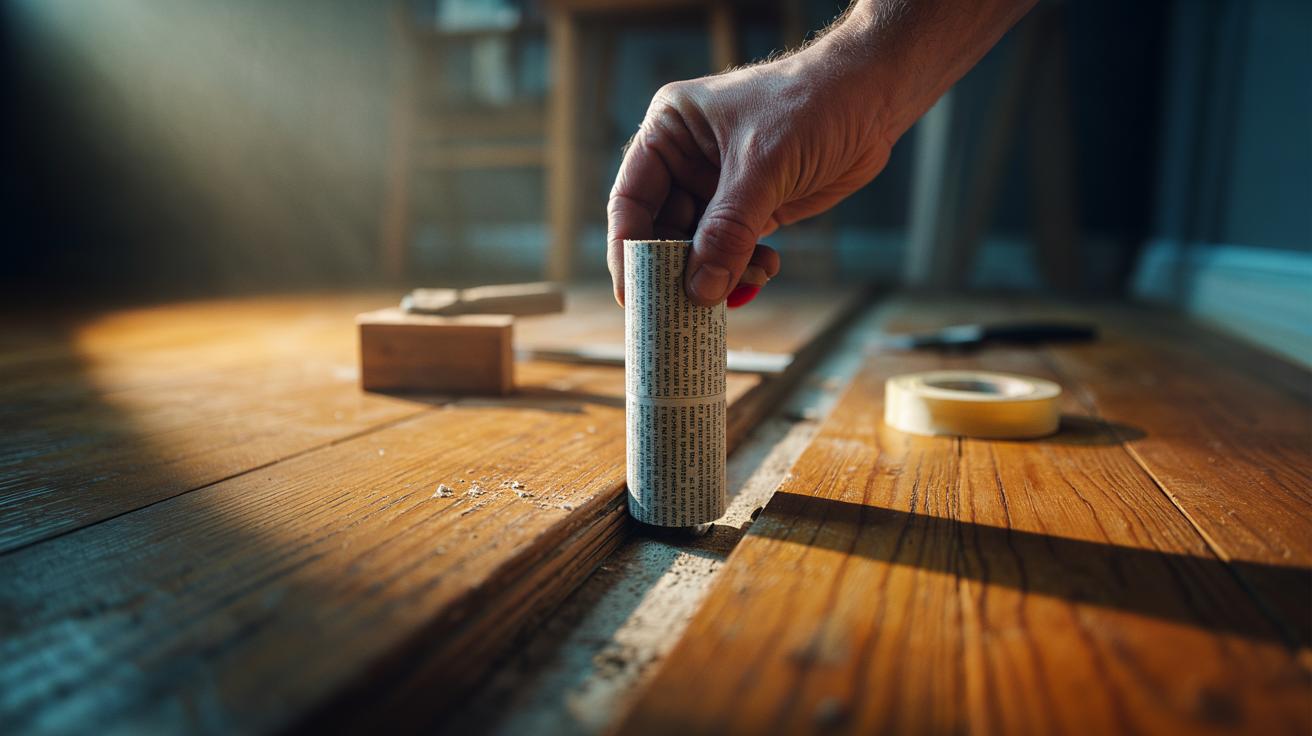
First, find the epicentre. Walk the suspect area slowly, pressing along board edges and near fixings, marking the precise squeak line. If you can access underneath—via a cellar hatch or under-stair cupboard—listen while someone applies pressure above. Never drive screws where you cannot see what lies beneath; pipes and cables love to hide in joists. Prepare your shim by rolling newspaper tightly into a cigar, binding it with a strip of masking tape so it holds shape. The aim is a firm, slightly compressible roll that you can incrementally fatten by adding a wrap.
Approach from below if possible: press the roll between the joist top and the board until snug, tapping gently with a wooden block. From above, lift a board edge minimally by backing out one screw or easing a nail, then slide the roll into the hairline gap and reseat the fixing. Test with body weight; if the squeak persists, adjust thickness. A smear of PVA on the roll can lock fibres and resist humidity, but keep adhesives modest so the repair stays reversible. The sweet spot is tight enough to stop movement, not so tight that you create a bulge or new stress point.
When Paper Is Not Enough: Alternatives and Long-Term Fixes
Paper can quell most chatty boards, but structural issues demand more. If a joist has settled or a board is cupped, supplement shims with pilot holes and trim-head screws to draw the board down cleanly without splitting. Where tongues are worn, inject a bead of construction adhesive along the groove and weight overnight. In basements, consider thin timber shims bedded in adhesive for larger, stable gaps. For persistent noise along long runs, acoustic underlay beneath a plywood overlay creates a decoupled, silent walking surface.
Damp environments call for vigilance. Identify leaks, improve ventilation, and avoid organic shims near chronic moisture. Electric underfloor heating complicates matters; consult the manufacturer before adding fasteners. If you uncover bounce across a span, a discreet noggin or sistered joist may be the right cure. Use paper for diagnosis as much as remedy: if a shim silences the noise, you’ve proved movement is the cause and mapped the fix. When in doubt—heritage floors, unknown services, or visible deflection—bring in a carpenter for a safe, durable solution that respects the fabric of the building.
Old newspapers rarely make headlines these days, yet rolled into a tidy wedge they can tame the most obstinate floorboard squeak with elegant simplicity. By filling the precise gap and absorbing micro-movement, a paper shim restores quiet without scars, costs, or upheaval. It’s a testable, reversible step that can inform any subsequent repair. Silence often comes from small, well-placed interventions rather than grand overhauls. If your floor is advertising every step, will you try the newspaper trick first to diagnose and damp the movement—or leap straight to screws and adhesives and risk changing the character of your boards?
Did you like it?4.4/5 (29)