In a nutshell
- 🧼 Why it works: Dense newspaper cellulose provides gentle micro-abrasion while white vinegar (~5% acetic acid) dissolves oils and limescale, evaporating clean for a streak-free finish.
- 🧪 Exact mix and method: Use 1:1 vinegar to water (or 1:2 to soften odour); choose distilled water in hard-water areas; add 1 drop washing-up liquid for heavy film. Light mist, overlapping S-strokes, and a dry buff.
- 📰 Best materials: Non-glossy old newspaper folded into firm pads; avoid glossy inserts; swap pages often to prevent lint and ink transfer.
- ♻️ Safety and sustainability: Low VOC, pennies per clean; avoid contact with natural stone, unsealed timber, and specialist coatings; catch drips, spot-test, and consider gloves.
- 🛠️ Troubleshooting: For streaks, use less solution, clean out of direct sun, switch to distilled water; pre-treat sticky residues with a flat razor or soapy water; microfibre for coated mirrors, lemon peel for a light scent.
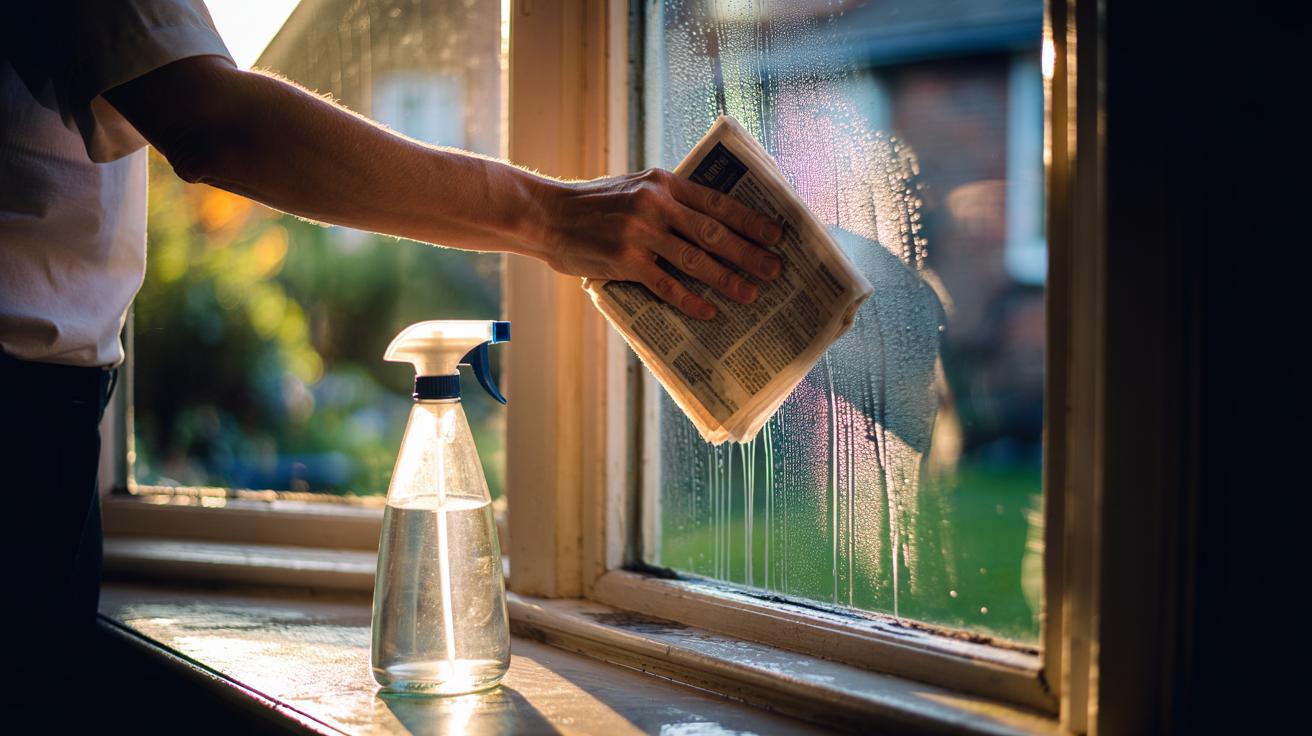
Across Britain, a humble, time-tested trick has been quietly outshining pricey sprays: old newspaper paired with a splash of white vinegar. From tower-block flats to Victorian terraces, this duo leaves panes pristine, costs pennies, and cuts waste. With nothing more than recycled paper and a cupboard staple, it clears greasy fingerprints, water spots, and the dusty veil that dulls daylight. No lint, no smears, and no chemical haze. Below, you’ll find the science that makes it work, the precise mix and method, and smart fixes for stubborn streaks. Once you’ve tried it on windows, you may never look at shop-bought glass cleaners the same way again.
Why Newspaper and Vinegar Work
Old newspaper earns its keep because of its dense cellulose fibres and slightly textured surface, which provide a gentle, micro-abrasive action that lifts grime without scratching standard glass. The paper’s compact fibres don’t shed like some tissues or paper towels, reducing lint that causes smears. Meanwhile, white vinegar (typically 5% acetic acid) dissolves the alkaline minerals behind limescale spots and cuts through the oily film left by hands and urban pollution. Together, they clean and then lightly polish, leaving a crisp, clear finish. This duo simultaneously dissolves deposits and buffs the pane, which is why it’s famous for a streak-free sheen.
Many branded glass cleaners contain surfactants, dyes, or silicones which can leave a whisper of residue that blooms into streaks as sunlight hits. Vinegar evaporates cleanly, and newspaper helps carry away dissolved grime rather than pushing it around. The method is minimalist but effective: no ammonia, no aerosol propellants, and no synthetic fragrances to fog the view. On standard glass and uncoated mirrors, newspaper and vinegar deliver clarity that rivals premium sprays—without the price tag.
The Exact Mix and Method
For most British tap water, mix 1 part white vinegar to 1 part warm water. If the odour bothers you, a 1:2 vinegar-to-water dilution still cleans well. In hard-water areas, use distilled water to prevent mineral spotting. For heavy kitchen film, add just one drop of washing-up liquid to the bottle—too much can leave residue. Decant into a clean spray bottle. A light mist is all you need; more liquid invites streaks.
| Item | Quantity/Ratio | Notes |
|---|---|---|
| White vinegar | 1 part | Use distilled white for neutral scent and clarity |
| Water | 1 part (or 2 parts) | Distilled if you have hard water |
| Washing-up liquid | 1 drop (optional) | Only for greasy build-up |
| Old newspaper | Several pages | Avoid glossy or coloured inserts |
First, dust the frame and sill so grit doesn’t drag across the pane. Spray a fine mist, then fold a sheet of non-glossy newspaper into a tight pad. Wipe in overlapping S-strokes from top to bottom, paying attention to edges where residue gathers. Swap to a fresh dry page for a final buff. Avoid weekend supplements and glossy magazines; the coatings can smear. If ink transfers, wear light gloves and finish with a clean page. Use gentle pressure and finish with a dry buff for glass that looks newly installed.
Safety, Sustainability, and Cost
Vinegar and newspaper are a thrifty, low-impact pairing. You’re reusing paper that might otherwise be binned and skipping single-use wipes and plastic-heavy sprays. Vinegar’s low VOC profile keeps indoor air clearer, while the mix biodegrades harmlessly down the sink. In cost terms, a homemade bottle often comes in at a fraction of branded cleaners—think pennies per use rather than pounds. It’s a rare case where the green choice is also the cheapest and most effective. For many households, that means more frequent cleaning, brighter rooms, and less packaging waste. And should you run out, your corner shop likely has what you need within minutes.
There are sensible limits. Avoid vinegar on natural stone sills like marble or limestone, where acids can etch. Take care around unsealed timber frames and freshly painted surfaces; wipe drips immediately. Don’t use on specialist coatings—anti-glare, smart glass, or certain tinted films—without checking the maker’s guidance. Handle old leaded lights gently. If you have very sensitive skin, consider thin gloves to avoid ink transfer. Test a small corner first when you’re unsure about frames, films, or finishes.
Troubleshooting Persistent Streaks
If streaks linger, check your water. Hard water can deposit minerals as the pane dries; switch to distilled water for the mix. Spraying too much solution leaves excess to chase around—use a finer mist or a slightly drier pad. Glass that’s hot in direct sun dries unevenly; clean when the window is cool and shaded. Replace newspaper pads as they soften; a crisp edge lifts more residue. Most streaks come from using too much liquid or not changing to a dry page for the final pass.
Sticky residues—window stickers, silicone smears, or cooking films—may need a pre-clean. Gently scrape with a fresh razor blade held flat (on standard glass only), or soften goo with a dab of warm, soapy water before the vinegar pass. If a mirror has fog-resistant coatings, use a microfibre cloth for the last buff. Prefer a fresher scent? Add a strip of lemon peel to the bottle for a day, then remove—no oils left behind. Finish every clean with a dry, tight-rolled newspaper page to seal in that smearless shine.
The old newspaper and vinegar routine isn’t nostalgia; it’s a practical, low-waste system that reliably delivers streak-free windows. It harnesses simple chemistry, clever materials, and a few deft movements to outclass products that promise more and deliver less. Your reward is daylight that looks newly polished and a view free from foggy film. Once you master the light mist and dry buff, clarity becomes effortless. Will you give this classic a go on your panes this week—and which window in your home will be the first to reveal the difference?
Did you like it?4.5/5 (29)