In a nutshell
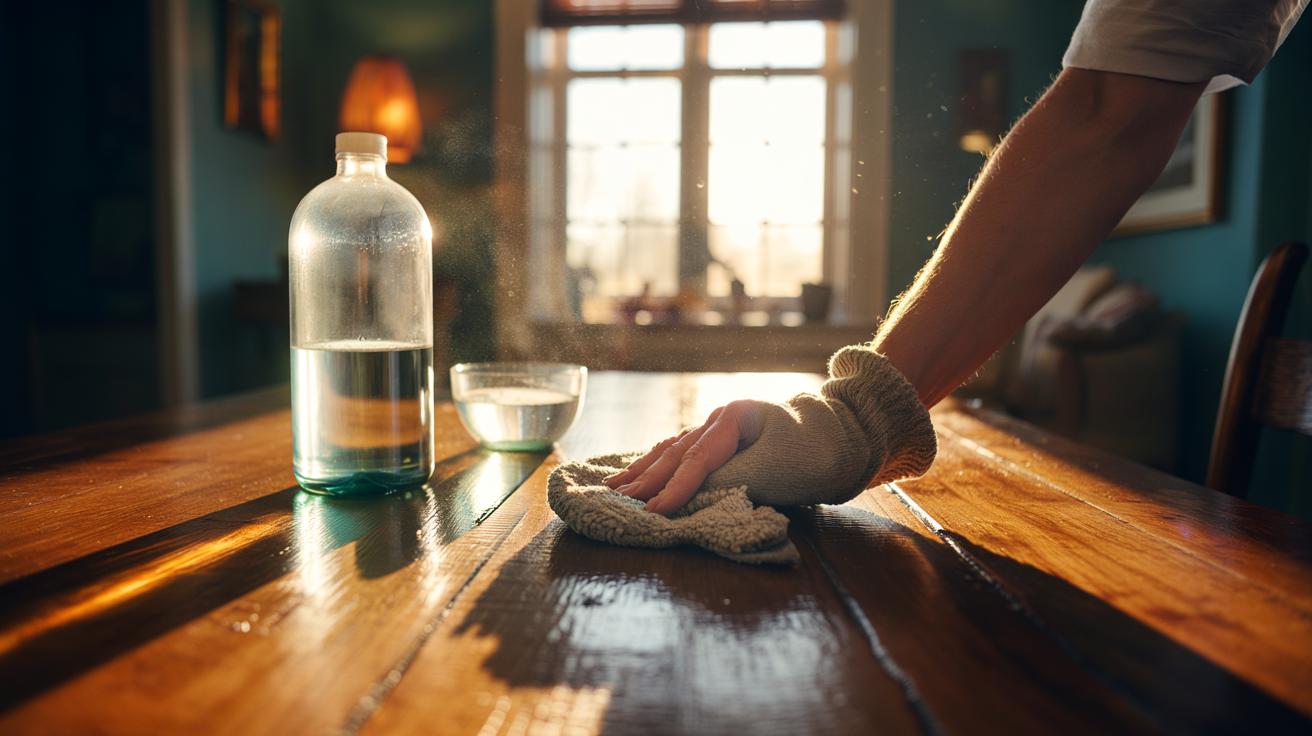
- 🧦 Use an old cotton sock as a polishing mitt: its soft knit traps dust, follows the grain, and a brisk dry buff restores a natural shine.
- 🧪 Clean with white distilled vinegar diluted 1:2–1:3; dampen, don’t soak, and patch-test sensitive finishes before proceeding.
- 📋 Method: mix solution, wring sock thoroughly, wipe with the grain, then immediately dry-buff; repeat lightly and finish with a touch of mineral oil if needed.
- 🧰 Finish care: safe for polyurethane/varnish, gentler on oil finishes and veneer; avoid vinegar on waxed, French-polished, or shellac surfaces—dry buff only.
- 🌍 Benefits: low-VOC, reusable, and budget-friendly, delivering an authentic, natural sheen without heavy chemical polishes.
Across British households, the humblest cleaning hack is enjoying a revival: an old cotton sock and a splash of white vinegar can coax dull timber back to a gentle glow. This simple duo cuts through fingerprints, ring marks, and airborne grime while preserving the character of aged finishes. Because the sock fits your hand, it delivers control and even pressure, helping you buff along the grain rather than drag grit across it. The approach is thrifty, low in VOCs, and kinder to sealed surfaces than harsh sprays. Used correctly, the sock-and-vinegar technique refreshes sheen without stripping finishes or leaving smeary residue, making it a practical first step before any serious restoration.
Why an Old Sock Works Surprisingly Well
Turned inside out, an old cotton sock becomes a nimble polishing mitt. The looped knit traps dust while the fabric’s soft nap provides mild, uniform abrasion, enough to burnish a finish without scratching. Because it hugs your fingers, you can trace mouldings, edges, and handles with finesse, keeping pressure consistent and avoiding swirl marks. The cloth’s gentle friction subtly warms the surface, letting existing waxes or oils redistribute for a more even lustre. Unlike disposable wipes, a sock can be rinsed and reused, so fibres soften over time rather than shedding lint that dulls the look.
The shape also encourages good technique. You naturally follow the grain, rotate to clean sections as they load with dirt, and switch to a dry patch for buffing. That brisk dry buff is key: it lifts the last haze of moisture and polishes micro-highs on the finish, producing a natural shine instead of a glossy overlay. Keep a second sock for a final pass, and you’ll see the difference in clarity and depth.
Vinegar’s Role in Safe Wood Cleaning
White distilled vinegar (about 5% acetic acid) excels at loosening mineral deposits, airborne grease, and the alkaline residues that accumulate on furniture. Diluted with water, it cuts the film that makes timber look tired without attacking intact polyurethane or modern lacquer. Never pour vinegar directly on the surface, and avoid prolonged wetting that can creep into joints or veneer. Mist a little on the sock, or dip and wring until just damp. The goal is a controlled wipe, not a soak. Choose white vinegar rather than malt or cider; coloured vinegars risk staining and can carry lingering aromas.
On recently waxed, French-polished, or shellac finishes, proceed with caution. Acids may dull a fresh wax coat or soften shellac if overused. A simple rule protects your heirlooms: patch-test under a hanging edge with a 1:3 vinegar-to-water mix, then inspect after drying. If the sheen stays true and no tackiness appears, you’re safe to continue, refreshing the cloth as it lifts grime.
Step-by-Step: The Sock and Vinegar Method
This routine targets grime first, then restores clarity with a dry buff. Work in light passes, letting repetition do the cleaning rather than pressure. Two socks make the job neater—one damp for cleaning, one dry for polishing. Keep a small bowl for your mix and change it as the water clouds. If the piece is ornate, use a soft brush to tease dust from crevices before you begin, so grit won’t mar the finish during wiping.
- Mix 1 part white vinegar with 2–3 parts water in a small bowl.
- Turn a clean cotton sock inside out; dampen and wring thoroughly.
- Wipe with the grain, rotating the sock to clean sections as they soil.
- Immediately follow with a second dry sock to buff to a natural shine.
- Stubborn marks: repeat with fresh solution; avoid rubbing hard spots aggressively.
- Optional: finish with a few drops of food-grade mineral oil on the dry sock, then buff.
| Surface | Dilution | Passes | Notes |
|---|---|---|---|
| Polyurethane/varnish | 1:2 vinegar:water | 2–3 light | Safe; dry buff immediately. |
| Oil finish | 1:3 vinegar:water | 1–2 gentle | Minimal moisture; add mineral oil after. |
| Wax/shellac | Avoid vinegar | Dry buff only | Use clean sock; no liquids. |
| Veneer | 1:3 vinegar:water | 1–2 swift | Keep cloth barely damp. |
Allow the piece to air for a few minutes, then run a final dry sock pass. If adding oil, place a pea-sized drop on the cloth, spread it thinly, and buff until the surface feels dry to touch. Any tackiness means you’ve used too much.
Finish Types and What to Avoid
Modern polyurethane and factory-applied varnishes tolerate mild acid and minimal moisture, making them good candidates for the sock-and-vinegar treatment. Hand-rubbed oil finishes are more porous, so keep the cloth just damp and finish with a whisper of mineral oil. Skip vinegar entirely on freshly waxed furniture, French polish, or soft shellac—dry buffing only preserves their delicate sheen. For veneered tops, ensure edges aren’t lifting and avoid any liquid pooling. If you see white blooming or drag, stop and reassess your dilution and technique.
As for “polish” boosters, choose stable oils that won’t oxidise: food-grade mineral oil or fractionated coconut oil are reliable. Avoid olive oil and most vegetable oils; they can turn sticky, attract dust, and leave a rancid smell. If a deeper revive is needed after cleaning, wax sparingly with a high-quality paste, then return to the sock for a brilliant hand-buffed finish.
Reusing a sock and a little vinegar channels common sense and stewardship: less waste, fewer chemicals, and wood that looks honest rather than lacquered within an inch of its life. The technique is forgiving, cheap, and quick to repeat whenever fingerprints and haze reappear. Start gentle, keep the solution light, and let the dry buff do the shining. With that rhythm, dining tables, bookcases, and bedside cabinets all regain clarity without a trace of synthetic gloss. Which piece of furniture in your home will you test first with the sock-and-vinegar method, and what finish challenges are you hoping to solve?
Did you like it?4.4/5 (30)