In a nutshell
- 🧂 The salt scrub works by delivering gentle mechanical shear from soft halite crystals, lifting the tannin-limescale film instantly without scratching or bleach.
- 🍵 Tea stains persist because tannins bind to microscopic glaze texture and limescale, with stoneware often gripping more than smooth porcelain.
- ✍️ Quick method: dampen the mug, add a teaspoon of coarse salt, rub in small circles with light pressure, then rinse—avoid metallic trims and delicate decals.
- 🔄 Use alternatives when needed: a bicarbonate paste for delicate glazes, denture tablets for heavy stains, or melamine foam with a light touch.
- 🌿 Everyday wins: it’s cheap, eco-friendly, and fast; keep salt by the sink and tackle hard water sources to reduce future build-up.
Every British kitchen has a mug with a tell-tale brown ring, a badge of honour for habitual tea drinkers and a nuisance for anyone who loves gleaming crockery. The quickest cure is disarmingly simple: a salt scrub. A pinch of coarse crystals and a touch of water shift stains that soaps ignore, drawing out the tannins that cling to ceramic glaze. No bleach, no faff—just a few swirls and the mark is gone. This time-saving trick relies on physics more than chemistry, and it works just as well on stoneware as on robust porcelain. Here’s the science of why it’s so effective, and how to do it right in seconds.
Why Tea Leaves Stubborn Marks in Mugs
Tea owes its taste and colour to tannins, the polyphenols that readily bind to microscopic texture on ceramic glazes. When a mug cools between sips, those compounds precipitate, teaming up with limescale from hard water to create a thin, sticky film. Over time the film compacts into a visible ring, particularly along the level where liquid meets air. Unlike greasy residues, tannin films are not easily lifted by standard detergents, which is why a freshly washed mug can still look tired.
Glaze finish matters too. Stoneware with a slightly matte surface offers more nooks for tannins to grip than ultra-smooth vitrified porcelain. Heat cycling—hot brew, cool air—also tightens the stain’s hold, as dissolved minerals crystallise and lock pigments into place. The result is a mark that seems baked in, but it’s largely surface-level and ripe for removal with the right kind of gentle abrasion.
How Salt Crystals Lift Marks Instantly
Ordinary halite (table salt) forms cubic crystals with sharp micro-edges. On the Mohs scale, salt sits at roughly 2–2.5, softer than a mug’s glassy glaze (typically 5–6). That hardness gap is the magic: the crystals are tough enough to disrupt the stain, yet soft enough to spare the glaze. As you rub, salt grains deliver mechanical shear to the tannin-limescale film, prising it up without scouring the surface beneath.
Add a few drops of water and those crystals create a thin brine that keeps the grains moving while preventing gouging. The salt partially dissolves, exposing fresh facets that keep cutting through residue as you swirl. Because you’re breaking a weak film rather than dissolving the mug’s finish, results appear in seconds—often before the kettle has boiled. Coarser grains work fastest; finer table salt still succeeds but may need an extra pass.
Step-by-Step Salt Scrub Technique
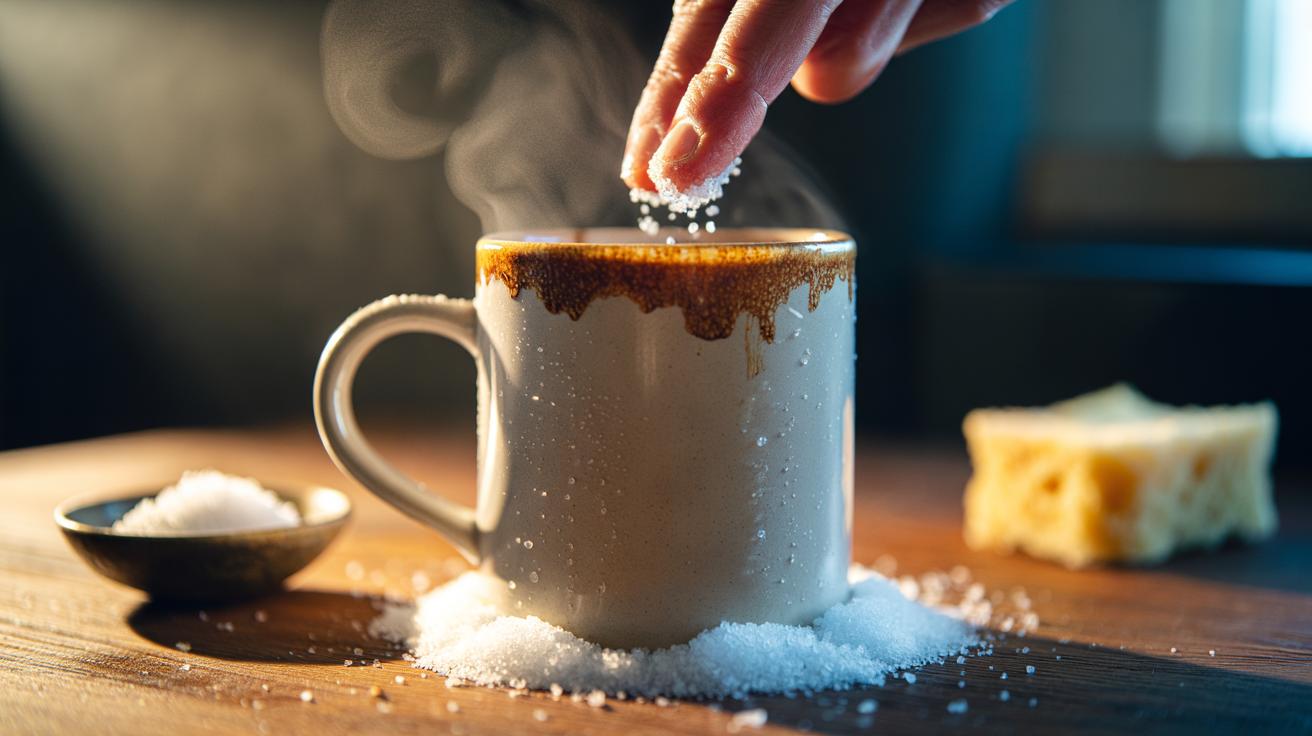
Dampen the inside of the mug with warm water. Sprinkle a teaspoon of coarse sea salt or kosher salt onto the stain. Using a soft sponge or your fingertips, massage the area with small circles, adding just enough water to form a gritty paste. The ring will haze, then vanish. Rinse thoroughly with hot water and let air-dry. For persistent rims, repeat once, rotating the mug to keep pressure even. Gentle pressure is key; let the crystals do the work.
For pale interiors, finish with a quick swill of hot water to remove any remaining brine specks. Avoid metal scourers that can scratch and trap future stains. On bone china with gold or platinum edging, keep salt away from the decoration. Always test on an inconspicuous spot if the glaze looks soft, matte, or hand-painted. If the mark returns quickly, consider tackling underlying limescale in your kettle or tap aerator to reduce mineral build-up.
When Not to Use Salt and What to Try Instead
Some mugs aren’t suited to grit, even gentle grit. Delicate decals, metallic trims, and intentionally matte glazes can mark if overworked. In those cases, choose a non-scratching route: a paste of bicarbonate of soda and water, or a denture-cleaning tablet soak for severe rings. Melamine foam also erases stains with micro-structure rather than harshness, though it should be used lightly. If you’re unsure about your glaze, start mild and step up only if the stain persists.
To help you pick the right approach, here’s a quick comparison of safe, household options that handle tea’s stubborn tannins without drama. Match the method to your mug’s finish and the age of the stain for the fastest, safest clean. Salt is unbeatable for speed on robust glazes; bicarbonate shines on delicate pieces; tablet soaks rescue abandoned office mugs without scrubbing.
| Method | Primary Action | Abrasiveness | Best For | Notes |
|---|---|---|---|---|
| Coarse Salt Scrub | Mechanical shear of stain film | Low–Medium | Stoneware, glazed porcelain | Fast; avoid on metallic trims |
| Bicarbonate Paste | Mild alkali loosens tannins | Low | Bone china, delicate glazes | Slower; good control |
| Denture Tablet Soak | Oxygen release lifts stains | None | Heavily stained mugs | Hands-off; needs soaking time |
| Melamine Foam | Micro-abrasive structure | Low–Medium | Gloss glazes | Light pressure only |
Salt delivers a tiny miracle at the sink: sharp but soft crystals that unseat tea’s clingy tannins in a quick, satisfying swirl. It’s cheap, eco-friendly, and refreshingly uncomplicated—ideal for everyday mugs that bear the brunt of a strong brew. Keep a small jar of coarse salt by the washing-up liquid and your favourite cups will stay photo-fresh between deadlines and tea rounds. Next time a brown ring appears, will you reach for a bottle of bleach—or try the swift, crystal-powered scrub that leaves your mug spotless in moments?
Did you like it?4.5/5 (28)