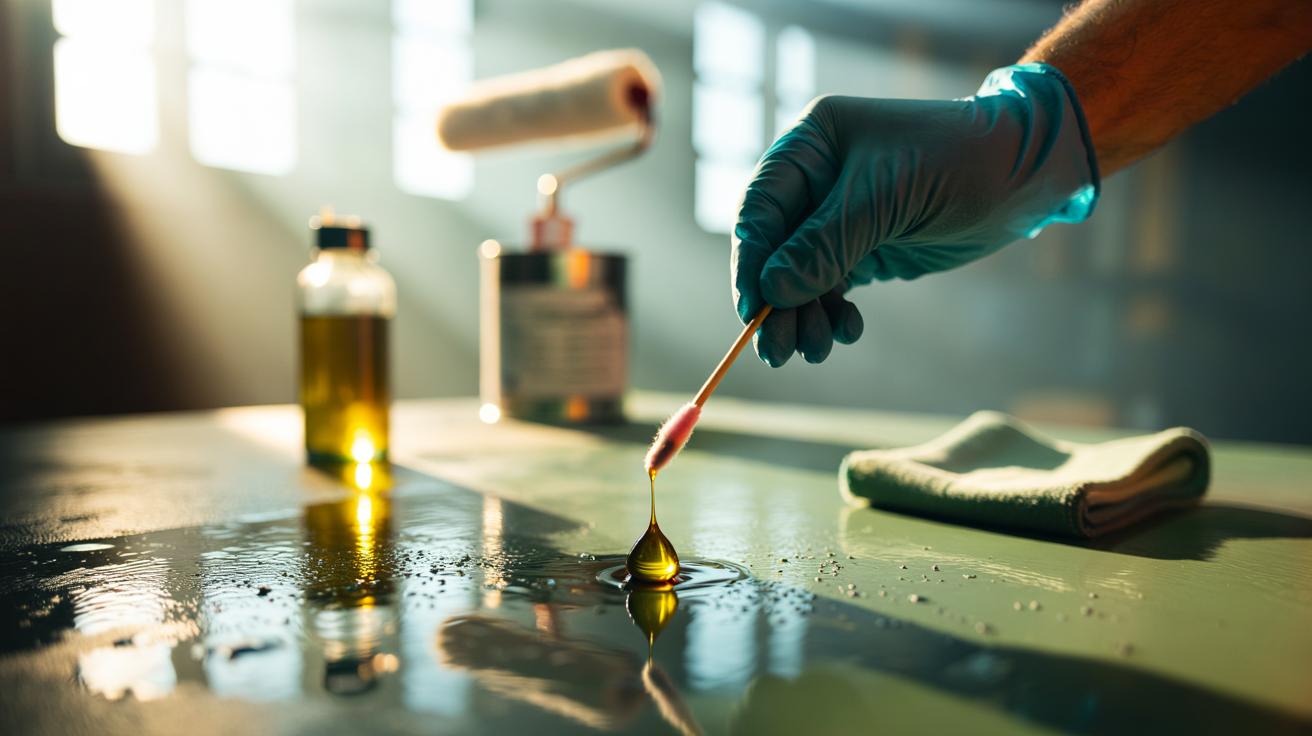
In a nutshell
- 🫒 The science: natural fats are non‑polar and lipophilic, acting as a mild plasticiser that softens acrylic and alkyd binders so dried specks lift without harsh solvents.
- 🔍 Where it works: excellent on thin overspray and flecks on glass, metal, sealed wood, tiles, and skin; weak on heavy drips and two‑pack epoxy/PU where mechanical or specialist methods are better.
- 🧰 How to do it: dampen, dab a drop of olive oil with a cotton bud, wait 5–10 minutes, lift the edge gently, then wipe; on fabrics, blot and follow with washing‑up liquid; finish by removing residue with detergent or isopropyl alcohol.
- ⚠️ Safety and surfaces: test a hidden area, avoid porous timber and matte paints, prevent slip hazards, and dispose of oil‑soaked rags safely; ventilate if escalating to stronger solvents.
- ♻️ Smart alternatives: other mild fats (rapeseed, coconut, petroleum jelly) offer similar softening—use minimal amounts, keep abrasion gentle, and soften, lift, neutralise as a conservation‑minded approach.
That speckling on your hands, windows or skirting board needn’t mean harsh thinners. The quiet trick behind the viral “olive oil dab” is materials science: natural fats can plasticise dried paint just enough to release it. A tiny drop creeps into the film, easing the bond without attacking the substrate. Used sparingly, patiently, and wiped away fully, olive oil can free specks from glass, metal, finished timber, and skin with surprising elegance. It’s not magic and it’s not universal, but as a first pass before solvents, it offers control, low odour and a friendly touch.
How Natural Fats Break Down Paint Binders
Paint is a composite: pigments and additives held in a binder that cures into a solid film. Many common household paints use acrylic or vinyl-acrylic emulsions; older glosses rely on alkyd resins. Olive oil and similar fats are largely non-polar and lipophilic. They migrate into a dry film’s micro-voids and act as a mild plasticiser, reducing intermolecular attraction within the binder. This slight softening lowers the film’s cohesion without dissolving it outright, making the speck more pliable and easier to shear off with minimal force.
The effect shows best on thin, dried spatter where mechanical leverage finishes the job. Oils don’t “melt” paint; they swell it just enough for a fingernail, a wooden cocktail stick or a microfibre cloth to lift the edge. On acrylic emulsions the softening is quick. On alkyd/oil-based flecks, the kinship between oil and resin can encourage swelling, but full cures resist more. Think of oil as a softener, not a stripper; cured two-pack coatings remain largely unmoved.
When Olive Oil Works—and When It Doesn’t
Olive oil shines on light overspray and pinhead flecks on glass, metal, sealed wood, ceramic tiles and skin. Fresh-to-recent specks yield fastest, yet even week-old emulsion spots can be coaxed free. Porous fabrics are trickier: oil can darken fibres while it loosens the paint, so a blot-and-detergent follow-up is vital. Always test a hidden area first, especially on delicate finishes like satin lacquers or matte wall paints that can mark with oil contact.
| Paint Type | Typical Binder | Olive Oil Effect | Best Alternative If Needed |
|---|---|---|---|
| Water-based emulsion | Acrylic/vinyl-acrylic | Good softening of specks | Isopropyl alcohol on glass/metal |
| Oil-based gloss/enamel | Alkyd | Moderate swelling; slower | White spirit (mineral spirits), carefully |
| Aerosol spray paint | Acrylic/nitro blends | Variable; thin mist lifts | Acetone on glass/metal only |
| Two-pack epoxy/PU | Chemically cured | Poor; highly resistant | Mechanical removal; specialist stripper |
Heavy drips, fully cured enamels, car clearcoats and catalysed epoxy or polyurethane don’t respond much. In those cases, controlled abrasion (plastic scraper, razor on glass) or targeted solvents outperform oil. Stop at the first sign of surface dulling and switch tactics to protect the substrate.
Step-by-Step Method for Lifting Paint Specks
Start by loosening the target. For water-based specks on non-porous surfaces, a warm, damp cloth for 60 seconds primes the film. Dab a tiny drop of olive oil with a cotton bud directly onto the speck—no flooding. Let the oil sit for 5–10 minutes to migrate into the binder. Nudge the edge with a fingernail or a wooden cocktail stick, keeping the tool shallow to avoid scratching. Wipe the softened fleck away with a microfibre cloth in small, firm arcs.
On fabrics, place kitchen towel beneath, then dab oil on the speck and blot upward to lift pigment. Follow immediately with washing-up liquid and warm water to emulsify residual oil, then launder. For skin and hair, massage a drop of oil to dissolve the specks, then wash with soap. On wood or metal, finish with a light detergent or isopropyl alcohol to remove the oily film. If resistance persists, repeat once; if still stubborn, change method rather than forcing it.
Safety, Surfaces, and Stain Management
Olive oil is gentle, but not neutral to every finish. It can darken untreated timber, mark flat wall paint and leave halos on porous stone. Always do a discreet patch test, and confine the dab strictly to the speck. Keep oil off floors where it can create slip hazards. After removal, banish residue: on hard surfaces, a solution of warm water and washing-up liquid breaks the oil’s film; on textiles, pre-treat with liquid detergent before washing to prevent lingering odour or rings.
Mind disposal. Never leave oil-soaked rags bunched up; in rare cases they can self-heat. Spread them flat to dry outdoors before binning, or seal in a metal container. Ventilate if you escalate to white spirit or acetone. If olive oil is unavailable, other mild fats—rapeseed oil, coconut oil, even petroleum jelly—offer similar plasticising action with comparable caveats. Use the smallest effective amount and keep abrasives gentle so the cure is not worse than the speck.
The appeal of the olive oil dab is its balance: enough softening to free paint without punishing the surface beneath. A little patience, targeted application and diligent clean-up turn a messy speck into a quiet non-event. Think like a conservator: soften, lift, neutralise. For the stubborn outliers—aged enamels, catalysed coatings—step up with appropriate tools and solvents, always protecting the substrate. What surfaces in your home most often suffer specks, and which gentle technique would you try first before reaching for heavy-duty removers?
Did you like it?4.4/5 (23)