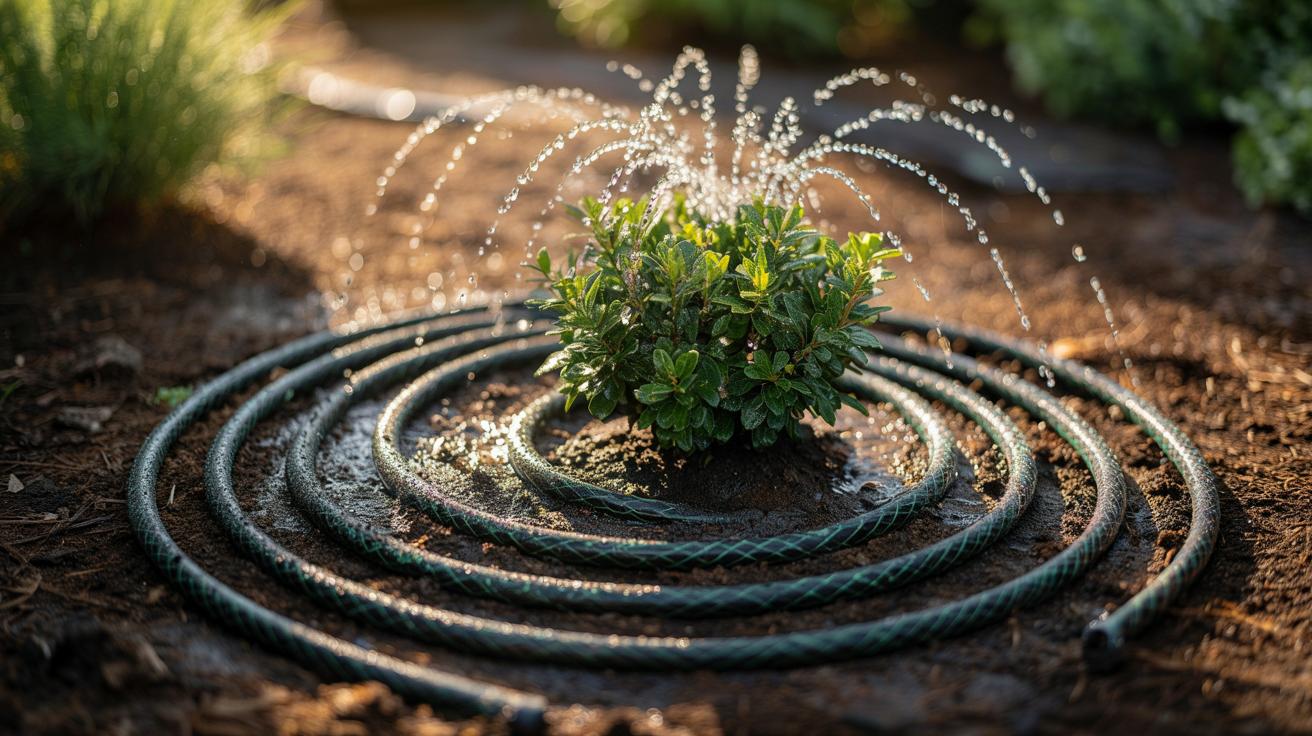
In a nutshell
- 🌱 Slow, steady flow matches the soil’s infiltration rate, forming a deep wetted bulb that feeds deeper roots while cutting runoff and evaporation.
- 🛠️ Build a hose-drip spiral with porous pipe, a pressure reducer, filter, and end cap; spiral 15–30 cm from the stem out to the canopy edge and cover with mulch (or bury 2–5 cm).
- ⏱️ Irrigate by volume: aim for 12–20 litres per shrub weekly in summer; measure flow to set runtime and verify depth with a spade test or soil moisture probe.
- 💧 Maximise efficiency in dry spells: use stored rainwater, keep delivery slow to avoid compaction, and tailor frequency to sandy (more often) vs clay (longer, less often) soils.
- ⚠️ Avoid high pressure, tight coils against stems, and unmulched soil; prevent clogging with filtration and monthly flushes, add loops for large shrubs, and seasonally dial back frequency.
Shrubs cling to life in heatwaves not because of heroic buckets but thanks to water reaching the places roots actually drink. The simplest tool is the hose-drip spiral: a length of porous pipe or gently pierced hose coiled around a plant and run at a slow trickle. When water arrives at the soil’s pace rather than the tap’s, it sinks rather than skates away. This method curbs evaporation, prevents crusting, and feeds moisture deep into the root zone. It’s frugal, quick to set up, and kind to soils—especially tired borders that have been starved by sporadic soakings and sudden downpours.
Why Slow Watering Works Below the Surface
Soil is a maze of pores, from generous gaps between sand grains to the microscopic channels in clay. The key to deep watering is matching the application to the soil’s infiltration rate. Trickle delivery gives the ground time to accept water, allowing gravity and capillary action to pull it downwards and sideways. As moisture moves, it forms a wetted bulb—a three-dimensional pocket that expands gradually, bathing fine feeder roots. Fast watering, by contrast, overwhelms the surface, fuels runoff, and leaves the subsurface parched.
Different textures respond differently. Sandy beds gulp water yet drain quickly, demanding modest but consistent doses; heavy clay accepts water slowly but stores it well once penetrated. A spiral that drips steadily beats a big splash: it maintains a gentle hydraulic gradient that keeps moisture migrating into deeper layers. Sustained slow flow also avoids soil compaction, keeping pore spaces open and aerated for root respiration. That’s why shrubs respond with deeper roots, improved resilience, and steadier growth even in dry spells.
Building a Hose-Drip Spiral in Minutes
Start with 10–15 metres of porous pipe (soaker hose) or a standard hose fitted with very fine pinholes every 20–30 cm. Add a pressure reducer (to about 1 bar), a backflow preventer, and an end cap. Coil the line around the shrub, beginning 15–30 cm from the stem and spiralling outward to just beyond the canopy edge—where most active feeder roots live. Peg it in place, then cover with 5–7 cm of mulch to curb evaporation and buffer temperature swings. Flush the line before capping to expel debris.
Connect to a tap or water butt via a filter. If you’re piercing a regular hose, keep holes tiny to sustain a slow trickle and avoid gushes; test pressure at the lowest setting that yields visible dampness. Burying the spiral 2–5 cm deep or tucking it under mulch concentrates water where it matters, not where sun and wind can steal it. An inexpensive mechanical timer, set to run weekly, prevents overenthusiastic watering and saves litres on a meter.
How Long and How Often to Run It
Think in litres, not minutes. Most established shrubs thrive on a single deep drink of 12–20 litres weekly in summer, adjusted for heat, wind, and soil. One thorough session is better than daily sprinkles, which wet leaves, encourage disease, and barely reach roots. Sandy beds may want two smaller sessions; clay often prefers one slow, extended run. Use the “spade test”: after watering, dig a small slit 15–25 cm down—if it’s cool and moist, you’ve hit the zone. A cheap soil moisture probe helps track consistency between sessions.
Match runtime to your system’s flow. Measure output by timing how long it takes to fill a 1-litre jug from the spiral endpoint. Then use the guide below to plan sessions. During hosepipe restrictions, switch to stored rainwater from a butt and check local rules; slow delivery remains the most efficient way to use limited supplies. Reassess after rain: if the top 10 cm is wet but deeper layers are dry, maintain your deep cycle—showers rarely recharge the root zone.
| Flow (L/hour) | Runtime (minutes) | Water Delivered (L) | Best For |
|---|---|---|---|
| 4 | 180 | 12 | Clay or newly planted shrubs |
| 8 | 90 | 12 | Loam and mixed borders |
| 12 | 60 | 12 | Free-draining sandy beds |
Common Mistakes and How to Fix Them
Too much pressure is the classic error. It creates spurts, surface pooling, and wasted water. Fit a pressure reducer and open the tap just enough for beads to form along the hose. If the surface shines, you’re watering too fast. Another mistake is spiralling tight against the stem; that zone sheds water and risks rot. Keep the first loop out where feeder roots live, and extend the spiral as the shrub grows. Avoid leaving bare soil: unmulched ground loses moisture fast and bakes into a crust that repels water.
Clogging happens when lines aren’t filtered or flushed. Add a simple inline filter and run the system briefly at full flow monthly to clear fines. If certain spots stay dry, the holes may be too few or uneven—re-space the spiral or introduce a second loop for large shrubs. Plan for seasons: reduce frequency in cool, damp months, but maintain occasional deep drinks to prevent root dieback. Finally, audit: lift the mulch and check for even dampness after each session.
The hose-drip spiral turns watering from a hurried chore into an intentional recharge of the soil’s reservoir. By aligning flow with the ground’s infiltration rate, it pushes moisture to where deep roots can bank it, trimming evaporation, runoff, and bills. A few smart parts—porous pipe, reducer, filter, and mulch—deliver professional results on a modest budget. In dry summers or under restrictions, slow delivery maximises every litre and protects planting plans you’ve invested in. Looking at your own borders, which shrub will you prioritise for a spiral, and how will you measure whether its root zone is truly being replenished?
Did you like it?4.6/5 (26)