In a nutshell
- 🧼 The pillowcase hack encloses each ceiling fan blade, trapping dust inside the fabric to prevent fallout and reduce airborne allergens.
- 🧪 It relies on fabric friction, slight dampness, and microfiber’s electrostatic attraction to shear the dust boundary layer and keep particles contained.
- 🪜 Steps: power off, use a stable ladder, mist the pillowcase interior, slide over the blade, pinch/seal and pull to wipe, then empty into a bin and launder; finish by checking screws.
- 🧰 Materials and safety: old cotton/microfiber pillowcase, spray bottle, light PPE; avoid on greasy or flaking blades—use a degreaser or remove blades for heavy buildup.
- ♻️ Versus dusters, vacuums, and wipes: the pillowcase method is low-cost, mess-free, and eco-friendlier; vacuums suit high ceilings, while sticky kitchen grime needs targeted cleaning.
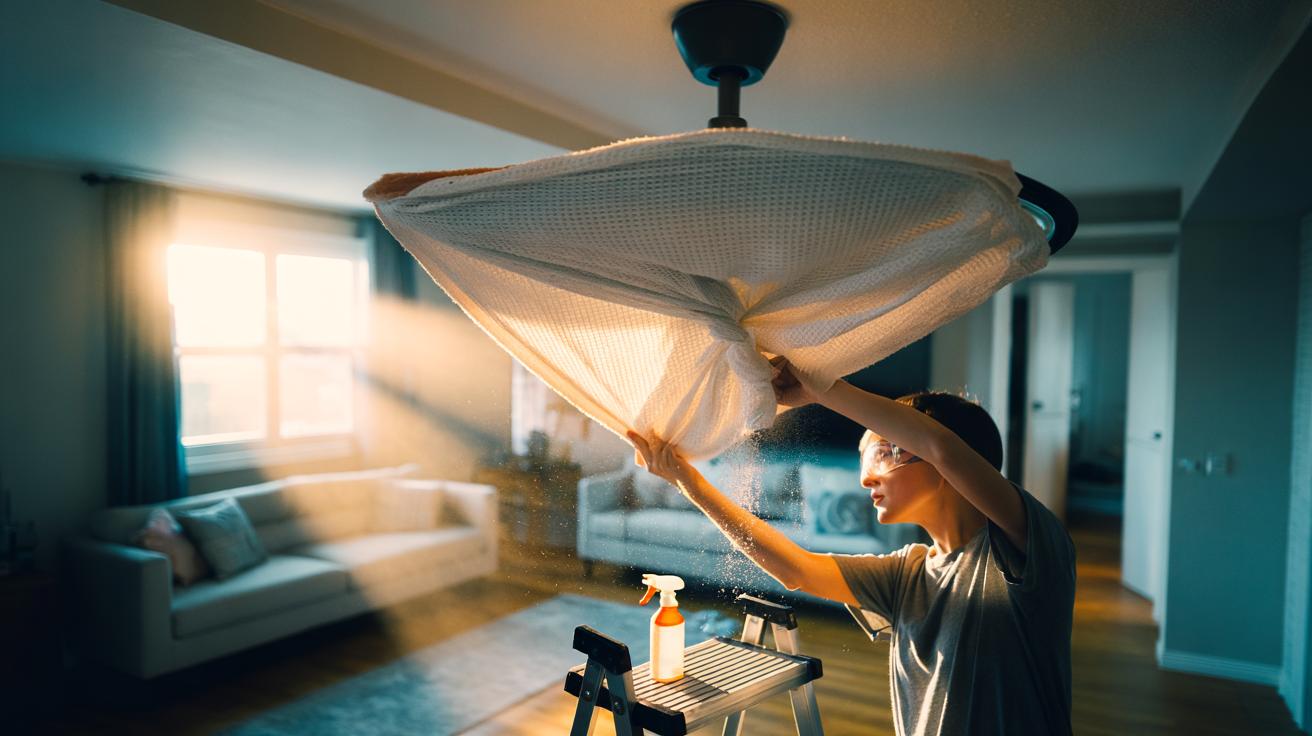
Ceiling fans are notorious dust magnets, and a clumsy clean can turn your room into a snow globe of particles. In British homes where heating cycles stir allergens, the pillowcase hack offers a simple way to capture grime at the source. Slip a pillowcase over each blade, wipe, and the dust comes off inside the fabric rather than raining down. This method traps debris before it becomes airborne, which is kinder to lungs and easier on surfaces below. It also avoids harsh chemicals and plastic-heavy disposables. Here’s why it works so well, how to do it safely, and when you might choose another method.
How the Pillowcase Hack Works
The brilliance lies in containment. A soft cotton or microfiber pillowcase envelopes the blade, creating a controlled “bag” that prevents a dust plume. As you pull the case toward you, the interior fibres generate light friction that dislodges grime while the fabric’s weave captures particles. Because the blade is encased on all sides, disturbed dust has nowhere to escape. The result is a clean surface without the fallout that comes from feather dusters or dry cloths.
There’s a bit of physics behind the effect. Dust sits in a boundary layer along the blade; pressure and motion from the fabric shear that layer away. Microfibers add an electrostatic attraction that clings to fine particles, including pollen and pet dander. Slight dampness inside the pillowcase increases adhesion, so the dust sticks instead of drifting. By minimising aerosolised particles, the hack reduces cleaning time spent on floors, bedding, and furniture beneath the fan, and it’s gentle on painted or composite blades that scratch easily.
Step-by-Step: Clean a Ceiling Fan with a Pillowcase
1) Switch the fan off at the wall and allow blades to stop completely. Place a chair or step ladder on a flat surface and stabilise it. 2) Lightly mist the inside of an old pillowcase with water or a mild, all-purpose cleaner—just enough to make it slightly damp, not wet. Damp fibres hold dust far more effectively than a dry cloth. 3) Slide the pillowcase over a blade until the end touches the back seam. Pinch the fabric around the top and bottom edges to seal.
4) Press gently and pull the pillowcase toward you, wiping the blade’s upper and lower faces in one motion. Rotate to a clean portion of fabric and repeat for each blade. 5) With the pillowcase still closed, step down carefully. Turn it inside-out over a bin to dump debris, then launder on a warm cycle. Finish by wiping the motor housing and stem with a damp microfibre cloth. Optional: a final pass with a dry cloth reduces streaks. Always check blade screws and brackets for tightness before restarting the fan.
Materials, Safety, and When Not to Use It
The hack relies on ordinary kit and common sense. Choose a robust pillowcase—microfiber captures the finest dust, while cotton handles bulky lint. A spritz bottle, a stable step ladder, and light PPE keep the job tidy and safe. Power off the fan and avoid overreaching from furniture; a secure footing prevents wobbles that can bend brackets or scratch ceilings. If blades are greasy—typical in kitchens—apply a degreasing cleaner inside the pillowcase and rinse it promptly after use.
| Item | Purpose |
|---|---|
| Old pillowcase (cotton or microfiber) | Encloses blade and traps dust |
| Spray bottle (water or mild cleaner) | Light dampness to improve adhesion |
| Stable step ladder | Safe access to fan height |
| Mask and safety glasses | Extra protection for allergies and eyes |
Skip the hack if your fan has delicate glass filigree close to the blades, flaking paint, or warped edges that could snag fabric. Severely caked, oily buildup may require a pre-soak or a removable blade clean by the sink. Always test cleaners on a hidden area to avoid streaking matte finishes.
Comparing Methods: Pillowcase vs Duster, Vacuum, and Disposable Wipes
A feather duster is quick but notorious for spreading debris; it’s fine for daily upkeep yet poor for allergy control. Disposable wipes are convenient, though they generate plastic waste and can streak finishes. A vacuum with a soft brush excels at containment, but only if you can manoeuvre the hose safely overhead. The pillowcase hack stands out by combining low cost, excellent dust capture, and minimal fallout, especially when you’re cleaning directly above beds, sofas, or dining tables.
In cost terms, a retired pillowcase and tap water are hard to beat. Environmentally, reusing textile is kinder than single-use wipes, and laundering removes allergens without harsh solvents. For very tall ceilings, a vacuum on an extension wand might win on safety, and for sticky kitchen grime, a degreaser plus removable blades might be better. The sweet spot for the pillowcase method is routine maintenance of standard household fans where you want thoroughness without mess—and without turning the room upside down.
The pillowcase hack endures because it’s fast, frugal, and scientifically sound: it encloses dust, uses light friction and electrostatic cling to capture particles, and keeps your furnishings clean in the process. By treating the blade like a bagged surface, you prevent the chain reaction of floating fluff that typical dusters unleash. With a little care—stable footing, a slightly damp fabric, and gentle pressure—you’ll get spotless blades in minutes. Ready to try it on your own fan, or do you have a ceiling setup that demands a different approach? What obstacles or room layouts would shape your choice of method?
Did you like it?4.6/5 (26)