In a nutshell
- 🧹 Turn a broom into a long-reach duster by wrapping a microfibre cloth securely with elastic bands, boosting leverage and ensuring effective dust capture instead of redistribution.
- 🧰 Use a microfibre or tight cotton cloth, an angled broom for corners, and double elastics; lightly mist for grime and test the wrap before working overhead.
- 🌀 Apply controlled S-strokes on coving and rails, nest the cloth into corners, and clean ceiling fans with one steady pull per blade using light pressure and periodic cloth rotation.
- 🛡️ Prioritise safety: avoid unstable standing, keep damp cloths away from electrics, and launder microfibre without softener to preserve its electrostatic grip; use colour-coding to maintain hygiene.
- 🌿 Enjoy low-cost, low-risk cleaning that reaches difficult corners, reduces allergens, and stays eco-friendly through washable materials and smart technique.
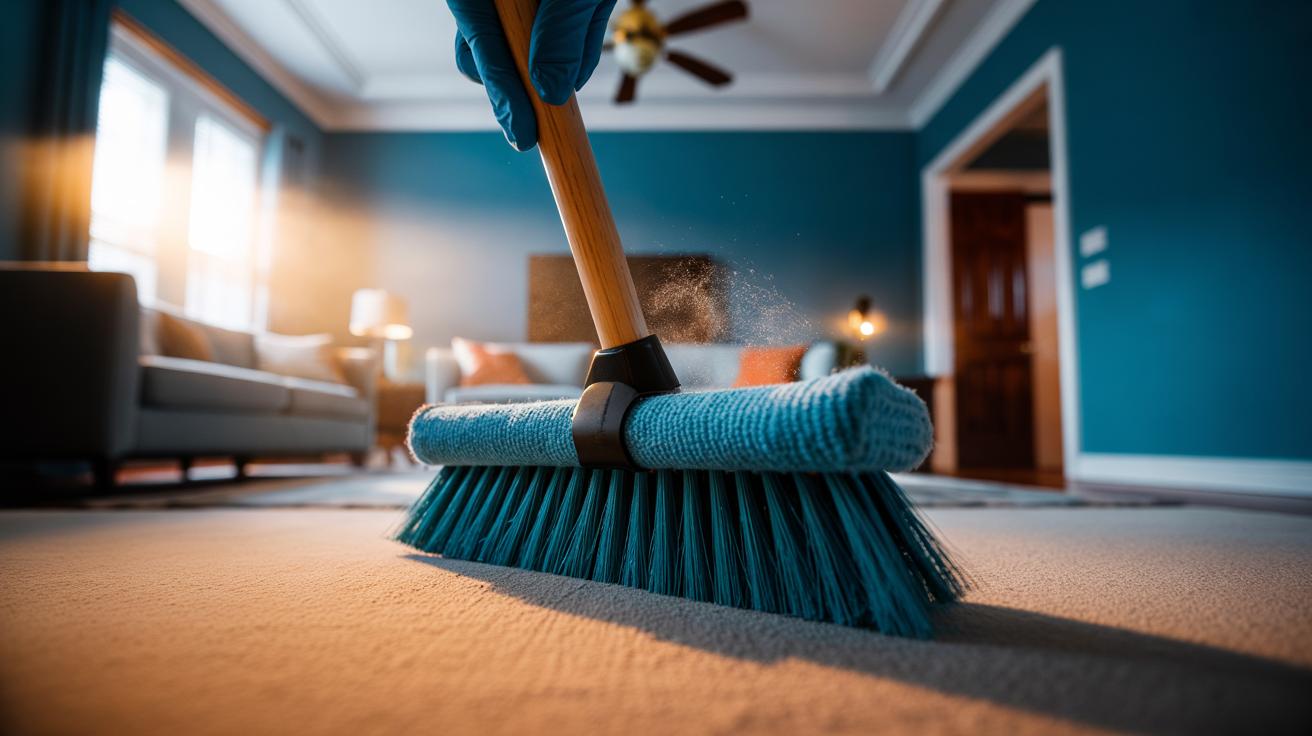
There’s a humble cleaning trick sweeping through British households: draping a cloth over a broom to dust high surfaces. It costs pennies, fits into any cupboard, and transforms a basic handle into a long-reach cleaning wand. With the right fabric and a secure wrap, you can capture cobwebs on coving, the top of wardrobes, and the stubborn grime nesting on ceiling fan blades. The secret is part microfibre, part leverage, and part common sense. By turning an everyday broom into an extendable duster, you reach the places most tools miss without teetering on chairs. Here’s how to make the method safe, efficient, and impressively thorough.
Why a Cloth and a Broom Beat a Feather Duster
The cloth-over-broom method combines coverage and control. A microfibre cloth traps dust via fine fibres and an electrostatic tug, while the broom provides reach and a stable platform. Unlike feather dusters that flick particles into the air, a tightly wrapped cloth clings to debris, reducing resettling and preventing allergen clouds. The broom’s long handle multiplies your leverage, letting you guide the cloth into crown mouldings, over picture rails, and along the tops of cabinets with a gentle wrist. Less force, more contact—better results.
Physics helps. The broom head offers a broad, flat surface; when wrapped, the cloth creates a cushioned edge that slides along cornices without scuffing paint. That shape also reaches the inner angle of corners better than many proprietary attachments. Because the cloth is removable, you can launder it between rooms, limiting cross-contamination. For allergy-prone households, the payoff is clear: captured dust, not redistributed dust.
Materials and Setup: The Right Cloth, Broom, and Safe Grip
Choose a microfibre or tightly woven cotton cloth large enough to double over the broom head. An angled broom gives better corner access, but a straight head works if wrapped neatly. Secure it with two sturdy elastic bands or a wide hair tie, placed near the ferrule and the tip to prevent slippage. Always test the wrap at shoulder height before reaching overhead. If tackling sticky residues, a light mist of water or diluted, non-abrasive cleaner helps—avoid soaking, which adds weight and can drip onto electrics.
| Item | Purpose | Notes |
|---|---|---|
| Microfibre cloth | Traps dust and fine particles | Look for lint-free, tight weave |
| Angled broom | Reach and stability | Angle improves corner contact |
| Elastic bands | Secure the wrap | Use two for even tension |
| Light cleaner | Tackles grime | Sparingly used; avoid electrics |
To set up, fold the cloth over the broom head, leaving a smooth, taut cleaning face. Cross the elastics in a figure-of-eight around the head so the cloth can’t twist. Twist the handle gently; if the cloth slips, add a second layer or another band. Secure before you stretch—your shoulders and ceilings will thank you.
Technique: Reaching Corners, Cornices, and Ceiling Fans
Stand a step back from the wall so the handle angles upwards at roughly 60–70 degrees. Guide the wrapped head into the corner, pressing lightly so the cloth edge nests into the angle. Use slow S-strokes along coving and picture rails; this keeps contact consistent and avoids flicking debris. For ceiling fan blades, rest the cloth on the top surface, pull towards you in a single pass, then rotate the head to capture the underside. One steady pull per blade reduces fallout.
For vents and detectors, hold the broom head flush and dab rather than drag to avoid knocking fittings. On the tops of wardrobes or curtain pelmets, work from the back towards the front edge so dust doesn’t tumble into the room. Rotate the broom periodically to expose a clean section of cloth. If the cloth loads up, remove and refold to present a fresh face. The mantra is simple: light pressure, long contact, low mess.
Safety, Hygiene, and Maintenance Tips
Do not climb on unstable furniture to gain extra reach; move your body, not the ground beneath you. Keep your stance wide and core engaged to reduce shoulder strain. If dust is heavy, wear light eye protection and a mask. Avoid damp cloths near sockets, light fittings, or smoke alarms. For tall stairwells, use a purpose-made extension pole or call in help—there’s a line between smart hacks and risky improvisation.
Hygiene matters. Shake gross debris outdoors, then launder microfibre on a cool cycle without fabric softener, which kills its electrostatic grip. Assign colour-coded cloths for kitchens, bathrooms, and living areas to prevent cross-use. Rinse broom heads if they’re detachable, and store elastics in a small tin to keep their tension. A monthly schedule for high surfaces prevents the crusty build-up that demands chemicals. Clean often enough that “light dusting” remains light.
The cloth-over-broom hack thrives on simplicity: a low-cost, low-risk way to keep ceilings, coving, and high shelves genuinely clean without scattering allergens. By pairing microfibre with leverage, you create a nimble tool that slips into tight corners and lifts dust on the first pass. It’s adaptable, washable, and as green as your laundry routine. If you’ve ever dreaded balancing on a chair with a flimsy duster, this is your smarter route. Which high spots in your home would benefit most from a secure, long-reach clean—and how will you adapt the technique to suit your space?
Did you like it?4.5/5 (20)