In a nutshell
- 🥔 The potato’s oxalic acid chelates iron oxide while starch provides gentle, non-scratching abrasion, lifting light rust without harming finishes.
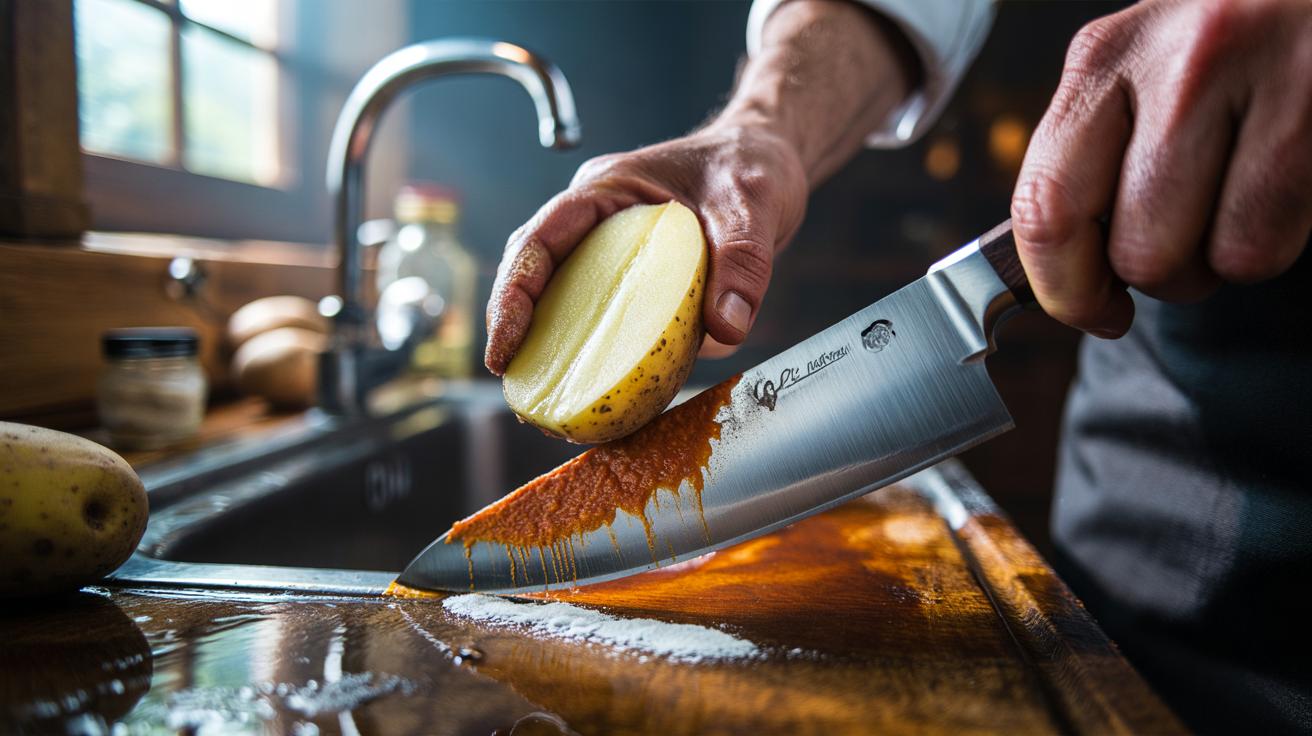
- 🧪 Quick method: halve a potato, dust with baking soda, rub spine-to-edge on stains, let sit 2–3 minutes, then rinse, dry, and lightly oil carbon steel.
- 👨🍳 Chef use cases: ideal for orange bloom, tea staining, and water spots mid-service; avoid for deep pitting, mirror/etched finishes, or stripping a protective patina.
- 🛡️ Prevention: hand wash, thorough drying (including choil/bolster), ventilated storage with silica gel, skip the dishwasher, and apply camellia oil to carbon steel.
- ⏱️ Benefits: works in minutes, non-toxic, low-cost, and blade-safe—an effective first-aid step before abrasives or rust erasers.
It sounds like kitchen folklore, yet a simple potato half can lift rust stains from knives in minutes. Many UK chefs swear by it between services because it’s fast, safe, and inexpensive. The trick relies on a potato’s natural oxalic acid and gentle starch, which loosen oxidation without scratching a blade. This is a quietly effective alternative to harsh chemicals that can dull or mar steel. Whether you run carbon steel prep knives or stainless workhorses, this method restores a clean surface so your edge glides and food flavors stay pure. Here’s how it works, why professionals use it, and when to choose other tools.
Why a Potato Works: The Science Beneath the Skin
Rust is iron oxide, and it bonds stubbornly to steel. A potato contains trace oxalic acid that chelates iron, helping lift oxidation, while its starch granules add a soft, non-scratching polish. The potato’s moisture carries these agents across the blade, allowing them to penetrate discoloration and loosen the film. In practice, this mild chemistry is strong enough to clear fresh orange bloom and tea-staining but gentle enough to preserve a knife’s finish. Compared with lemon or vinegar, the potato sits in a sweet spot: acidic enough to work quickly, not so aggressive that it etches or streaks.
The result is a controlled clean that respects both stainless and carbon steel. On carbon steel, it won’t strip a healthy patina if contact is brief; on stainless, it removes small spots without fogging the polish. Keep contact time short, rinse thoroughly, and dry immediately to avoid flash rust.
| Potato Component | Role in Rust Removal | Notes |
|---|---|---|
| Oxalic acid | Loosens iron oxide via chelation | Works in minutes; avoid prolonged soaking |
| Starch | Acts as a mild, non-scratching abrasive | Gentler than scouring powders |
| Moisture | Distributes actives evenly | Rinse and dry to prevent flash rust |
Step-By-Step: The Potato-and-Baking-Soda Method
1) Halve a firm potato. 2) Lightly dust the cut face with baking soda or fine salt; soda buffers acidity and boosts cleaning power. 3) Lay the knife flat, edge away from you. 4) Rub the potato along stained areas, working from spine to edge to avoid contact with the cutting side. Keep strokes parallel to the factory finish. 5) Let the slurry sit 2–3 minutes, then rub again. This quick routine restores clarity without scouring the steel. 6) Rinse in warm water, wipe with a soft cloth, and dry completely.
Finish by applying a fingerprint of food-safe oil (camellia, mineral, or board oil) to carbon steel; for stainless, a dry polish with a microfiber cloth is enough. If stains persist, repeat once rather than pressing harder. Pressure scratches; time does the work. For heavily pitted rust, step up to a rust eraser or fine abrasive pad before returning to the potato for a uniform finish.
What Chefs Know: When to Use It—and When Not to
In busy kitchens, this trick shines on fresh orange bloom, dishwasher-like tea staining, and light water spots. Line cooks keep a halved potato near the sink because it’s non-toxic, blade-safe, and needs no PPE. A 90-second pass between tasks prevents surface rust spreading along the bevel, which can grab soft ingredients and drag herbs. Chefs value interventions that are fast enough to fit mid-service yet kind to the blade’s geometry. The method is especially helpful on satin-finished prep knives and carbon steel pettys that see wet produce.
Skip the potato for deep pitting, chipped edges, or any blade with a reactive etched pattern (some Damascus or coated knives). Don’t strip a stable patina on carbon steel; it protects against future rust and adds character. If a dark patina looks patchy, target only the bright orange spots. For heritage blades or mirror polishes, test under the handle first, and limit contact time to protect the finish.
Maintenance Tips to Keep Knives Rust-Free
Rust thrives on moisture and neglect. Wash by hand, then dry from spine to edge, including the choil and near the bolster. Store with airflow: a magnetic strip beats a damp drawer, and a breathable saya protects edges without trapping humidity. Add a small silica gel sachet to drawers. After acidic prep (tomatoes, citrus), rinse and dry immediately. On carbon steel, a whisper of camellia oil before service prevents flash rust during long sessions. Small, repeatable habits outcompete any single rescue trick.
Mind the water. Hard water leaves mineral films that attract corrosion; a quick wipe with isopropyl alcohol or hot water plus a towel break prevents spotting. Skip the dishwasher—heat, caustic detergents, and vibration dull edges and invite rust at the heel. For monthly care, use a fine rust eraser on stubborn areas, then a potato pass to even the tone. Keep boards dry and clean so your freshly restored blade stays that way.
The humble potato sits quietly at the junction of chemistry and craft, helping chefs and home cooks erase rust without compromising a blade’s finish. Its gentle acidity and starch do the heavy lifting in minutes, while good habits keep corrosion from returning. Think of it as a first-aid kit for steel, not a substitute for care. With a halved spud and a pinch of baking soda, you can rescue a favourite knife before service or supper. Which knife in your drawer is first in line for a quick potato polish today—and what finish are you hoping to preserve?
Did you like it?4.4/5 (30)