In a nutshell
- ⚡ The triboelectric effect charges a rubber glove, using static electricity to pull cat hair from curtain fibres; low humidity boosts results for an almost one-swipe clean.
- 🧤 Step-by-step: wear latex or nitrile, hold the curtain taut, sweep top-to-bottom with a flat palm, pinch off clumps, recharge the glove by rubbing on microfibre, and hoover the sill/floor to finish.
- 🧪 Glove choices: Latex (high static, not for allergies), Nitrile (durable, allergy-safe), and Silicone (textured grip, long-lasting) to match fabric type and shedding level.
- 🧵 Fabric safety: test on delicate fabrics (silk, velvet, loose linen), use light pressure, smooth nails/remove rings, avoid fabric softeners, and use anti-static spray sparingly.
- ⏱️ Quick, frugal, fabric-friendly: a dry clean that beats lint rollers and frequent washing, ideal for pre-guest touch-ups and sustainable weekly maintenance.
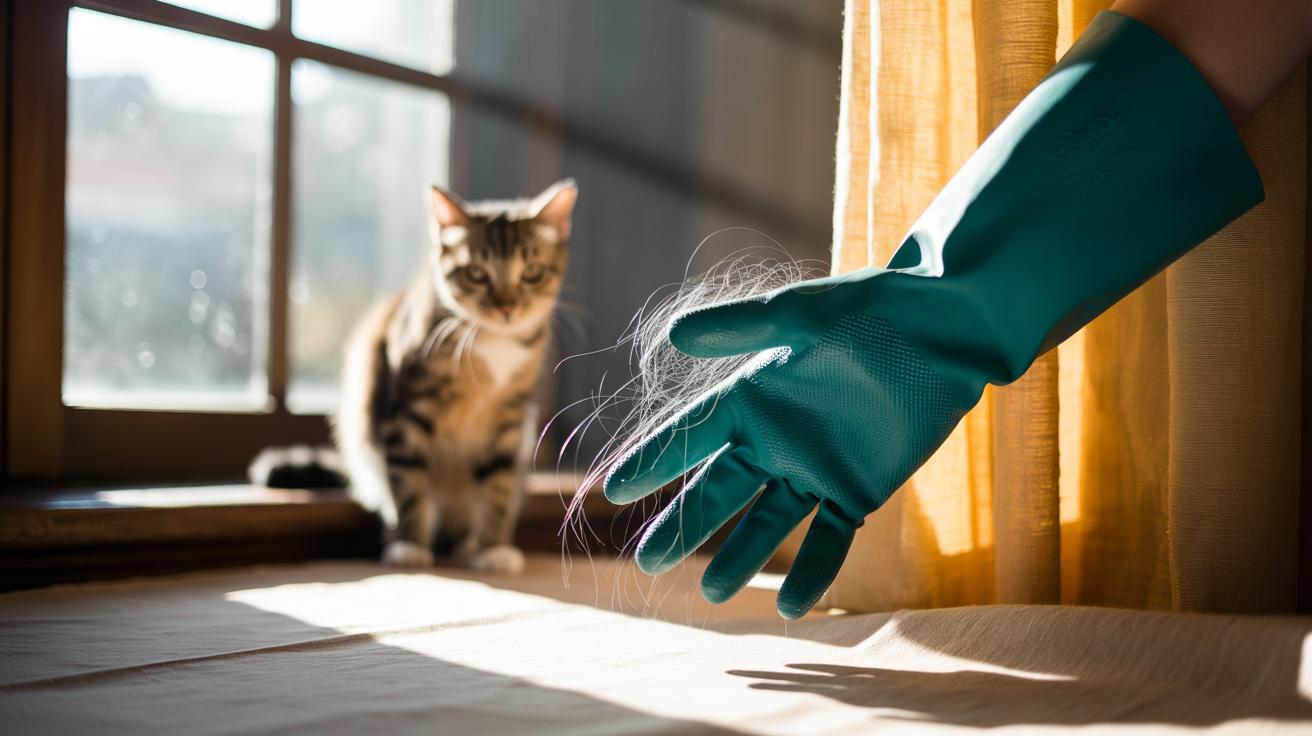
Pet parents know the scene: the curtains look elegant at breakfast, then by teatime they’re flocked with a fine coat of cat fluff. There’s a simple fix hiding in the under-sink cupboard. With a humble rubber glove, you can harness static electricity to sweep off clingy cat hair in a clean, satisfying pass. The method is dry, quick, and kinder to fabrics than constant washing or sticky rollers. In one swipe, static charge makes fur leap from fibres to your glove, forming tidy clumps you can bin in seconds. Here’s how the trick works, how to do it safely on different curtain materials, and what to consider if you have sensitive skin or delicate weaves.
Why Rubber Gloves Create Static
The secret sits in the triboelectric effect. When a rubber glove glides over curtain fabric, the surfaces exchange electrons. Rubber tends to pick up negative charge, while many textiles—especially polyester or blended synthetics—become relatively positive. Opposite charges attract, so the charged glove tugs on loose pet hair, which itself carries tiny charges and behaves like lightweight filaments. This is why the hair practically jumps onto the glove without brute force or harsh rubbing. You get a clean lift, not a smear, and far less re-deposition than you’d get from a feather duster.
Conditions matter. Low humidity favours charge build-up, so a crisp winter morning can make the trick feel almost magical. On damp days, the charge dissipates faster; lightly moistening the glove restores grip but shouldn’t soak the fabric. Different fabrics respond differently too: tightly woven synthetics shed quickly, while plush or brushed fibres hold onto hair in layers. For the latter, the glove still works—just use slower, overlapping strokes to accumulate a larger static pull.
Step-by-Step: the One-Swipe Method
Prepare the area by closing windows to reduce draughts that free-fly hairs. Put on a clean latex or nitrile glove. If the air is humid, barely dampen the palm and fingers—think a few droplets, not a rinse. Hold the curtain taut with your free hand. With steady, downward strokes, sweep from top to hem, keeping your palm flat so the static field covers maximum surface. You’ll see fur gather into soft rolls; pinch them off and drop into the bin. Repeat once more for corners and pleats, where fluff often hides.
Work methodically: left panel, then right, front face, then the lining. For delicate fabrics such as silk, use minimal pressure and a very light touch—let the static do the lifting. If your glove loses bite, give it a quick rub against a dry microfibre cloth to recharge it. Finish by running a vacuum or hoover along the sill and floor to capture strays. The whole process usually takes under five minutes per window and avoids adhesives, sprays, or laundering.
Choosing Gloves and Protecting Fabrics
Glove material affects charge, grip, and comfort. Latex often delivers the snappiest static, but it can bother sensitive skin. Nitrile is a strong, hypoallergenic alternative with excellent control. Silicone washing-up gloves provide superb grip and longevity, though the charge can feel slightly gentler—offset by their textured palms. Always test on an inconspicuous seam, especially with silk, velvet, or loosely woven linen, to ensure there’s no snagging or distortion. Avoid soaking curtains or using fabric softeners right before cleaning; both reduce static and make hair re-adhere.
To protect fibres, keep nails smooth, remove rings, and use broad, smooth strokes. If the fabric is very delicate, place a thin microfibre cloth over your gloved hand for a cushioned pass—this still transmits charge while reducing friction. Save anti-static sprays for stubborn cases and apply lightly from a distance to prevent residue. For heavy shedders, combine the glove technique with regular grooming and a weekly vacuum nozzle pass along hems and pleats for long-term control.
| Glove Material | Static Build-up | Grip on Fur | Best For | Notes |
|---|---|---|---|---|
| Latex | High | Strong | Synthetics, tight weaves | Not suitable for latex allergies |
| Nitrile | Medium-High | Precise | Mixed fabrics, allergy-safe | Durable and skin-friendly |
| Silicone | Medium | Very strong (textured) | Thicker curtains, heavy shed | Great longevity and control |
That’s the charm of the rubber glove trick: it’s frugal, fast, and fabric-friendly. You’re converting everyday static into a practical cleaning ally, sparing your curtains from over-washing and your home from a snowstorm of fluff. Once you’ve seen fur leap onto a charged glove, lint rollers feel like hard labour. Try it before guests arrive, after a sunbeam nap, or whenever your moggy stakes out the window seat. Will the whisper-quiet sweep of static become your go-to strategy—or will you pair it with grooming and a weekly hoover for a belt-and-braces approach?
Did you like it?4.5/5 (21)