In a nutshell
- 🔥 Burning a sage bundle releases aromatic terpenes but also increases PM2.5, meaning the air is not literally cleaner during a burn.
- 🧪 Evidence for smoke’s antimicrobial effects is context-specific and short-lived, and it does not replace cleaning, ventilation, or filtration.
- 🌬️ For genuinely fresher air, prioritise ventilation, open windows for cross-breezes, and use HEPA filtration alongside brief, well-managed burns.
- 🛡️ Put fire safety first: never leave embers unattended, protect surfaces, and keep those with respiratory sensitivities, babies, and pets away during the burn.
- 🌿 Respect origins with ethical sourcing, embrace the ritual’s psychological benefits, and consider non-smoke alternatives like hydrosols or bells.
The ritual of lighting a sage bundle has moved from niche spiritual circles into mainstream British homes, credited with clearing negative energy and refreshing stale rooms. Much of its appeal lies in a blend of scent, symbolism, and ceremony. Yet there is also a practical question: what does the smoke actually do to the air you breathe? This article unpacks the chemistry of a smouldering bundle, the cultural stories that travel with it, and the practical steps for safer use indoors. Respect for origin, good ventilation, and realistic expectations are essential. Done thoughtfully, smudging can feel like a reset for a space, but it should sit alongside evidence-based habits that keep indoor air genuinely clean.
What Happens When a Sage Bundle Burns
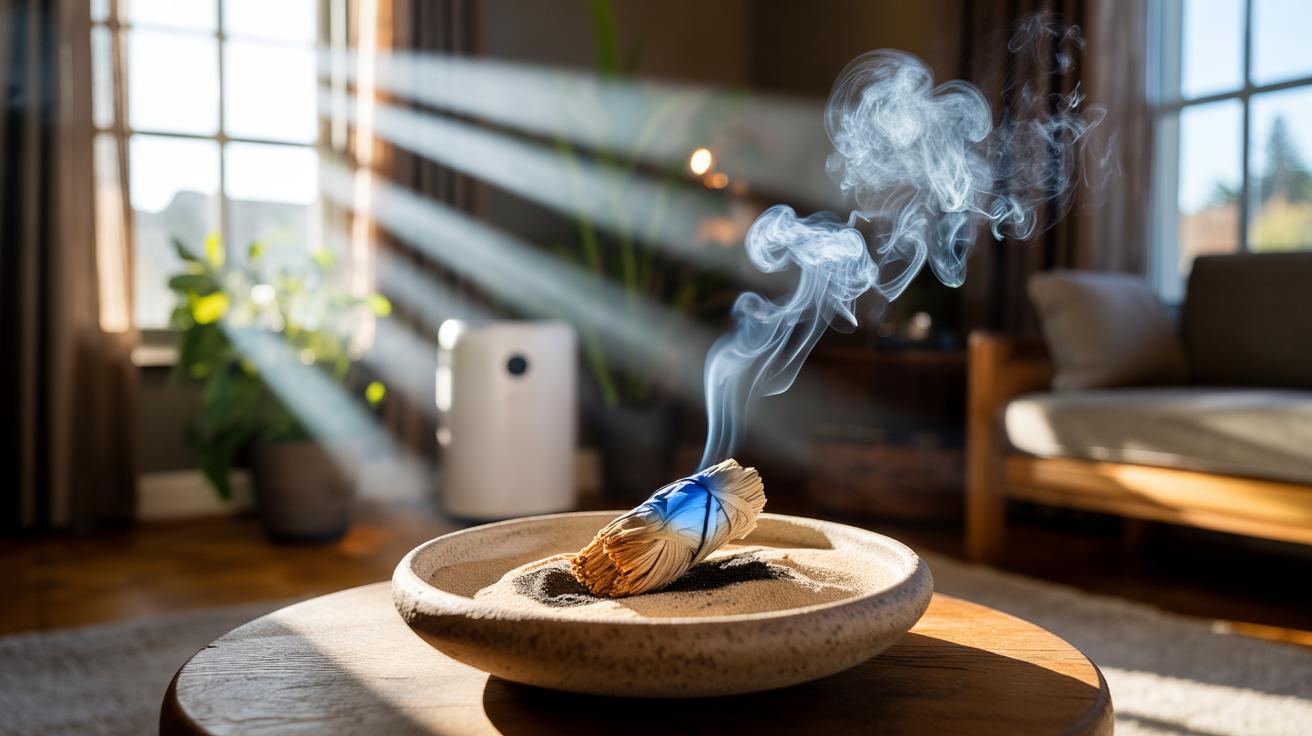
When a bundle of white sage (Salvia apiana) smoulders, the plant’s oils undergo pyrolysis, releasing a bouquet of aromatic compounds—terpenes such as 1,8-cineole and camphor—alongside water vapour and visible smoke. That smoke contains particulate matter (PM2.5), tiny soot-like particles that can hang in the air and settle onto surfaces. The fragrance travels quickly, masking odours and signalling “freshness” to the brain. There is no smoke without particulates, so the air is not literally cleaner during a burn, even if it smells more intentional and calm.
You may hear claims about negative ions neutralising contaminants. Flames and smoke can generate ions, but indoor levels are typically small and short-lived, often swamped by normal room air chemistry. Some plant smokes show lab-tested antimicrobial activity at close range, yet household conditions vary widely. In practical terms, the immediate effects are most noticeable as odour masking and a transient exposure that may reduce some microbes near the ember. This is not a substitute for cleaning, ventilation, or filtration, which physically remove pollutants rather than add new ones.
Does Smoke Actually Clean the Air?
Evidence is mixed and context-dependent. Studies on medicinal herbal smoke in controlled settings have reported temporary reductions in airborne bacteria, but the mixtures, burn times, and ventilation differ from home rituals. Research on white sage alone is limited, and lab gains do not automatically translate to typical living rooms. Meanwhile, the same smoke that may stress microbes also raises PM2.5 and volatile organic compounds (VOCs), which can irritate lungs and eyes, especially for people with asthma or allergies. Smoke is not an air purifier in the engineering sense.
Think of a sage burn as a sensory and symbolic reset rather than a primary hygiene tool. For genuine air cleaning, open windows for cross-breezes, vacuum with HEPA, and consider a certified HEPA filter in busy rooms. That combination tackles dust, pollen, and combustion by-products far more effectively. Ritual can still have value—just pair it with the basics that keep indoor air healthy for everyone at home.
| Aspect | Potential Benefit | Limitation/Notes |
|---|---|---|
| Microbial load | Short-lived antimicrobial exposure near smoke | Evidence varies; not equivalent to filtration or disinfection |
| Odours | Strong aroma masks stale smells | Does not remove source pollutants; residues may linger |
| Mood/ritual | Scent and ceremony promote calm and focus | Subjective; benefits tied to intention and context |
| Particles (PM2.5) | None | Increases indoor particulate load; ventilate or avoid if sensitive |
| Safety | Grounding routine | Open flame; ash and ember risks; use a stable holder and sand |
Practical Steps for a Safer, Effective Burn
Start small. Use a tightly bound sage bundle or a pinch of loose leaves in a heatproof bowl. Crack windows on opposite sides of the room to encourage cross-ventilation. Light briefly, blow out to a smoulder, then guide the smoke with a feather or hand near doorways, corners, and soft furnishings where odours gather. Keep a dish of sand or soil to extinguish and tap away ash. Short, occasional burns limit particulate build-up while preserving the sensory effect.
Safety sits above ritual. Never leave embers unattended; protect surfaces with ceramic or metal, and check smoke alarms. People with respiratory conditions, babies, and pets may be sensitive—keep them out of the room and ventilate thoroughly. Source thoughtfully: look for ethically harvested white sage or consider culinary sage and rosemary grown locally. If your goal is cleaner air, finish by airing out the space and vacuuming with a HEPA machine to remove smoke residues from carpets and curtains.
Scent, Ritual, and the Psychology of Cleanliness
Part of the power of smudging is psychological. Scent routes straight to the limbic system, linking aroma with memory and emotion. A deliberate, sensory ritual can signal transition—new season, new chapter—and reduce stress through attentional focus. Your brain tags the aroma as a “fresh start,” and that framing can influence how a room feels. This does not negate physics; it complements it. Pair intention with tangible actions: open the windows, clear clutter that traps dust, and let daylight in to shift how a room is perceived.
If “negative energy” reads as tension or stale habits, consider non-smoke options that support the same reset. Try a mindful walkthrough with a bell, a saline spritz, or a diffuser with sage hydrosol while ventilating. A quick surface wipe with microfibre removes the dust that odours cling to. The result is a space that is both symbolically lighter and, crucially, measurably fresher to breathe.
Burning sage has become a modern shorthand for clearing spaces, blending tradition with a sensory cue that many people find grounding. The smoke can mask odours and may exert short-lived antimicrobial action close to the ember, but it also adds particulates, so ventilation and filtration remain the gold standard for clean indoor air. Approached with respect for its cultural roots and with good fire safety, a brief, well-ventilated smudge can mark a moment of reset. How will you combine ritual, ventilation, and everyday habits to create a home that feels lighter and truly breathes easier?
Did you like it?4.8/5 (21)