In a nutshell
- 📰 Newspaper’s interlocked cellulose fibres create a lint-free buff that gently micro-polishes glass, delivering a crisp, streak-free shine when used with minimal moisture.
- 💧 Tiny channels enable capillary action to wick water into the material, while fine microtexture breaks surface tension—preventing droplet arcs and residue that cause streaks.
- 🧵 Choose uncoated newsprint or a tight-weave microfibre glass cloth; avoid glossy inserts and standard paper towels that shed lint and smear detergents.
- 🧽 Technique matters: apply a light cleaner, use overlapping S-motions, rotate to a dry section promptly, detail edges, and, on large panes, squeegee first then finish with a lint-free buff.
- ✅ Expect practical gains: faster drying, fewer products, and consistent clarity across seasons, with materials that prioritise absorption speed, low lint, and precise release from glass.
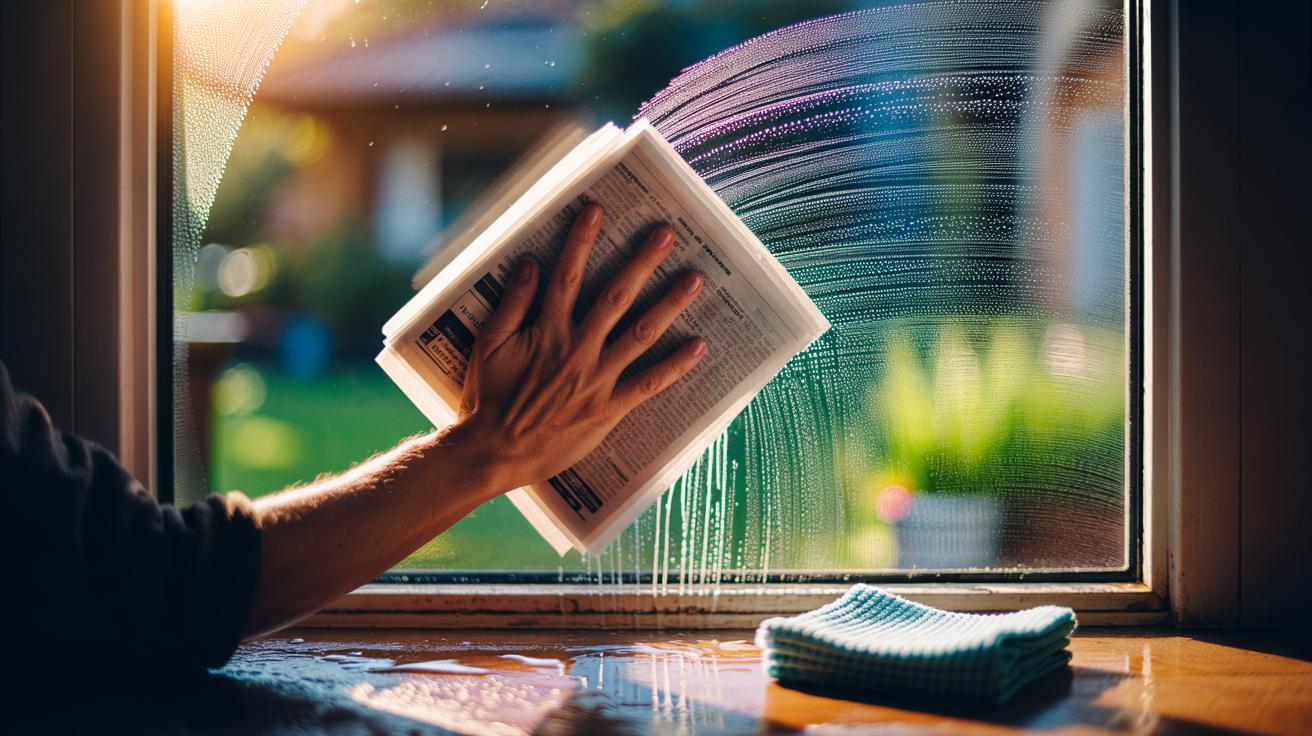
There’s an old-school trick that still cuts through rain smears and traffic film with newsroom efficiency: the humble newspaper buff. In an age of spray-and-walk-away promises, the secret remains material science. Lint-free fibres, the right level of absorbency, and a fine microtexture decide whether panes gleam or cloud. Streak-free results depend more on the wipe than the bottle. Properly handled, newsprint or a modern lintless cloth will lift moisture and residue cleanly, leaving a crisp, high-clarity finish. Here’s how the physics of paper and cloth outsmart fogging, smudges, and stubborn water marks—and how to put that science to work at your window.
Why Newspaper Still Works: The Science Behind Lint-Free Shine
Traditional newsprint is built from interlocked cellulose fibres that are long, fine, and relatively smooth. This fibrous mesh is dense enough to resist fraying, which means fewer loose strands to shed across glass. When lightly damp, the paper’s surface softens and conforms, creating more contact points that gather droplets and soap residue. Crucially, it stays lint-free in use, so you aren’t swapping water marks for fluff. The goal is to reduce what’s left behind while increasing what’s lifted away.
Ink worries are often overstated; modern soy or water-based inks tend to set firmly. If transfer happens, it signals oversaturation. Work with minimal moisture, rotating to a dry patch for the final buff. The slight micro-abrasion of paper fibres helps polish the last film without scratching. That’s why newspaper excels as a finishing tool: it finesses tiny streaks that wider-weave towels smear. Used correctly, it leaves a uniform optical surface that reads as real clarity.
Capillary Action and Microtexture: How Absorption Prevents Streaks
The secret weapon is capillary action. Within lint-free materials, tiny channels between fibres draw water sideways, spreading it thin and trapping it away from the glass. By wicking moisture into the body of the paper or cloth, these capillaries stop droplets from coalescing into tell-tale arcs. A fast wick reduces drying time and limits the silica-rich residue that etches a streak. Pair this with low-lint construction and you’ve addressed both solids and liquids in a single pass.
Then comes microtexture. Fine fibres act like a gentle squeegee at microscopic scale, breaking surface tension and slicing through the boundary film that holds grime to the pane. The best materials create uniform pressure and release, moving liquid off the glass and into their structure rather than shoving it around. That’s why glossy magazine stock struggles: coatings repel water, defeating absorption. Effective glass polishing is a subtle equilibrium—enough grab to collect moisture, enough glide to avoid drag.
Choosing the Right Paper and Alternatives: What Counts as Lint-Free
Not all paper is equal. Choose plain newsprint—uncoated, low-gloss, and reasonably firm. Avoid heavily coated inserts and shiny supplements that resist wetting. If your window cleaner is alcohol- or vinegar-based, the paper remains stable, so long as you don’t over-saturate it. Where ink transfer is a concern, turn to a microfibre glass cloth with a tight, low-pile weave (often labelled “glass and polishing”). Dense fibres mean less lint, faster wicking, and a clear finish at first pass.
For large panes or exterior work, many pros use a squeegee to strip bulk water, then finish with newsprint or a lint-free cloth. Avoid standard kitchen towels; their perforations tear, leave fluff, and trail binders. A genuine chamois works on pure water, yet can smear detergent films. The deciding factors are lint control, absorption speed, and how consistently the material releases wet residue from glass.
| Material | Lint Shedding | Absorption Speed | Reusability | Best For |
|---|---|---|---|---|
| Newspaper (uncoated) | Very low | Fast | Single-use | Final buff; indoor panes |
| Microfibre (glass weave) | Minimal | Very fast | High | All-round; polish without sprays |
| Paper towel | High | Moderate | Low | Quick spills, not finishing |
| Squeegee + chamois | None | Bulk removal | High | Large exterior panes |
The Technique: From Dilution to Drying for Streakless Panes
Mix a light cleaner: either a 1:1 water and white vinegar solution, a drop of washing-up liquid in a litre of warm water, or a spritz of isopropyl alcohol for greasy films. Mist the pane lightly—don’t drench. Wipe in overlapping S-motions with a folded square of newsprint or a glass microfibre, applying gentle, consistent pressure. Rotate to a fresh, dry quadrant as soon as you feel drag. Dry fibres polish; wet fibres smear.
Detail the edges where water congregates. Work top to bottom to manage gravity and prevent runs. On large panes, pull a squeegee first, then newspaper-buff the fine haze the rubber can leave behind. Sunlit glass demands speed: the quicker you wick and buff, the fewer evaporation marks you’ll chase. Finish by cross-checking from two angles; streaks often hide until the angle of light reveals them. A final, light-handed buff locks in that newsroom-grade, streak-free clarity.
Whether you swear by a broadsheet or a specialist cloth, the principle stands: lint-free material that wicks quickly delivers a sharper, cleaner window. The method rewards thrift and technique over gadgetry, turning yesterday’s headlines into today’s high-gloss finish. You’ll save on sprays, cut drying time, and gain repeatable results in drizzly British weather or bright winter sun. What combination of cleaner, material, and motion works best on your most challenging pane—and what will you tweak after seeing the science in action?
Did you like it?4.5/5 (27)