In a nutshell
- 🍋 Lemon + salt paste whitens boards by combining natural acidity and gritty abrasion to disrupt bacteria and lift stains and odours.
- 🧪 Acid lowers surface pH and salt adds osmotic stress, while scrubbing breaks biofilm—good for reducing microbes, not full sterilisation.
- 🧼 Safe method: cover with coarse salt, scrub using lemon halves, allow 3–5 minutes’ contact, rinse hot, dry upright, and oil wood with food-grade mineral oil.
- 🪵 Material matters: wood is porous with some antimicrobial traits; plastic is non-porous and dishwasher-safe but grooves trap residue—use colour-coded boards to limit cross-contamination.
- ⚠️ Limits and upgrades: after raw proteins use detergent first; for higher risk, add dishwasher (plastic) or hydrogen peroxide wipe; retire boards with deep fissures, mould, or persistent odour.
In home kitchens across the UK, the humblest remedies often prove the most effective. A simple paste of lemon and salt can lift stains, neutralise odours, and help suppress microbes on chopping boards—all without harsh chemicals. The trick lies in harnessing natural acidity and abrasion. Lemon’s citric acid lowers surface pH to a level many bacteria find intolerable, while coarse salt scours away grime and loosens biofilm. Used correctly, this method brightens boards and refreshes surfaces between deeper cleans. It is a practical, low-cost habit that turns pantry staples into a credible hygiene ally. Still, it is not a medical steriliser. Here’s how and why this paste works, the limits you should know, and when to switch to stronger measures.
Why Lemon and Salt Work
The power duo begins with citric acid. By dropping the board’s surface pH below neutral, lemon juice disrupts enzymes and weakens bacterial cell membranes. Many foodborne bugs, from Salmonella to E. coli, struggle to maintain internal balance in acidic conditions, reducing their viability. Meanwhile, sodium chloride exerts osmotic pressure, drawing water out of microbes and stressing their defences. Together they form a concentrated, slightly sticky paste that clings to the wood or plastic long enough to act. The lemon’s mild bleaching effect also lifts tannin stains from tea, beetroot, and herbs, restoring a cleaner look and smell.
Equally important is mechanical abrasion. Coarse salt granules break up greasy films and biofilms, exposing hidden bacteria so the acid can reach them. This scrubbing removes food residues—the fuel that microbes need to thrive. Think of lemon-salt paste as a one-two punch: chemical stress plus physical scouring. It’s effective for everyday refreshes and odour control, especially on wooden boards that should not be soaked. Remember, though, it reduces microbial load; it does not “sterilise” to hospital standards.
How to Make and Use the Paste Safely
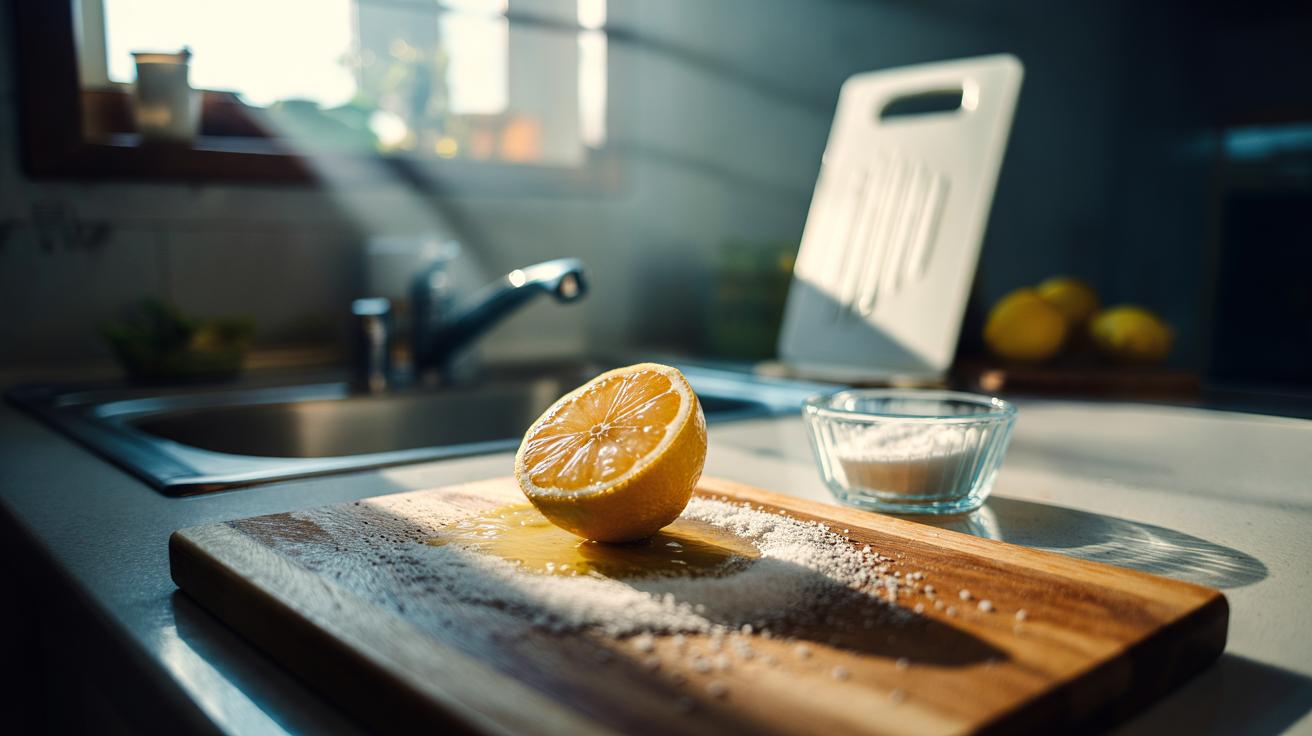
Cut a lemon in half and sprinkle a generous layer of coarse salt (kosher or sea salt) over the dry board. Use the lemon cut-side down as a built-in scouring pad, squeezing lightly to release juice as you work in tight circles. Aim for a thick, sandy paste that clings to the grain. Allow a contact time of 3–5 minutes to let the acid do its work, then scrub again for good measure. Rinse with hot water, scrape excess moisture, and stand the board upright to dry thoroughly. For wood, finish with a thin coat of food-grade mineral oil to resist moisture.
Never mix acidic cleaners with bleach—dangerous fumes can form. Avoid steel wool on plastic boards, which can gouge the surface, and don’t soak wooden boards, which encourages warping and splits. If your board handled raw meat, clean first with hot water and washing-up liquid, then apply the lemon-salt routine for deodorising and brightening. Drying is non-negotiable: bacteria love moisture, so leave plenty of air circulation. Done weekly, this ritual keeps boards visibly brighter and less hospitable to microbes.
Wood Versus Plastic: What the Science Says
Wood and plastic behave differently under the same paste. Solid wood (beech, maple) is porous; it can wick moisture inward where microbes dehydrate and die off. Certain woods also contain antimicrobial tannins. Plastic is non-porous, which helps with rapid cleaning and, in many cases, dishwasher disinfection. Yet plastic accumulates knife scars that trap residue and bacteria. The lemon-salt paste excels at clearing residues in those grooves, but deep cuts may still harbour organisms. Match your method to your material and the foods you prepare most often.
| Board Type | Pros | Cautions | Best Use |
|---|---|---|---|
| Wood (Beech/Maple) | Natural antimicrobial traits; gentle on knives; looks great | Do not soak; dry fast; oil monthly | Bread, fruit, veg, cooked foods |
| Plastic (HDPE) | Dishwasher-safe; non-porous; colour-code options | Knife grooves trap debris; can warp with heat | Raw meat, fish, poultry prep |
For wood, the lemon-salt paste delivers standout results: it brightens, deodorises, and supports the board’s own drying defence. For plastic, it’s an effective pre-rinse scrub before the dishwasher. Colour-coded boards reduce cross-contamination risks, especially in busy households. If deep stains or smells persist after treatment, consider a longer contact time or repeat the process. Persistent odour is a sign of embedded residue—time to escalate your clean.
Limits, Hygiene, and When to Upgrade Your Routine
Home cooks should view lemon and salt as part of a layered hygiene strategy. After raw proteins, wash with hot water and detergent first, then apply the paste for surface brightening and smell control. When illness risk is higher—immunocompromised guests, pregnancy, or very young children—step up to stronger options: dishwasher cycles for plastic, or a 3% hydrogen peroxide wipe followed by thorough rinsing. Natural does not always mean sufficient for every scenario. On wooden boards, sun-drying for a short spell can assist odour release, but avoid prolonged heat that may crack the grain.
Know when to retire a board. Deep fissures, black mould stains, persistent odour, or warping indicate it’s past its best. Plastic that is heavily gouged should be replaced or sanded smooth. For wood, occasional sanding and re-oiling can reset the surface. Store boards upright to promote airflow. If you cook daily, schedule a weekly lemon-salt treatment and a monthly deep clean. Hygiene is a habit, not a one-off. Done consistently, this simple paste keeps your prep space brighter, safer, and more pleasant to use.
As a kitchen ritual, the lemon and salt paste earns its place: it lowers pH, strips biofilm, lifts stains, and freshens odours, all while being gentle on most boards and kinder to the environment than bleach-heavy routines. Use it as a smart first line of defence, not a silver bullet. For raw meat prep, layer in detergent washes, dishwasher cycles for plastic, and vigilant drying. Keep an eye on damage, replace tired boards, and oil wood regularly. With these habits, your chopping stations stay bright and dependable. How might you adapt this routine—by board type, cooking style, or household needs—to raise your kitchen’s hygiene game?
Did you like it?4.6/5 (28)