In a nutshell
- 🔬 The onion’s thiosulfinates and other sulfur compounds lower surface tension, wetting and disrupting oxidised grease films; heat turns juice to steam for a modest chemical assist—not soap-level saponification.
- ♨️ On hot grates (about 180–230°C), juice-driven steam softens residues while cellulose fibres provide gentle abrasion; mild acidity helps deglaze, and there are no risky wire bristles.
- 🧅 Method: preheat, spear a halved onion, scrub in overlapping strokes, refresh the cut face as needed, briefly close the lid to trap steam, then burn off and apply a light oil film to protect the grate.
- 🛡️ Safety and limits: rely on high heat to sanitise; use a scraper/heat-rated nylon brush or baking soda paste for heavy carbon; moderate pressure on porcelain enamel; gloves if sensitive to alliums.
- ✅ Benefits: quick, low-cost, and chemical-light; reduces sticking, avoids bristle hazards, offers mild antimicrobial effects, and keeps flavours clean between cooks.
It sounds like a pub myth, yet the onion-on-a-fork trick has science behind it. When a hot grate meets a cut onion, heat, moisture, and sulfur compounds work together to lift stubborn fats. The onion’s juice loosens char, its fibres offer a gentle scrub, and reactive sulfur chemistry helps disrupt greasy films. Crucially, this is not soap-level degreasing; it’s a clever, low-tech boost that improves the effectiveness of mechanical cleaning. For summer cooks and year-round grillers alike, it’s a fast way to refresh bars between batches, add a light aromatic note, and reduce reliance on harsh chemicals while still tackling build-up that mutes flavour and leaves food sticking.
How Sulfur Compounds Loosen Grease
Slice an onion and you unleash enzymes that rapidly convert amino-acid sulfoxides into volatile sulfur species, notably thiosulfinates and the lachrymatory syn‑propanethial S‑oxide. On a hot grate, these molecules mingle with steam and loosen hydrophobic residues. They don’t “saponify” fat like an alkali would, but they can alter surface tension, wetting the film so water penetrates under the grease. Some thiosulfinates also interact with oxidised lipids and proteinaceous crusts, helping disrupt the crosslinked matrix that glues grime to metal.
The result is a modest chemical assist paired with heat. Think of the onion as a mild reactive rinse that makes scrubbing and steam more effective, rather than a miracle solvent. Antimicrobial properties are a bonus: the same sulfur chemistry that gives alliums their bite inhibits microbes lingering on warm—but not sterilised—grates. Combined with the onion’s natural acidity and cellulose fibres, you get a short, sharp clean-up without reaching for detergents.
| Onion/Heat Factor | Primary Action on Grime | What It Means for Cleaning |
|---|---|---|
| Thiosulfinates | Lowers surface tension; disrupts oxidised films | Grease lifts more readily with light scrubbing |
| Steam from juice | Softens carbonised fat | Easier to wipe without gouging the metal |
| Cellulose fibres | Gentle abrasion | Scrubs without the risk of wire bristles |
| Mild acidity (pH ~5) | Helps deglaze metal surface | Assists removal of thin, sticky residues |
| Heat (180–230°C) | Mobilises fats | Maximises chemical and mechanical effects |
Heat, Steam, and Abrasion: The Practical Mechanics
A cut onion is mostly water bound in plant cells. Press it onto hot bars and the water flashes into steam, forcing its way beneath congealed fat while carrying sulfur compounds into the residue. The heat softens polymerised oils, and the onion’s flesh acts as a squeegee, pushing loosened grime to the edges. For best results, clean while the grill is hot but not roaring—roughly 180–230°C gives steam without instantly scorching the onion. This sweet spot also preserves the grate’s seasoning on cast iron while still shifting stubborn films.
The onion’s texture matters. Those stringy layers provide abrasion gentle enough for enamel and stainless steel, yet assertive enough to lift particulates that defeat a damp cloth. Sugars in the juice can caramelise lightly, leaving a faint, pleasant aroma that dissipates with a short preheat. Because there are no wire bristles, you also avoid the rare but serious hazard of metal fragments sticking to food—one reason many pitmasters keep an onion to hand.
Step-by-Step: Using an Onion to Clean Your Grill
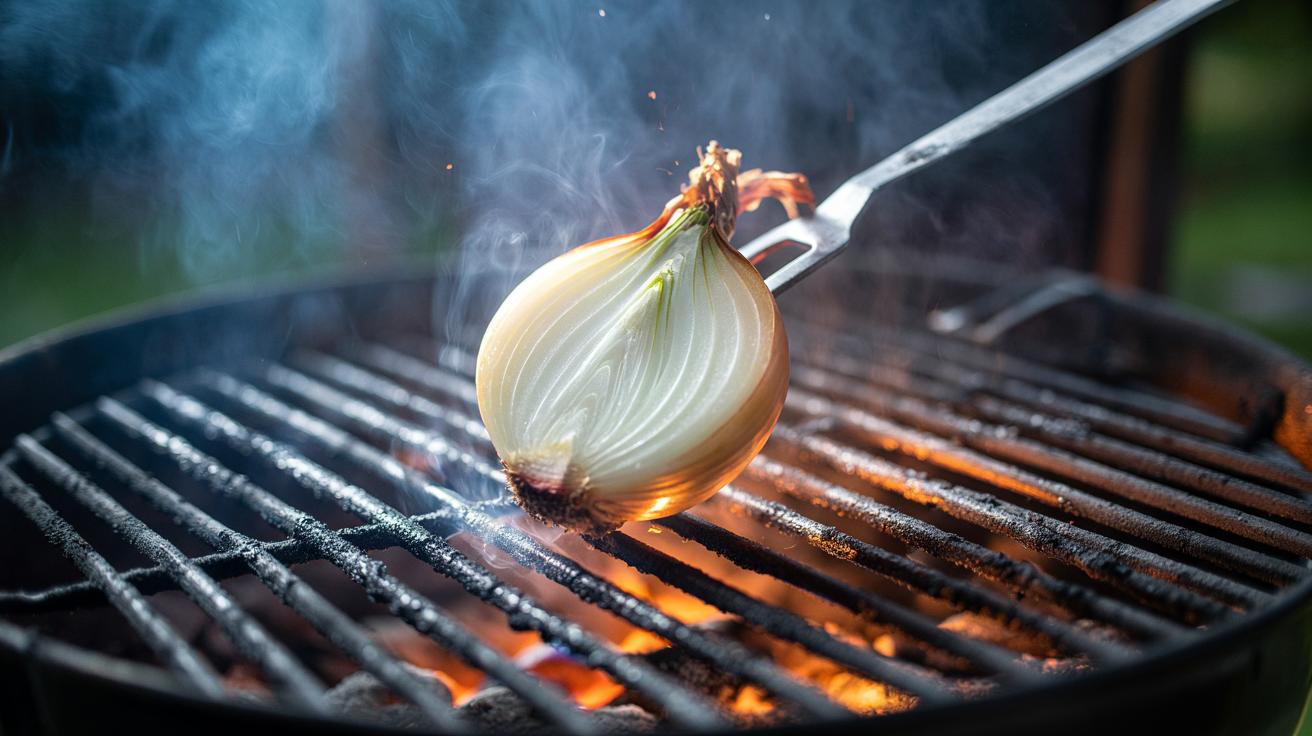
Heat the barbecue to cooking temperature, then cut a firm, halved onion. Spear it on a long fork, cut face forward. Sweep along the grates with steady pressure, letting the onion’s juice bead and hiss. Re-cut the face for fresh juice when it dries. Work in overlapping strokes so steam and sulfur compounds can reach every bar and contact point. For heavy build-up, park the hood for a minute to trap steam, then resume scrubbing. Wipe the edge of the onion on a drip tray to shed lifted grease rather than smearing it back.
After scrubbing, run the burners or coals for five minutes to dry the metal and burn off any lingering onion sugars. Then oil a folded towel lightly and swab the bars to restore a thin protective film—especially on cast iron. This sequence—onion, heat, light oil—reduces sticking on your next cook and avoids detergent residue. It’s quick, repeatable, and suits weeknight grilling as well as long weekend sessions.
Safety, Limitations, and When to Use Alternatives
There are limits. The onion method excels at day-to-day maintenance but will not erase thick, carbonised layers or flaking lacquer. For that, reach for a scraper, a nylon brush rated for heat, or a baking soda paste on cooled grates. Do not rely on an onion to sanitise; high heat is your steriliser. After cleaning, crank the grill for a short bake-out, which neutralises microbes and dries hidden moisture. If you’re sensitive to alliums, gloves help; the aroma fades quickly once the grill is fired.
Be mindful of materials. Stainless steel and cast iron handle the method well; porcelain enamel benefits from the onion’s gentler abrasion. Avoid excessive pressure that might chip coatings. If you’ve marinated in sugary sauces, clean promptly—sweet residues burn hard. For smokers, a warm-down pass with an onion after service keeps racks usable without dismantling the set-up. And if you’re worried about flavour carryover, give the bars a minute of heat post-scrub before the next food hits.
The onion-on-grill technique works because chemistry meets common sense: thiosulfinates change how grease behaves, steam softens it, and the onion’s fibres sweep it away. It is cost-free, prevents stray bristles, and keeps flavours bright between courses. Used hot and followed by a brief burn-off, it’s a reliable maintenance ritual rather than a deep-clean solution. With barbecue season stretching across the British calendar, a humble onion can be the difference between sticking and searing. Will you try this reactive scrub on your next cook, or do you swear by a different routine for keeping your grates in prime condition?
Did you like it?4.6/5 (30)