In a nutshell
- 🧪 Fresh coffee stains quickly due to tannins, oils, and melanoidins, with heat and capillary action driving pigments deep into surfaces.
- 🧂 Salt crystals form micro-channels and dissolve into brine, creating capillary pull that wicks liquid before pigments set; prefer coarse salt and do not scrub.
- ⏱️ Rapid rescue: lightly blot edges, ring with salt, cover the centre, wait 3–5 minutes, then lift and repeat if needed; finish with a cool, damp wipe and thorough drying.
- 🪵 Surface smarts: sealed wood and laminates are forgiving; oiled/waxed wood needs gentle handling; marble/limestone can etch; remove wet salt from stainless steel to prevent pitting.
- ✅ Why it works: salt is inert, colourless, tidy, and cheap—an everyday fix that averts harsh cleaners; the rule is cover fast, lift cleanly, finish dry.
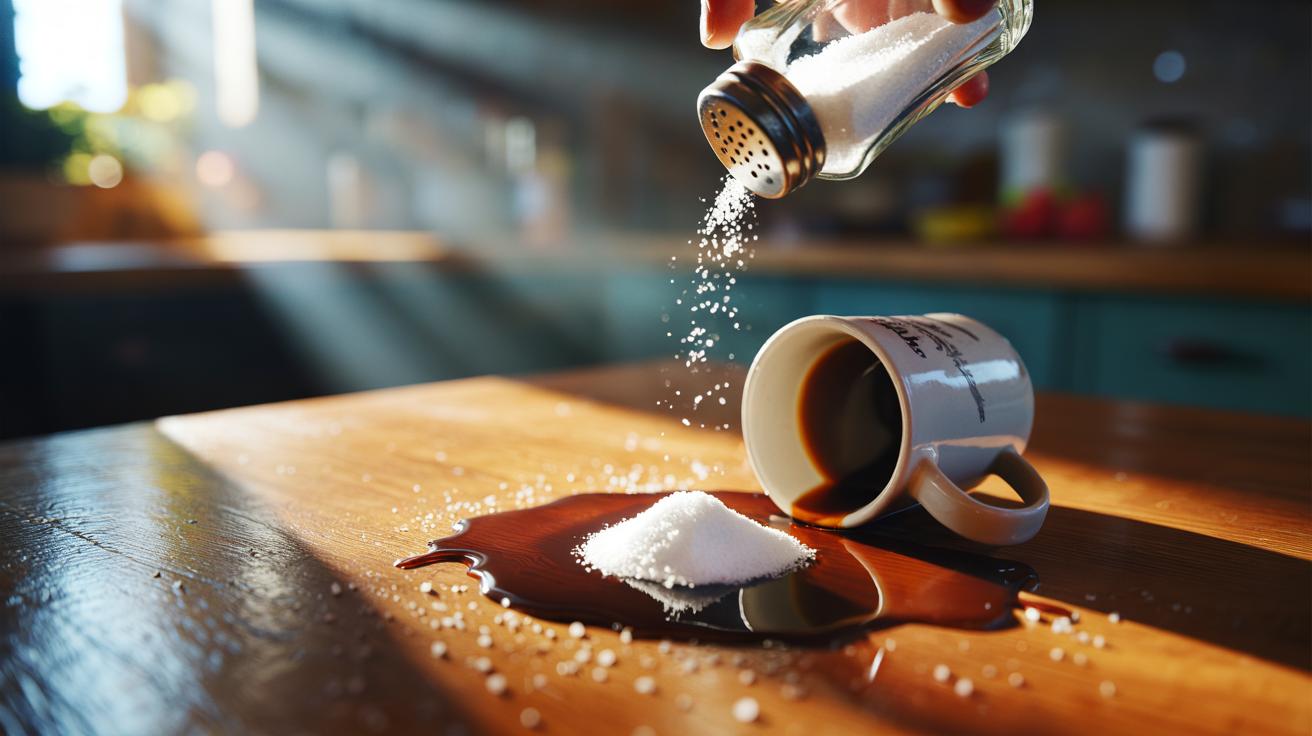
You’ve upended a fresh mug of coffee, and your beautiful tabletop is seconds away from wearing a permanent brown halo. In British kitchens and cafés alike, the simplest rescue sits an arm’s length away: the salt shaker. Sprinkle quickly and those pale crystals act like a thirsty sponge, pulling liquid from the surface before pigments and oils can bite. This isn’t folklore; it’s a neat blend of physics and chemistry. Understanding why coffee marks so fast, and why salt buys you precious time, helps you save wood, stone, and fabric finishes without panic. Speed is everything—reach for salt before heat and tannins set the stain.
Why Fresh Coffee Stains So Fast
Hot coffee carries a cocktail of tannins, oils, and dark melanoidins—the compounds forged during roasting that give brew its nutty, caramel notes and its stubborn colour. Heat accelerates their movement, so when coffee hits a table, these molecules spread rapidly. On wood, warmth softens finishes and opens micro‑pores; on fabrics, fibres perform capillary action, wicking fluid—the darker components travel with it. Once the liquid evaporates, pigment lodges in the grain or weave, leaving the familiar brown bloom that can feel immovable.
Timing is the difference between a quick clean and a lingering blemish. Act in the first minute and you can prevent most stains from anchoring. That’s when liquid still outweighs residue and can be intercepted. If you wait, solvents required to shift what’s left become harsher and risk dulling lacquer, lifting oil finishes, or abrading soft stone. The goal is simple: remove the watery carrier and its dissolved colourants before the surface absorbs them.
How Salt Crystals Absorb Liquid
Table salt—sodium chloride—isn’t strongly hygroscopic in air, but it dissolves instantly in water. Tip a mound onto a fresh spill and you create a bed of hard crystals with tiny gaps between grains. Those gaps generate capillary pull, drawing liquid off the surface and into the salt pile. As the outer layer dissolves, it becomes brine with lower water activity than the spill, nudging more liquid into the crystal mass. The large, angular particles of coarse salt excel here: they hold structure, keep the brine contained, and continue wicking until the visible puddle vanishes.
This is why salt outperforms napkins and why it’s cleaner than sugar. Paper pushes liquid sideways and can grind pigment into a finish; sugar dissolves but leaves stickiness. Salt is inert, colourless, and easy to sweep away. Cover, don’t scrub: you want absorption, not abrasion. Fine table salt works in a pinch, yet coarse or kosher crystals create better channels and are easier to lift without smearing.
Step-by-Step: Using Salt to Save Your Table
First, stay calm. Blot any standing puddle gently with the edge of a clean cloth—just enough to stop the flow. Build a ring of coarse salt around the outer edge of the spill to arrest spread, then flood the centre with more crystals. Leave the mound to work for three to five minutes. You’ll see it darken as the brine forms. Brush the salt away with a card or dry cloth, lifting rather than pushing. If a shadow remains, apply a fresh sprinkle for another short round, then wipe with a barely damp cloth and dry thoroughly.
On fabric seat covers, slide kitchen roll beneath the stain before salting to stop wicking to deeper layers. For stubborn shadows on sealed wood, a second pass using salt followed by a mist of cold soda water can lift residual colour without harming finishes. Do not rub: friction drives pigment into pores and scuffs lacquer. Always test delicate coatings in an inconspicuous spot. Finish by drying the area completely; water left under salt can mark soft coatings or promote rust on hidden fasteners.
Wood, Stone, and Fabric: What Surfaces Benefit Most
Salt is gentle on most everyday finishes when used quickly and then removed. Varnished or polyurethane‑sealed wood tolerates the method well; the salt draws liquid before it penetrates. Oiled or waxed wood needs slightly more care, as finishes are breathable; speed and light pressure are vital. On marble, limestone, and some granites, coffee acids can etch, so the prime task is to halt contact time—salt helps by immobilising the pool. Laminates are forgiving, though chips and seams wick fast. Stainless steel is safe briefly, but do not leave wet salt on metal: it encourages corrosion at scratches. Upholstery benefits from salt’s containment, especially when paired with blotting beneath.
Choose the right grade: coarse crystals for control, fine for quick dustings in tight seams. Remember that salt can scratch soft acrylics if rubbed, so lift, don’t grind. After cleanup, neutral care—cool water, mild soap, dry—prevents rings. The table below sums up the best practice for common surfaces and flags simple cautions to keep your furniture unblemished.
| Surface | Best Salt Grade | Act Within | Caution |
|---|---|---|---|
| Varnished wood | Coarse | 1 minute | Lift salt; avoid rubbing that dulls gloss |
| Oiled/waxed wood | Coarse | 30 seconds | Follow with light re‑oil if a pale ring appears |
| Marble/limestone | Coarse | Immediate | Wipe promptly; acids can etch if left |
| Granite (sealed) | Coarse | 2 minutes | Check seal; avoid abrasive motion |
| Laminate | Either | 2 minutes | Watch edges and seams |
| Upholstery | Fine | Immediate | Pad beneath fabric to stop wicking |
| Stainless steel | Either | 1 minute | Remove salt fully to avoid pitting at scratches |
It’s reassuring that a humble shaker can outwit a spill: salt corrals the coffee, wicks it off the surface, and denies stains the chance to set. Used swiftly and gently, the crystals prevent panic scrubbing and protect finishes from harsher remedies. The method is tidy, cheap, and ready the instant disaster strikes. Pair it with a cool, damp wipe and thorough drying, and your table should look unruffled by the mishap. The rule is simple: cover fast, lift cleanly, and finish dry. What other quiet kitchen standbys have saved your surfaces when seconds mattered?
Did you like it?4.6/5 (25)