In a nutshell
- 🧂 Salt’s crystal lattice and mild hygroscopicity drive capillary action that wicks liquid and pigments from fibres, stopping stains before they bind—most effective on fresh spills.
- 🕒 Act fast: blot, don’t rub, then apply a 3–5 mm layer of salt, wait 10–20 minutes (up to 30 for urine), lift the crust, vacuum, and repeat once if needed.
- 🧵 Choose grains wisely: fine salt for rapid uptake, coarse for channeling; a blend works on plush piles. Avoid salt on silk/viscose and use solvent-based cleaners for grease or wax.
- 📊 Targeted tactics: red wine, coffee/tea, urine, and fresh blood all respond well; use cool water mists where noted and finish odour control with bicarbonate of soda.
- 🧰 Smart limits: test on richly dyed wool, use cold water for protein stains, groom pile after cleaning, and if a mark persists after two cycles, call a professional.
Spilled red wine, black coffee, even pet accidents: few household moments spark more panic than liquid sinking into a pale wool weave. Yet there is a calm, almost alchemical fix sitting in every kitchen—common table salt. When thrown onto a fresh spill, its crystals pull liquid up and away from fibres before stains set. Speed is everything: the first minute decides whether pigment becomes permanent. By understanding how salt’s structure acts as a miniature pump, homeowners can prevent lasting marks, protect pile, and save on costly call-outs. Here is the science, the method, and the limits of this deceptively simple remedy.
Why Salt Works on Fresh Spills
Salt’s power lies in its crystal lattice and its mildly hygroscopic nature. Each grain offers sharp edges and microscopic voids that draw liquid through capillary action, wicking moisture into a network of tiny channels. As liquid migrates, dissolved pigments—anthocyanins in wine, tannins in tea—travel with it, leaving carpet fibres drier and less saturated. By removing water quickly, salt denies colour molecules the time they need to bind with dyes in natural or synthetic piles. This is why timing matters: fresh spills release readily; dried ones cling.
There is a second benefit. As salt absorbs, it clumps and forms a crust that locks in the captured liquid, reducing spread across the nap. That physical barrier stops a spill creeping into adjacent tufts. The effect is most dramatic within the first five minutes, when gravity and wicking would otherwise carry the stain into the underlay. Used promptly, salt acts as an inexpensive, sacrificial sponge you can lift away and discard.
Step-By-Step Method for Carpet Emergencies
Start with calm, clean basics. Blot the area gently with a white, lint‑free cloth or kitchen towel to remove surface liquid. Do not rub; friction forces pigment deeper and distorts the pile. Lift any solids with a spoon edge. For blood or dairy, use cold water only at this stage—heat sets proteins—then blot again. Aim to leave the surface damp rather than glossy-wet.
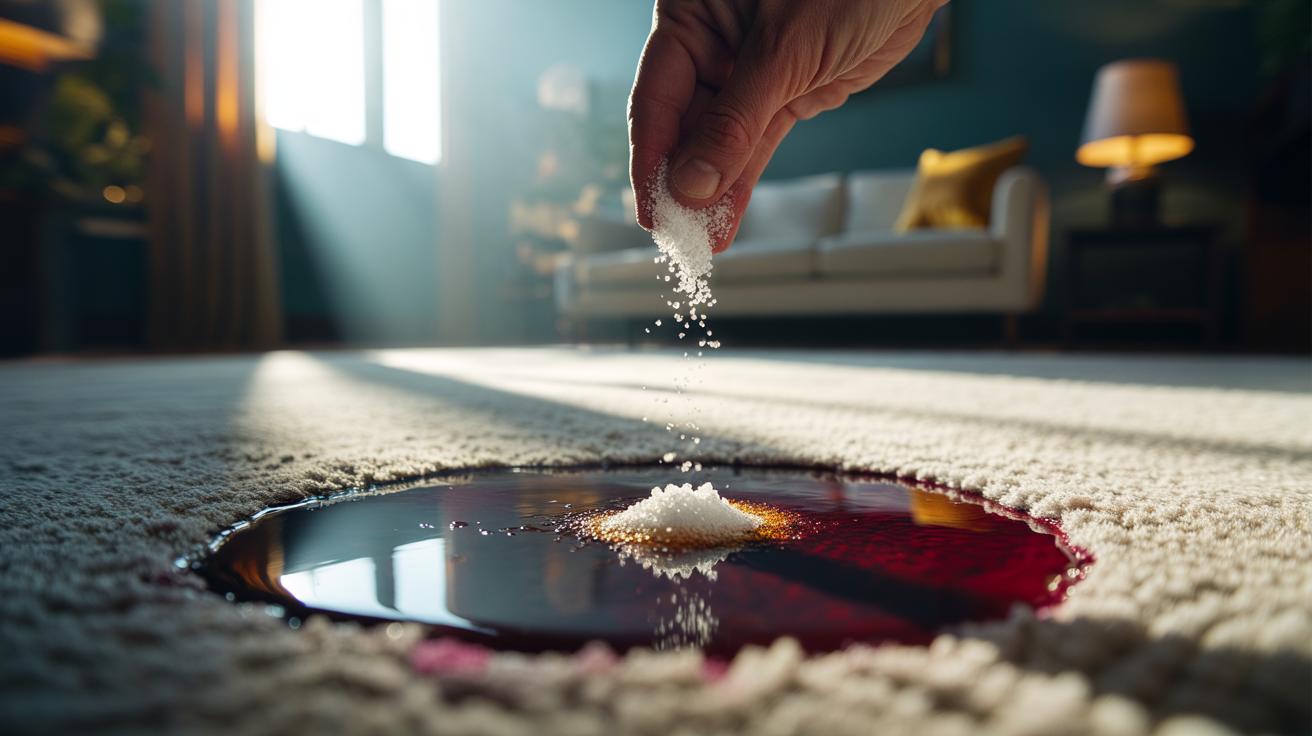
Now deploy the salt. Sprinkle a generous layer—around 3–5 mm—of ordinary table salt directly over the damp zone, extending 1–2 cm beyond the visible edge. For deep pile, press lightly with fingertips to ensure contact without grinding. Leave in place for 10–20 minutes for wine, tea, and juice; up to 30 minutes for pet urine. Resist the urge to peek; uninterrupted contact produces a more complete lift.
Once clumped, scoop the salt crust into a dustpan, then vacuum thoroughly. If a faint mark remains, mist with cool water, blot again, and apply a second, thinner salt pass. Finish by grooming the pile with a clean fork or soft brush to realign fibres. For lingering odour, dust with a teaspoon of bicarbonate of soda after the area is dry, leave an hour, and vacuum.
Choosing the Right Grain and When Not to Use Salt
Grain size influences performance. Fine table salt offers massive surface area for rapid uptake; coarse rock or kosher salt creates channels that keep a spill from smearing. A 70/30 blend (fine/coarse) works well on plush carpets where speed and structure both help. Iodised varieties and anti‑caking agents are typically present in tiny amounts and do not hinder absorption. If colour transfer onto your blotting cloth is heavy, choose coarse grains to reduce smudge risk. On wool and richly dyed rugs, always test in a discreet corner first to ensure no lightening occurs when moisture is introduced.
Salt is not a cure‑all. It excels with aqueous spills but struggles with grease, lipstick, motor oil, or candle wax because salt is not a solvent. For oily marks, use a suitable solvent‑based cleaner or professional service. Avoid salt on silk or viscose where water can watermark; opt for specialist care. Old, set stains may require enzyme (for urine) or oxidising solutions. When in doubt, stop, blot, and consult the rug maker’s care guidance.
Quick Reference: Common Spills and Salt Timing
Different liquids behave differently in fibres, so match your approach to the culprit. Use the guide below to make fast, correct choices and avoid avoidable damage. Treat while the spill is still glossy-wet for the best outcome. Where “first move” lists water, keep it cool, never hot. For odour issues, finish with bicarbonate of soda once dry.
| Spill Type | First Move | Salt Layer | Wait Time | Notes |
|---|---|---|---|---|
| Red wine | Blot; optional cool water mist | 3–5 mm | 15–20 min | Repeat once if tint remains |
| Coffee/tea | Blot; cool water | 3–4 mm | 10–15 min | Tannins lift best when fresh |
| Pet urine (fresh) | Blot thoroughly | 4–5 mm | 20–30 min | Follow with enzyme for odour |
| Blood (fresh) | Cold water blot only | 3–4 mm | 15–20 min | Never use warm water |
| Cooking oil | Do not use salt | — | — | Use solvent-based cleaner |
These timings are guides, not absolutes. Humidity, pile density, and dye chemistry all play a role. When the salt crust forms hard clumps, it has done its job; remove it, reassess, and either repeat once or move to gentle rinsing. If a stain persists after two cycles, stop aggressive action to avoid pile distortion and call a professional. A measured approach preserves both colour and texture.
Salt’s elegance lies in its simplicity: crystals that seize liquid before it settles, saving both fibres and pride. Armed with quick blotting, the right grain, and realistic limits, you can turn panic into procedure and keep carpets looking new for longer. The method costs pennies, takes minutes, and often averts a costly clean. The secret is acting decisively while the spill is fresh. Which room in your home would benefit most from a ready “salt-and-blot” kit, and how will you tailor it to the spills you face most often?
Did you like it?4.6/5 (30)