In a nutshell
- 🍷 Salt works by capillary action, wicking wine into its crystalline lattice and sequestering moisture before dyes bond to fibres—speed is essential.
- 🧂 Method: blot, then heap 3–5 mm of table salt, leave undisturbed (10–20 minutes for fabrics, longer on carpets), lift away, rinse from the reverse, pre-treat, and wash cool—never rub.
- 🧵 Fabric nuance: effective on cotton, linen, and carpets; use care on silk, viscose, and wool; avoid on leather/suede; no heat until the stain is gone.
- 🧪 Alternatives: bicarbonate for odours, clay cat litter for large carpet spills, cornflour for oily mixes—salt remains the first responder.
- 🧭 Strategy: prioritise sequence over force—blot, salt, rinse, reassess—to prevent setting and minimise damage.
Few domestic crises cause such instant panic as the slosh of red wine across a pale carpet or crisp shirt. The first instinct is to rub; resist it. The smarter reflex is to reach for table salt and pour a sober mound straight onto the splash. It looks like witchcraft, but there’s clear physics at play: the crystalline pile acts as a thirsty sponge, pulling pigment and liquid away from the fibres before the stain sets. Speed trumps everything; act in the first minute and you can often erase the evidence entirely. Here’s why this classic trick works—and how to do it right.
Why Salt Works on Red Wine Stains
Red wine’s fearsome reputation comes from anthocyanin dyes and tannins, small molecules that bond readily with fabric fibres, especially natural ones like cotton and linen. Sodium chloride’s crystalline lattice offers tiny capillaries that draw liquid upwards by capillary action, siphoning wine from the pile of a carpet or the weave of a shirt. At the same time, a dense layer of salt creates a local gradient that encourages water to migrate into the crystals, taking dissolved pigments along for the ride. The faster you create this absorbent bed, the less time pigments have to complex with fibres.
Left alone, wine’s acids and pigments begin to oxidise and link to the fabric, a process accelerated by heat and time. Salt interrupts that clock by sequestering moisture before those reactions lock in. Think of it as crowd control: remove the crowd (liquid) and the troublemakers (dyes) disperse. This is why the salt must be applied thickly and left to work; thin sprinkles merely dissolve and spread the mess. Generosity with salt now saves you harsh chemicals later.
Step-by-Step: The Right Way to Use Salt
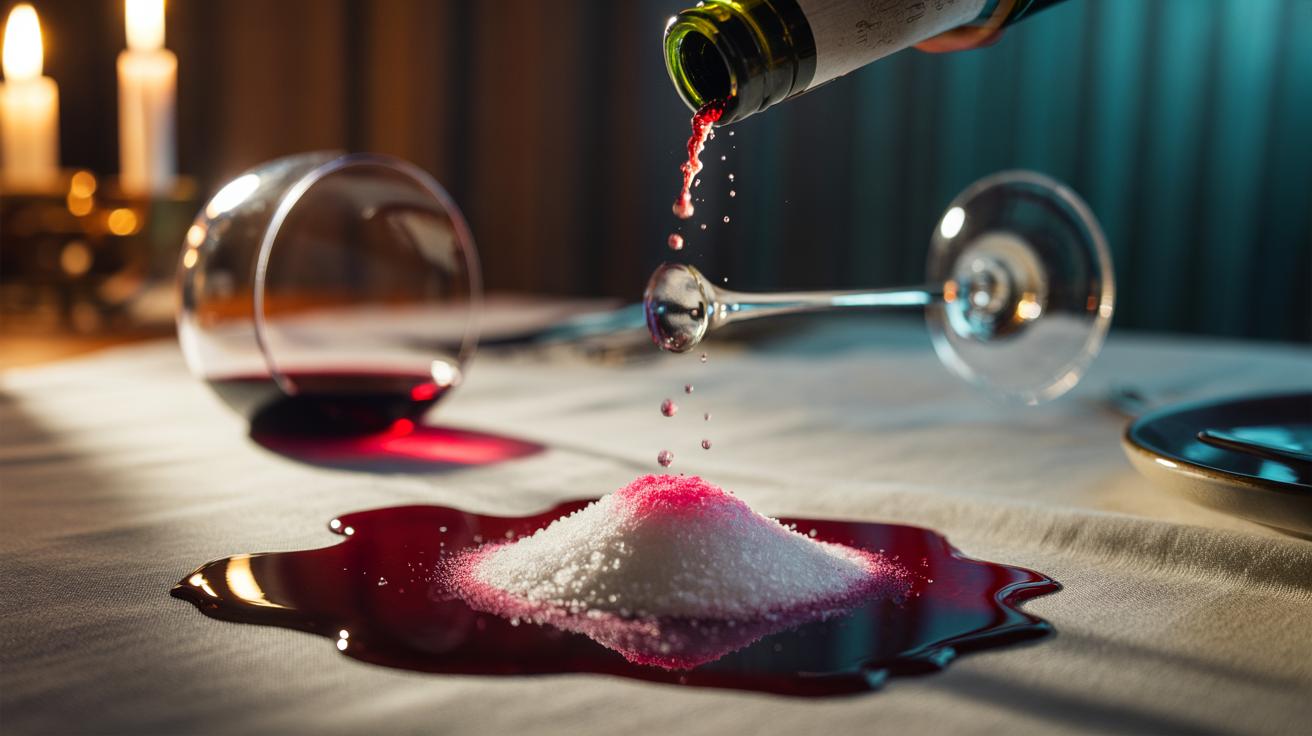
First, blot—don’t rub—with clean, white paper towels to remove excess wine from the surface. Immediately heap a 3–5 mm layer of table salt over the entire damp area, extending past the visible edge. The crystals will start to pinken as they wick liquid upwards. Leave it undisturbed for 10–20 minutes on fabric and up to an hour on carpet. Movement grinds pigment deeper; stillness lets salt do the lifting. Once the salt turns crimson and crusty, lift it away with a spoon and discard.
Follow by rinsing from the reverse side of the fabric with cool water to flush residual dyes out, then pre-treat with a mild oxygen-based stain remover and launder cool. On carpets or upholstery, mist with cool water, blot again, and repeat a lighter salt application if a shadow remains. Avoid hot water and irons at this stage. Heat will fix any lingering pigment permanently. If in doubt, spot-test hidden areas for colourfastness before pre-treating.
Testing the Limits: Fabrics, Finishes, and Timing
Salt is superb for sturdy, colourfast textiles—cotton shirts, table linens, wool-blend carpets. On silk, viscose, and pure wool, handle gently: blot, use a conservative salt layer, and keep the fabric flat to avoid tide marks. Upholstery with stain-guard finishes often responds brilliantly because the coating keeps wine near the surface where salt can access it. Leather and suede are different beasts; skip salt and opt for specialist cleaners. One rule spans all materials: never add heat until the stain is visibly gone.
Timing is the critical variable. Fresh spills remain mobile and extractable; dried stains have begun to crosslink. If you discover a mark the next day, rehydrate with cool water, blot, and then apply salt to draw out the revived liquids. Expect diminishing returns and be ready to escalate to enzymatic or oxygen-based cleaners. On patterned fabrics, avoid aggressive rubbing that can lighten dyes around the stain, creating a pale halo. Patience and repeated light passes beat one brutal scrub.
Salt Versus Other Absorbents
Not all absorbents behave alike. Table salt is cheap, available, and excellent at wicking aqueous spills quickly. Bicarbonate of soda offers mild alkalinity that can help with odours but may leave chalky residue and can interact with silk or wool finishes. Cat litter (clay-based) excels on larger carpet spills due to high capacity, though granules are awkward on garments. Cornflour can help with oily stains, less so with wine. In a pinch, layering paper towel beneath and salt above creates a pull-through “sandwich” that speeds extraction from clothing. Choose by spill size, surface, and what’s in your cupboard.
As a quick reference, consider the options below for common scenarios. Use them as staged tactics: start with salt for speed, then refine with targeted treatments if a tint lingers. Always finish by rinsing cool and air-drying flat to assess progress before any heat-based finishing. Once you tumble-dry or iron, you forfeit the chance to remove what remains.
| Absorbent | Best Use | Pros | Cautions |
|---|---|---|---|
| Table salt | Fresh wine on fabric or carpet | Fast wicking, ubiquitous, inexpensive | Can leave residue; vacuum/brush thoroughly |
| Bicarbonate of soda | Fresh or odorous spills on hard-wearing fabrics | Deodorises, gentle abrasive when dry | Avoid on silk/wool finishes; may lighten dyes |
| Clay cat litter | Large carpet spills | High capacity, easy to scoop | Granules messy on clothing; press gently |
| Cornflour | Oily stains, mixed drinks | Absorbs lipids, safe on most fabrics | Limited effect on pure wine |
Salt may be humble, but against red wine it’s a first responder—a precise, physical solution that buys time and preserves fibres while you decide the next step. Act fast, pile it high, keep it cool, and you’ll often avert a lasting reminder of last night’s toast. If a blush persists, escalate gently with oxygen-based products and keep heat out of the equation until you’re satisfied. Think sequence, not force: blot, salt, rinse, reassess. What’s your go-to tactic when stains strike at the worst possible moment, and which fabric has tested your resolve the most?
Did you like it?4.4/5 (23)