In a nutshell
- ✨ The rubber glove trick relies on microtexture, friction and mild static to attract glitter, herding it into clumps you can lift; follow the rule: less pressure, more passes.
- 🧤 Pick the right glove: latex/nitrile for clothes and upholstery (dry), textured washing-up gloves for carpets (dry or lightly damp), and silicone for smooth hard surfaces (lightly damp).
- 🧺 Use surface-safe techniques: on carpets sweep in sections without scrubbing, on hard floors/worktops use a lightly damp glove, and on upholstery/clothing follow the weave or pat delicate fabrics after spot-testing.
- 🪄 Combine tools for speed: glove first to cluster, then vacuum to lift the bulk, finishing with the glove; tap or rinse the glove clean and dry fully to reset grip and charge.
- ♻️ Troubleshoot and dispose responsibly: use cornflour for oily glitter, manage humidity/static with slower passes or slight dampness, and trap waste in sealed containers or sink strainers; consider biodegradable glitter.
Glitter looks innocent until it invades carpets, clothes and every crevice of your home. The simplest fix hiding in plain sight is a humble pair of rubber gloves. When you pass a glove over a surface, its grippy texture and mild static pull those stubborn sparkles into a neat clump you can lift away. This low-tech trick works quickly, costs pennies, and avoids harsh chemicals. From party aftermath to craft explosions, the glove method tackles both fresh spills and weeks-old shimmer. Here’s how it works, why texture matters, and the best ways to deploy the technique across different surfaces without leaving scratches or residue.
How the Rubber Glove Trick Works
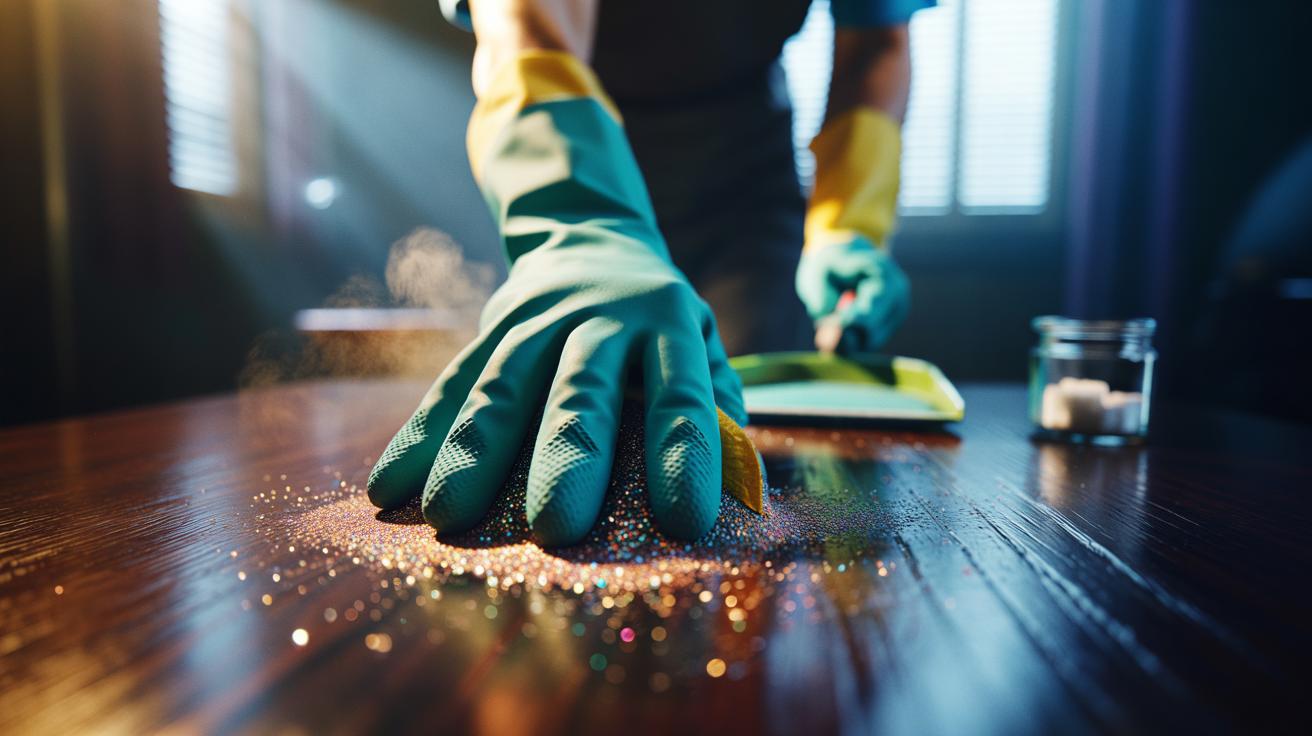
The magic is a mix of microtexture, friction and a touch of static charge. Glitter is light, flat and often plastic, so it clings through tiny electrostatic forces and sneaks into fibres. A rubber glove’s pebbled surface creates extra grip. As you sweep your hand, friction generates a mild charge and the glove’s texture grips the flakes, herding them into visible clusters. Think of it as a broom for micro-particles, but one that also attracts them. The result is faster, cleaner collection than chasing bits with a dry cloth.
Technique matters. Slip on the glove and use short, light strokes, moving in one direction to avoid redistributing the mess. On fabric or carpet, press gently to engage the glove’s ridges without digging in. Dampen the glove slightly for added tack on smooth floors or worktops, then rinse and repeat. Less pressure, more passes is the rule—let texture and charge do the heavy lifting, not brute force.
Choosing the Right Glove and Technique
Most household gloves work, but some excel. Latex and nitrile offer responsive grip and good dexterity. Chunky washing-up gloves with raised patterns are brilliant for carpets, while smoother silicone gloves shine on glass and tiles. If the surface is delicate, start with a dry glove and a feather-light touch. On slick areas like lino or stone, a barely damp glove increases contact without smearing. For clothes, keep it dry and sweep in the direction of the weave to avoid pilling. Always test in an inconspicuous spot first.
To finish, tap the glove over a bin to drop the gathered glitter, or rinse into a fine sieve to stop microplastics entering drains. Reset the charge by drying the glove thoroughly before the next pass. Pair the glove with a vacuum for speed: glove first to cluster, vacuum next to lift the bulk, glove again for the final crumbs.
| Glove Type | Best For | Use Dry/Damp | Notes |
|---|---|---|---|
| Latex/Nitrile | Clothes, upholstery | Dry | Excellent tactile control; avoid if latex allergy |
| Textured Washing-Up | Carpets, rugs | Dry or lightly damp | Ridges grab glitter deep in fibres |
| Silicone | Hard floors, worktops | Lightly damp | Easy rinse; great for smooth surfaces |
Safe Use on Different Surfaces
Carpets and Rugs: Work in sections. Glove-sweep to cluster, then lift clumps by hand. A final pass with the vacuum on low lifts loosened bits. Avoid aggressive scrubbing that can fuzz the pile. For shaggy textures, pinch and roll the glove over tufts rather than dragging.
Hard Floors and Worktops: Use a lightly damp glove to stop glitter skating away. Guide towards a dustpan, then wipe with a microfibre cloth. On wood, ensure the glove is clean to prevent fine scratching; a soft silicone glove is ideal. For stone or tiles, a quick spritz of water increases traction.
Upholstery and Clothing: Lay the fabric flat. Sweep with a dry nitrile glove, following the grain. On velvet or knits, lift and pat instead of sliding to protect the nap. For delicate finishes—silk, leather—test first, and consider placing a thin cotton cloth over the glove for a gentler interface. Finish with a light lint roll if needed.
Troubleshooting and Eco-Friendly Disposal
Stubborn, oily or wet glitter sticks harder. Sprinkle a touch of cornflour to neutralise residue, then glove-sweep once it’s dry. In humid rooms, static effect drops; a microfibre pre-wipe restores traction. If you feel tiny zaps on synthetic carpets, reduce speed and switch to a slightly damp glove. Never grind the particles in—multiple light passes beat one heavy scrub every time. For craft tables, wipe away glue spills before chasing glitter, or it will smear.
Disposal matters. Tip collected glitter into a jar or sealed paper packet before binning to stop it escaping. Fit a mesh sink strainer if you rinse gloves, capturing microplastics for responsible disposal. Wash reusable gloves with mild soap; dry fully to reset grip. Keep a small kit—glove, microfibre cloth, sieve—where messes happen. Consider biodegradable glitter for future projects to cut environmental impact without losing sparkle.
Glitter isn’t invincible; it just needed the right partner in crime—texture. With a simple rubber glove, you harness grip, static and smart technique to sweep away confetti-like specks from carpets, garments and glass without harsh cleaners or hours of faff. The trick is gentle strokes, the right glove for the surface, and tidy disposal that traps microplastics. Once you’ve tried it, you may never chase glitter with a roll of tape again. What surface in your home is the worst offender for lingering sparkle, and how will you tailor the glove method to tame it?
Did you like it?4.7/5 (20)