In a nutshell
- 🧂 Why salt works: Coarse crystals provide micro-abrasion that lifts iron oxide while mild acids (vinegar, lemon, potato/oxalic) loosen rust; chloride ions keep the surface wet and speed action.
- 🔧 Step-by-step: Degrease, apply coarse salt plus acid, dwell 5–10 minutes, scrub, refresh slurry, rinse, dry fast, and oil to seal.
- 🧪 Right materials: Prefer coarse sea/rock/kosher salt; partner with 5% white vinegar, lemon juice, or a halved potato; choose nylon, brass, or 0000 steel wool to suit the tool and finish.
- 🛡️ Rust prevention: Rinse thoroughly, neutralise with a weak bicarbonate solution, hot-water rinse, then oil or paste wax; store with desiccant and maintain sharp edges by honing.
- 💡 Benefits vs chemicals: Low-cost, low-tox, highly controllable method that removes rust without gouging sound steel and preserves patina when used gently.
In sheds across Britain, rust creeps over once-faithful spanners, chisels, and secateurs, turning bright steel into a dull orange scab. There is a thrifty, surprisingly effective response hiding in the pantry: a salt scrub. Coarse crystals, partnered with a mild acid such as vinegar or lemon juice, coax iron oxide from the surface while offering a gentle, controllable abrasion. The method is cheap, low-tox, and suitable for most workshop or garden tools. Handled carefully and finished properly, the salt scrub restores bite and shine without grinding away good metal, saving both money and history one tool at a time.
Why Salt Works on Rust
Rust removal is a balance of chemistry and texture. Coarse salt crystals deliver micro-abrasion: their angular faces fracture and shear brittle iron oxide without digging deeply into sound steel. Salt is also mildly hygroscopic, drawing a thin film of moisture to mobilise rust particles. Pairing salt with a weak acid—white vinegar (acetic), lemon (citric), or a cut potato (oxalic)—loosens the oxide chemically while the crystals lift it physically. Salt alone is not a magic solvent; it is an abrasive booster that shines when teamed with a mild acid.
Acids donate protons that help dissolve the oxide layer; chloride ions in table salt improve conductivity and keep the working surface wet, speeding the process. With a potato, the natural oxalic acid complexes iron, which explains the classic “potato-and-salt” remedy for kitchen knives. Crucially, the scrub is self-limiting: the crystals dull as they work, reducing the risk of gouging. Compared with harsh chemical baths, this method offers control, visibility, and fewer disposal headaches.
Step-by-Step: The Salt Scrub Method
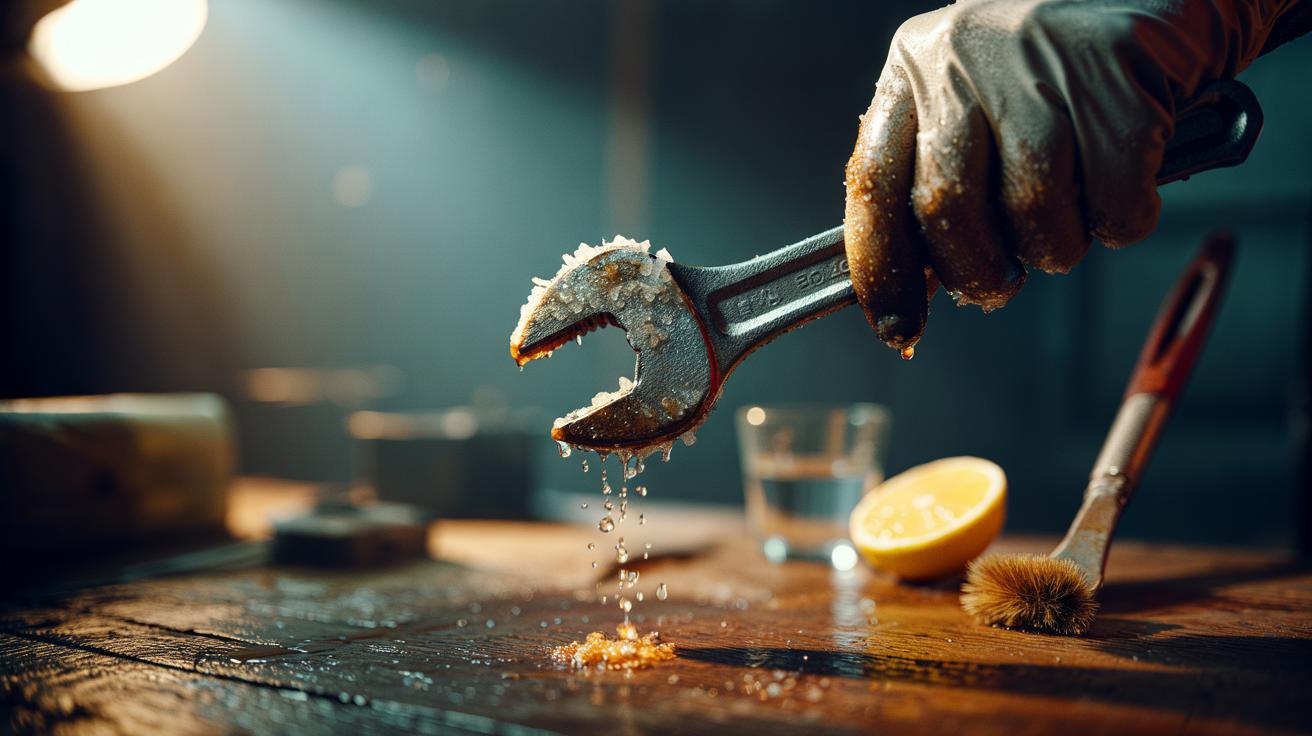
First, assemble materials: coarse sea or rock salt (1–3 mm crystals), white vinegar or lemon juice, clean rags, and a nylon brush or fine steel wool. Degrease the tool with washing-up liquid to expose the rust. Sprinkle a generous layer of salt over the affected area and wet it with your acid of choice until the crystals glisten. Let it sit for 5–10 minutes to soften the oxide, then scrub in small circles, applying consistent, moderate pressure. Replenish acid and salt as the crystals dissolve and turn brown.
For heavier rust, repeat the cycle or use the potato trick: cut a potato, dip the face in salt, and rub—freshening the cut as it darkens. Wipe away slurry, rinse thoroughly in warm water, and pat dry. Dry completely—ideally with a hairdryer or gentle heat—within minutes to prevent flash rust. Finish with a light coat of machine oil or paste wax on metal surfaces, and touch up edges on a stone if needed to restore keen performance.
Choosing Crystals, Additives, and Tools
Crystal size dictates bite. Fine table salt clumps and polishes; coarse sea, rock, or kosher salt provides edges that lift oxide efficiently. For chemistry, stick to household acids: 5% white vinegar for steady control, lemon juice for a fresher scent and similar potency, or a halved potato for oxalic acid that complexes rust quickly. Avoid strong mineral acids, which can pit steel and strip protective patinas. Stainless responds well but may need longer contact; high-carbon blades are fast to clean yet quick to re-rust if left damp.
Use nylon brushes on plated tools and fine steel wool (0000) or brass brushes on bare steel. Keep abrasives off painted areas you wish to preserve. Where pitting is deep, accept that removal reveals cavities; the goal is stability, not perfection. After treatment, neutralise acid residues with a brief rinse or a weak bicarbonate solution, then rinse with hot water, dry, and oil to seal the surface from air and humidity.
| Tool | Salt Grade | Acid Partner | Contact Time | Scrubber |
|---|---|---|---|---|
| Spanners/Sockets | Coarse sea | White vinegar | 5–10 min | Nylon brush |
| Garden Shears | Rock salt | Lemon juice | 10–15 min | Brass brush |
| Carbon-Steel Chisels | Coarse sea | Potato (oxalic) | 5–10 min | 0000 steel wool |
| Stainless Knives | Coarse sea | White vinegar | 10–20 min | Nylon pad |
Preventing Flash Rust and Preserving Edges
Chloride residues left by salt can accelerate corrosion if ignored. After scrubbing, rinse well, then briefly wash with a weak bicarbonate solution (¼ teaspoon per cup of water) to tame any remaining acidity. A final rinse in hot water heats the metal and speeds drying. Finish with a thin, even coat of oil—camellia, mineral, or light machine oil—to exclude air and moisture. For timber-handled tools, feed the wood with boiled linseed oil, keeping oil off areas you plan to glue later.
Edge safety matters. Mask or tape razor edges before scrubbing to avoid catching and rounding. When corrosion is cleared, refresh the bevel on a stone or fine diamond plate; rust etching can blunt micro-geometry that only honing will revive. Store tools off concrete floors, add desiccant to drawers, and consider a dab of paste wax on bare steel. With good drying and a simple oil ritual, the salt scrub becomes an occasional spruce-up, not a recurring rescue.
In a world fond of expensive miracle potions, the humble salt scrub stands out for its clarity: crystals that lift, acids that loosen, hands that guide. It respects old steel, wastes little, and teaches you to read the metal beneath your fingers. Clean, dry, oil—three words that lock in your effort and keep rust at bay. Whether you’re restoring a car boot find or tending faithful garden shears, will you reach for the salt pot and put this low-tech, high-satisfaction method to work on your next rusty challenge?
Did you like it?4.5/5 (28)