In a nutshell
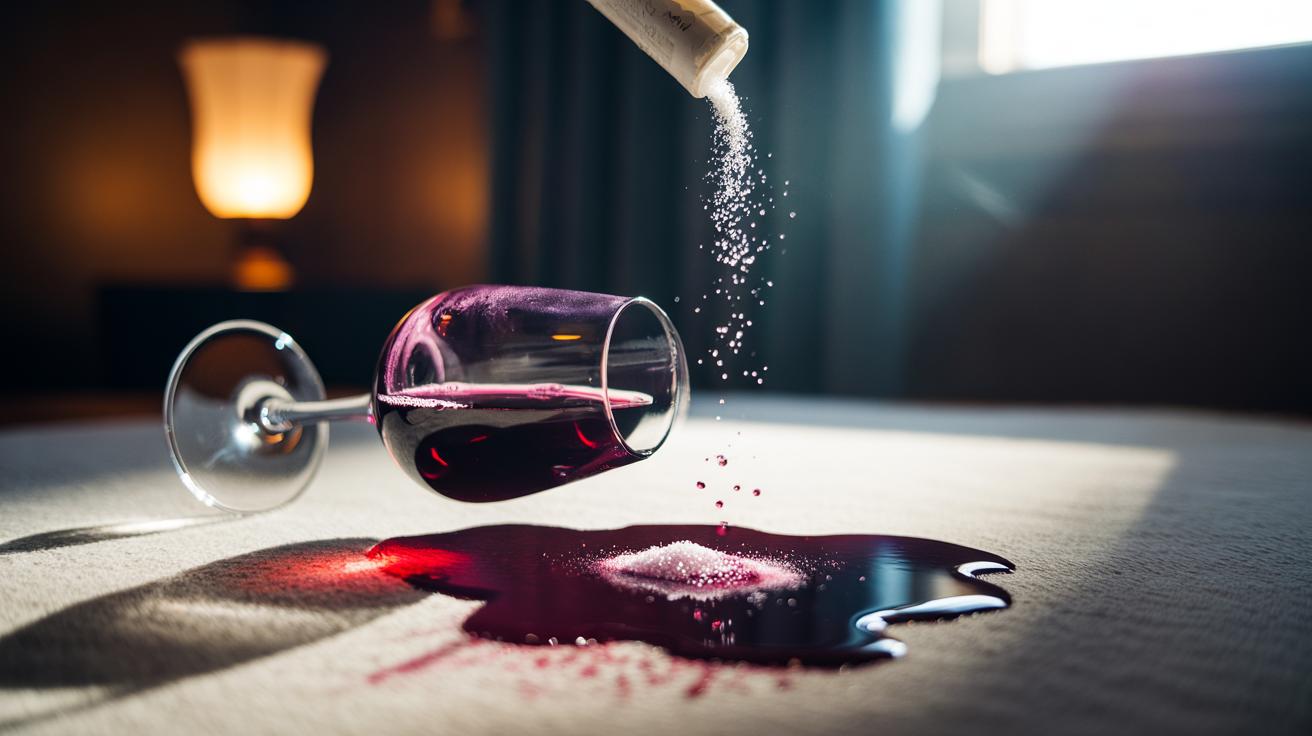
- 🧂 Salt buys time: its hygroscopic crystals create capillary action that wicks red wine out of fibres; act within the first two minutes and do not rub.
- ⏱️ Method that works: blot with a white cloth, pour a salt perimeter, build a 3–5 mm mound, wait 5–15 minutes until it turns pink, scoop and reapply, then finish with a cold-water blot; avoid hot water.
- 🧵 Mind the material: wool accepts dye and dislikes heat/alkalinity; synthetics can wick stains as they dry. Use a pH-neutral detergent sparingly after salt, and seek professional dry extraction if colour persists after two cycles.
- 🧪 Smart add‑ons: try soda water for lift, a mild bicarbonate solution for gentle pH shift, and spot-tested hydrogen peroxide (3%) on synthetics (never on wool) for lingering discolouration.
- 🛡️ Prevent the panic: apply a stain-guard, rotate rugs, and keep a spill kit ready—table salt, white towels, a spoon, a spray bottle of cold water, and gloves—for swift, damage-free response.
There are few domestic mishaps more dreaded than a glass of red toppling onto a pale carpet. Yet the simplest rescue often sits in the kitchen: a clean sprinkle of table salt. Before pigments bite into fibres, salt’s crystalline geometry buys time, pulling liquid to the surface where it can be lifted safely. Speed beats scrubbing every time. This isn’t myth or magic; it’s a neat intersection of household practicality and material science. Here is how salt works, why timing matters, the limits to watch, and the smart add-ons that leave your floor looking as if the party never hiccupped.
Why Salt Works on Fresh Red Wine
Red wine stains because anthocyanins and tannins sink into a carpet’s pile, bonding with fibres as the liquid spreads and evaporates. Salt is hygroscopic, meaning it draws water molecules into and onto its crystals. On contact, the dry grains promote capillary action, wicking wine out of the carpet and into the salt bed before pigments lock in. As some crystals dissolve, they form a thin brine that holds colour in suspension rather than allowing it to penetrate depth-wise. Act within the first two minutes to keep diffusion shallow and manageable.
The physics favours clean lifting over agitation. Spread a loose, even mound over the spill — the more coverage, the more surface area to capture liquid. The salt’s structure creates countless micro-channels that trap moisture, slowing dye migration. This is why a generous layer outperforms timid pinches. Do not rub; friction forces pigments into the backing. Instead, let absorption run its course, then collect the salt before it becomes saturated enough to re-wet the pile.
Step-by-Step: Deploying the Salt Sprinkle
First, blot the spill with a white, lint-free cloth to remove free liquid; press, don’t scrub. Dust a thick halo of salt around the perimeter to contain spread, then bury the centre under 3–5 mm of crystals. Leave it until the top layer turns pink or dull, signalling uptake. Scoop with a spoon, discard, and reapply fresh salt if the carpet still looks damp. Finish with a light blot using cold water to lift residual brine. Avoid hot water, which can set colour and distort fibres.
Quantity and timing make the difference between a faint shadow and a set patch. Fine table salt adheres well and packs densely, while coarser grains are slower but easier to lift. Keep the area ventilated and resist walking over it. Once dry to the touch, vacuum gently to remove remnants. If a pale “tide line” appears, mist with cold water and blot outward with clean towels to even the moisture field. Patience beats pressure, preserving both texture and colour.
| Step | Amount/Tool | Timing | Notes |
|---|---|---|---|
| Initial blot | White cloth | Within 30–60 seconds | Press only; lift free liquid |
| Salt perimeter | 1–2 tsp | Immediately after blot | Stops lateral spread |
| Salt mound | 3–5 mm layer | Leave 5–15 minutes | Replace once discoloured |
| Rinse and blot | Cold water mist | After salt removal | Finish with dry towels |
Pitfalls, Fibre Types, and When to Call a Professional
Not all carpets behave alike. Wool and many natural fibres swell with moisture and can accept dye; they respond well to salt, yet remain vulnerable to heat and high alkalinity. Synthetics such as nylon and polypropylene are less absorbent but can “wick” stains from the backing as they dry. Keep the treatment local and controlled to prevent moisture wicking a larger watermark. On hand-dyed rugs or sisal, do a quick patch test; some finishes blanch under excessive wetting, which salt cannot reverse.
Scale your intervention. If the spill is large, extract first with a wet/dry vacuum before salting to reduce load. After the salt stage, a pH-neutral detergent in cool water can help with residual tannins, but use sparingly. If you see persistent colour after two cycles, stop and call a professional cleaner. Overworking a stain can distort pile and drive pigment deeper. Professionals can deploy controlled heat, oxidisers, and dry extraction techniques that home kits can’t replicate safely.
Beyond Salt: Complementary Remedies and Prevention
Salt is your first responder, not the whole hospital. For lingering blush, dab with soda water; carbonation can nudge pigments off fibre surfaces. A pinch of bicarbonate of soda in cool water may help by gently raising pH, but keep it mild to avoid setting protein-based residues. On synthetics, a dilute hydrogen peroxide (no more than 3%, spot-tested) can brighten greying without triggering dye loss; never use it on wool. Always test in an inconspicuous area and wait for full drying before judging results.
Prevention is practical. Apply a reputable stain-guard treatment to busy rooms, rotate rugs to spread wear, and keep a spill kit: table salt, white towels, a spoon, a spray bottle of cold water, and disposable gloves. Educate guests to place glasses on trays over soft furnishings. In households that love Burgundy as much as beige decor, the payoff is real: less panic, fewer permanent marks, and a routine that respects both chemistry and your carpet’s lifespan.
So the quiet hero of the red-wine emergency is a staple in your cupboard, working with physics to capture pigments before they bed in. Act quickly, avoid friction, and let the crystals do the lifting. Then, if needed, bring in gentle rinses and targeted cleaners to finesse the finish. With a little knowledge and a handful of salt, the worst spills become footnotes rather than eyesores. What will you add to your home spill kit, and how will you change your response the next time a glass wobbles at a busy gathering?
Did you like it?4.6/5 (24)