In a nutshell
- 🧪 Explains how vinegar (acetic acid) and bicarbonate of soda react to create fizzing CO2 that loosens soap scum, light grease, and mineral films, offering a natural, low-tox unclogging method.
- 🛠️ Provides a clear, step-by-step routine: 100–150 g bicarbonate + 200–250 ml white vinegar after a hot water pre-flush, cover to focus fizz, wait 10–15 minutes, then hot water flush again.
- ⚠️ Stresses safety: never mix with bleach or caustic cleaners, ventilate, wear gloves, and let boiling water cool 30 seconds to protect PVC pipework.
- 🚰 Advises when to repeat vs escalate: combine with a plunger or drain snake if flow improves; persistent standing water, gurgling, or sewage odours signal it’s time to call a plumber.
- 🌿 Highlights benefits for UK homes: low-cost, eco-friendly maintenance that works best on fresh, shallow blockages and helps prevent bigger, pricier problems when used regularly.
Clogged sink at tea time? We’ve all been there, watching water creep towards the rim and wondering whether to reach for a harsh chemical or call a plumber. There’s a simpler, thriftier option hiding in the pantry. The classic partnership of vinegar and bicarbonate of soda (baking soda) can dislodge everyday grime without fumes or fuss. It’s not a cure-all, yet its fizzing action and mild chemistry often restore flow in minutes. For UK homes battling soap scum, toothpaste sludge, and the after-effects of hard water, this humble mix is a small, practical act of sustainability. Low cost, low risk, big relief.
How the Mix Works
The science is disarmingly simple. Acetic acid in white vinegar meets alkaline bicarbonate of soda, creating carbonic acid that breaks down instantly into carbon dioxide gas and water. Those bubbles don’t just look busy; they push and pry at the sludge coating your pipe walls, loosening deposits of soap, toothpaste, and light grease. Vinegar also helps dissolve mineral films common in hard-water areas, while bicarbonate provides mild abrasion and deodorising power. This is a mechanical nudge with gentle chemistry, not a heavy-duty solvent.
Set expectations. The mix excels with fresh build-up and narrow blockages near the waste, such as bathroom sinks, showers, and bath traps. It will not chew through a dense wad of hair bound with solidified oil, nor will it conquer a collapsed pipe or a fatberg lurking deep in the stack. Pairing the reaction with hot water improves results by softening residues and giving the loosened muck a push. Used early and regularly, it prevents the small annoyances from becoming big, expensive problems.
Step-by-Step Method for Sinks, Showers, and Baths
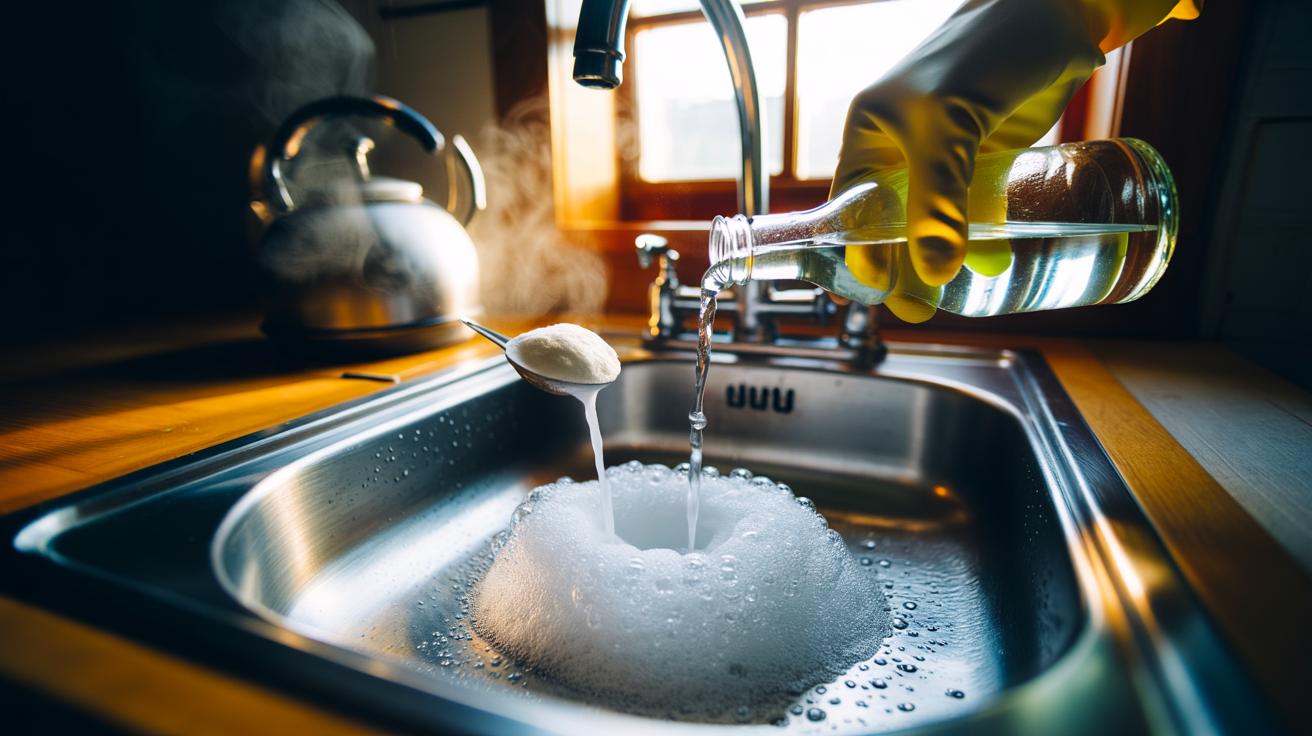
Start with access. Remove the plug or pop-up stopper and fish out visible hair. Run a kettle and let it sit 30 seconds to reduce the boil’s edge. Pour the hot water steadily to warm the pipework and soften grime. Sprinkle 100–150 g of bicarbonate of soda straight into the drain. Follow with 200–250 ml of warm white vinegar. Expect immediate fizzing; place a cup or cloth over the opening to keep the action focused. Never use this method immediately after applying bleach or a caustic gel.
Let it work for 10–15 minutes. Rattle the trap gently if accessible, then flush with another kettle of hot water. For showers and baths, repeat once if flow improves but remains sluggish. A rubber plunger used after the fizz can boost success by moving loosened debris. Do not seal the drain completely during the reaction—gas must escape safely. If water still pools without change, the blockage is likely deeper than the trap and needs a different tactic.
| Item | Quantity per drain | Contact time | Why it helps |
|---|---|---|---|
| Bicarbonate of soda | 100–150 g (approx. 1/2 cup) | 10–15 minutes | Alkalinity, mild abrasion, odour control |
| White vinegar (5% acetic) | 200–250 ml (approx. 1 cup) | 10–15 minutes | Acidic fizz, dissolves light mineral and soap films |
| Hot water flush | 1 kettle, rested 30 seconds | Immediate | Softens residues, carries debris away |
Safety, Materials, and Timing
Domestic vinegar and bicarbonate are gentle, yet sensible precautions apply. Wear washing-up gloves to avoid contact with murky water. Ventilate the room; the fizz releases gas that needs an easy path out. Never combine this method with commercial drain cleaners, bleach, or caustic soda—unpredictable reactions and heat can follow. If you’ve recently used a chemical product, flush thoroughly with plenty of water and wait before trying the pantry approach. Keep children and pets away from the immediate work area until the flush is complete.
Temperature matters. Most UK homes have PVC wastes that dislike boiling shocks; let freshly boiled water calm for half a minute. On metal pipework, hotter flushes are fine, but go steadily to avoid splashing. Timing also matters. Use the mix at the first sign of sluggish drainage or after messy jobs like shaving or washing greasy pans. A monthly maintenance fizz in busy bathrooms prevents buildup. Small, regular interventions beat emergency clearances every time.
When to Persist, When to Call a Plumber
Try up to two rounds if you see progress—faster draining, less gurgling, an improved smell. Augment the second attempt with a basic plunger or a small plastic drain snake to tease out hair. If water backs up into nearby fixtures—say, the bath gurgles when the basin drains—you’re facing a deeper partial blockage. At that point, remove and clean the trap if accessible. If the trap is clear but symptoms persist, the obstruction may be in the branch pipe or soil stack and needs pro tools.
Know the red flags. Persistent standing water, sewage odours, overflow at an outside gully, or repeated clogs after short-lived relief point to structural issues—tree roots, a sagging run, or fat deposits far downstream. In rented homes, report promptly to your landlord or managing agent. For owner-occupiers, a local engineer with a rotary snake or wet vac can restore proper flow quickly. Do not keep dosing a dead blockage—escalate before the problem escalates on you.
The vinegar and bicarbonate duo earns its reputation by pairing thrift with science. Used early, it spares you the acrid fumes and environmental burden of harsher formulas, and it often beats a call-out fee for everyday clogs. It won’t conquer every plumbing drama, but it shines as a first response and as regular maintenance in busy households. Keep a packet of bicarbonate, a bottle of white vinegar, and a kettle close, and your drains will thank you. What’s your go-to routine for keeping sinks and showers running clear, and which tricky blockage would you like to solve next?
Did you like it?4.5/5 (24)