In a nutshell
- 🧪 Soaking the showerhead in white vinegar dissolves limescale and biofilm, restoring nozzle diameter and the sensation of strong water pressure.
- 🔍 The real culprit is flow restriction, not the mains: mineral crust, grit, and clogged filters choke jets and distort spray patterns.
- 🧰 Practical method: remove or bag-and-soak for 30–90 minutes, pinch rubber jets, brush gently, flush hot, and clean the inlet filter; avoid needles that widen jets.
- 📊 Pick the right vinegar: white spirit (5–8%) for routine descaling, cleaning vinegar (10%) for heavy scale, and avoid malt vinegar due to staining and odour.
- ⚠️ Safety and upkeep: protect plated finishes, never mix with bleach, check O-rings, keep flow regulators, and descale quarterly in hard-water regions.
In hard-water Britain, a once-invigorating shower can turn feeble overnight. The culprit is rarely your boiler or a failing pump. It’s usually the showerhead itself, choked with limescale and grime that throttles flow. The fix is disarmingly simple: soak the showerhead in vinegar. This low-cost, low-effort ritual dissolves mineral buildup, clears micro-jets, and restores the spray pattern you paid for. Expect fizzing, flakes, then a dramatic improvement. It’s eco-friendly. It’s fast. And it leans on robust chemistry you can see and hear in action. Before you call a plumber, try a vinegar bath—your pressure problem may be nothing of the sort.
What Really Kills Your Shower Pressure
True water pressure is what your system delivers; the weak spray you feel is often a flow issue. Tiny nozzles and internal channels inside modern heads gather calcium carbonate deposits from hard water, a UK hallmark from Kent to the East of England. Each grain narrows the path. Add windblown grit, pipe sediment, and a sticky biofilm from soaps and bacteria, and your shower becomes strangled. Most “low-pressure” showers are actually high-resistance showers.
Look closely at the faceplate. You’ll spot crusted white rings around jets, uneven spray, even jets firing sideways. Flow restrictors and mesh filters inside the neck can be half-blinded too. The result: turbulent dribble where you want a clean cone of water. Restore the orifices to their designed diameter, and the “pressure” returns—without touching the mains, the combi, or the pump.
How Vinegar Dissolves Limescale and Biofilm
White vinegar (acetic acid, typically 5–8%) attacks limescale by converting stubborn mineral salts into soluble compounds, releasing bubbles as it works. That fizz you see is carbon dioxide signalling the dissolution of the crystalline crust that narrows jets. The mild acid also helps loosen biofilm, the gluey matrix that traps fine grit and nourishes bacteria, allowing gentle brushing to sweep it away. This is chemistry doing the heavy lifting so your hands don’t have to.
Warmth speeds things along. Use tepid—not boiling—vinegar to avoid damaging seals. The rubber “nipples” on many showerheads are designed for a quick pinch to crack off softened scale after soaking. For stubborn deposits in very hard-water postcodes, a longer soak or a second cycle finishes the job. Crucially, vinegar is non-toxic, cheap, and safe for most metals, making it the simplest routine descale for bathrooms without harsh fumes.
Step-by-Step: The No-Tools Soak That Works
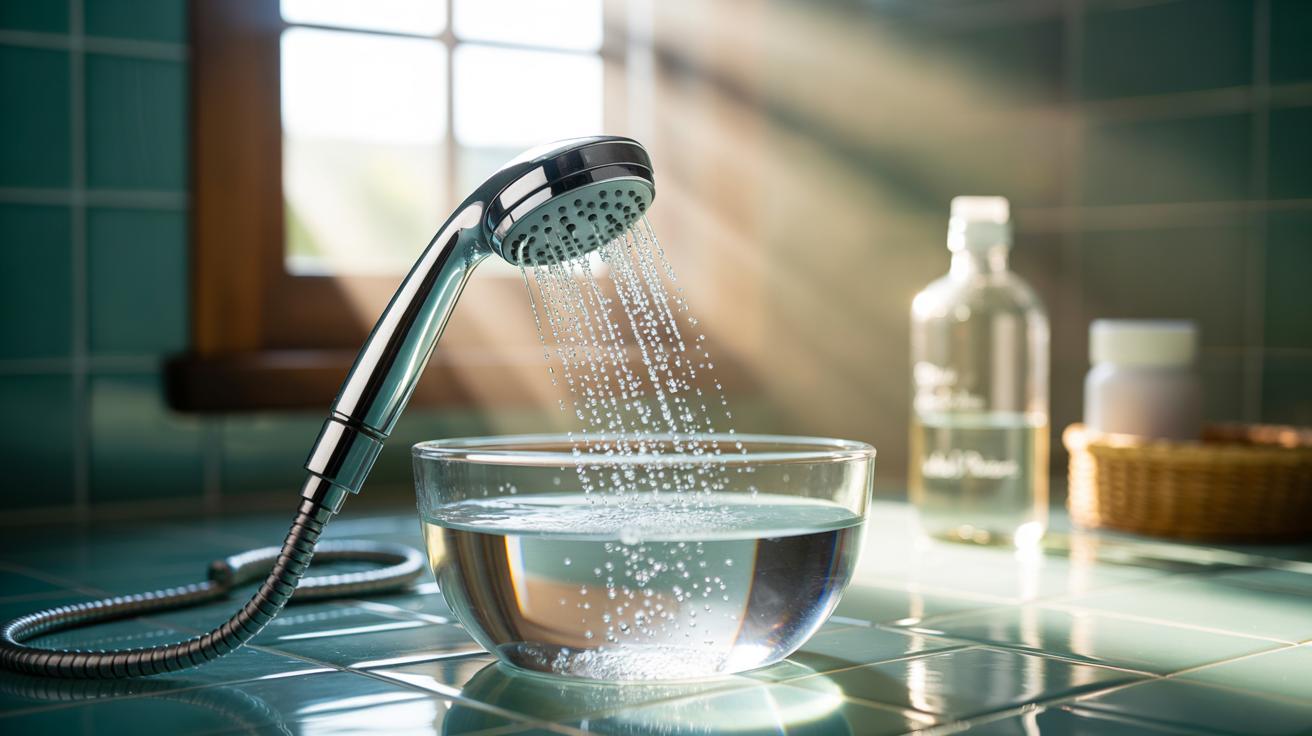
First, assess the head. If it unthreads easily, remove it and submerge in a bowl of white vinegar. If not, fill a sturdy food bag with vinegar, slip it over the head, and secure with an elastic band so the jets are fully covered. Leave it to soak until fizzing slows: usually 30–90 minutes. Don’t rush—contact time is everything.
After soaking, scrub the face with a soft brush, pinch rubber jets, and flush with hot water for a minute to expel loosened debris. Check the inlet filter and rinse it clean. If flow is still patchy, repeat once. For heavy scale, finish with a 1:1 vinegar–water rinse and a wipe of the plate. Avoid needles that can enlarge jets.
| Vinegar Type | Acetic Acid (%) | Best For | Typical Soak Time | Finish Notes |
|---|---|---|---|---|
| White spirit vinegar | 5–8 | Routine descaling | 45–90 minutes | Safe for most chrome/stainless |
| Cleaning vinegar | 10 | Heavy limescale | 20–45 minutes | Patch-test on plated finishes |
| Malt/brown vinegar | 4–6 | Not recommended | — | May stain; strong odour |
Safety, Materials, and When to Replace
Most modern heads are fine with vinegar, but treat plated brass, nickel, and painted finishes gently. Keep soak times conservative and rinse thoroughly. Avoid soaking natural stone tiles; protect them from splashes. Never mix vinegar with bleach or chlorine-based cleaners; harmful gases can form. If in doubt, remove the head and soak it in a bowl away from delicate surfaces.
Check O-rings and washers; replace if perished to prevent drips that waste water and invite scale. If internal passages are pitted or the spray plate is cracked, a new WRAS-compliant head can improve efficiency and hygiene. Descaling reduces biofilm but isn’t a substitute for hot flushing where legionella control is required in larger or little-used systems. Finally, beware of removing built-in flow regulators; they’re there to balance comfort with conservation. A clean head often restores satisfying performance without guzzling extra litres.
Soaking a showerhead in white vinegar is a small act with outsized results: fewer blockages, a truer spray shape, and the sensation of “pressure” reborn through restored flow. The method is frugal and kinder to the planet than harsh chemicals, all while leveraging straightforward household science. Make it a quarterly ritual in hard-water areas and your morning rinse will thank you. If your shower has been underperforming, why not try a vinegar bath tonight and measure the difference by feel—and perhaps even by a jug and stopwatch—then tell us what changed?
Did you like it?4.6/5 (30)