In a nutshell
- 🧼 The soap‑bar drawer hack floods the drawer headspace with fragrance molecules, out‑competing musty VOCs at your olfactory receptors; mild adsorption by soap/tissue helps, but it mainly shifts perception.
- 🌫️ Mustiness stems from humidity, poor airflow, and VOC build‑up in closed furniture; keep relative humidity below 60%, dry textiles fully, and air drawers to prevent odour saturation.
- 🌿 Match scents to problems: citrus for stale air, lavender/eucalyptus for damp, cedar/vetiver for antique wood; use a well‑scented bar, partially unwrapped in breathable wrap to avoid oil transfer.
- ⚠️ It’s a mask, not a cure: treat damp and mould first, add silica gel, bicarbonate, or activated charcoal; consider sensitivities, pets, and choose RSPO‑certified or palm‑free soaps.
- 🔄 Practical setup: place the bar where air circulates, adjust wrap to control intensity, and replace every 6–8 weeks; combine with ventilation for a lasting, fresh drawer.
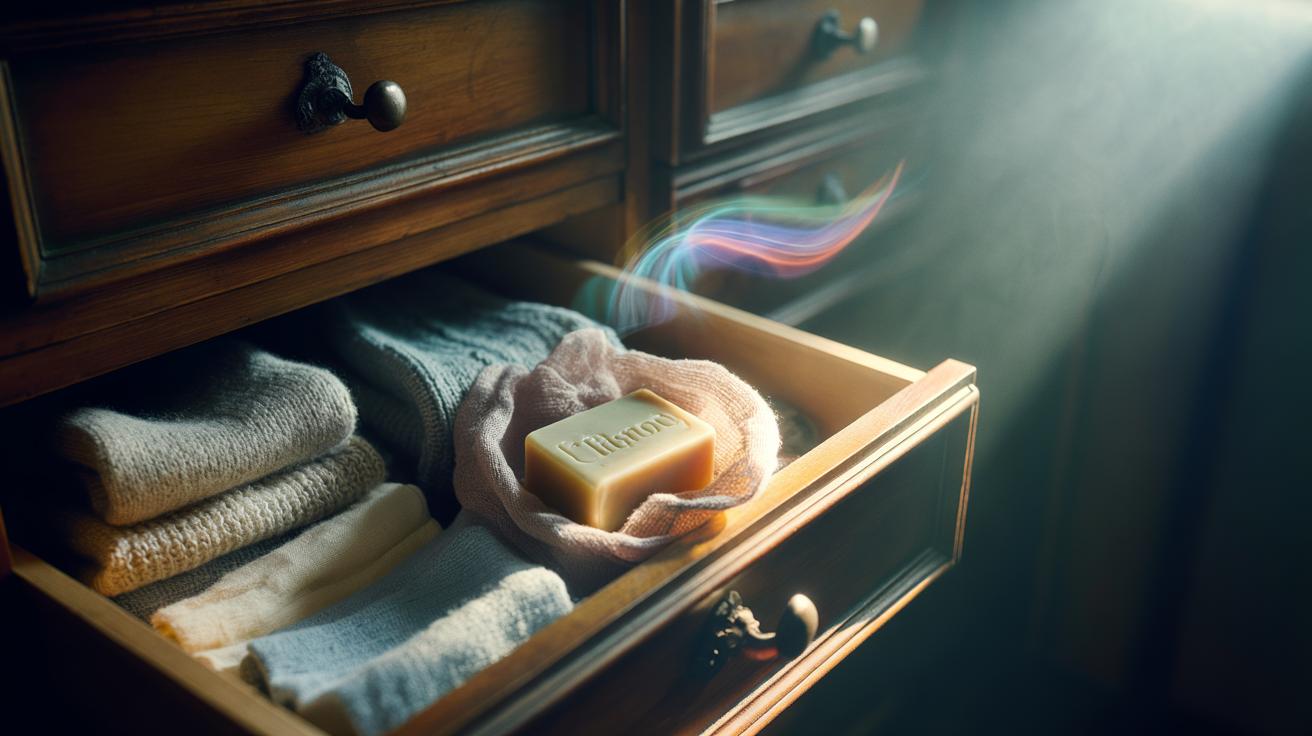
Open an old chest of drawers and you can almost see the stale air rolling out: a fug of damp wood, timeworn textiles, and the tang of closed-up rooms. A surprisingly effective fix is also the simplest: tuck a bar of scented soap among your clothes. The so‑called soap‑bar drawer hack doesn’t just add a pleasant note; it changes the chemistry of the air inside the drawer. By flooding the cramped space with fragrance molecules, the soap shifts what your nose detects, suppressing the musty profile without sprays or electrical gadgets. Used thoughtfully, a single bar can keep linens and knitwear smelling fresh for weeks, buying time while you tackle the underlying causes of stale odours.
Why Drawers Smell Musty
The culprit is usually a mix of humidity, limited airflow, and organic residues. Wood, paper liners, and fibres slowly release volatile organic compounds (VOCs); fabrics pick up traces of body oils; and microscopic moulds or bacteria can off‑gas earthy notes in stagnant, damp air. In older furniture, unfinished wood can absorb moisture like a sponge and then slowly exhale it, creating a microclimate ripe for mustiness. Even clean clothes can smell “old” if they sit in a sealed drawer where vapours accumulate, especially after seasonal storage.
Odour molecules drift into the drawer’s headspace—the air gap around your clothing—until the confined environment becomes saturated. Because there is little ventilation, the odours persist and re‑adsorb onto fibres. Temperature swings worsen the problem by driving VOCs in and out of wood and textiles. The simplest prevention is environmental: air the drawer, dry items fully before storage, and, crucially, keep relative humidity below 60%. That’s the groundwork on which the soap trick performs best.
How a Bar of Soap Neutralises Odours
A scented soap is a compact reservoir of volatile fragrance molecules—terpenes, esters, and aldehydes—designed to evaporate slowly. Place it in a closed drawer and those molecules build up in the headspace, “out‑competing” musty VOCs at your olfactory receptors. Think of it as olfactory crowding: by raising the concentration of pleasant volatiles, the soap shifts your perception decisively away from stale notes. It’s more than cover‑up; it changes the odour balance you actually inhale.
There’s also gentle physics at play. The soap base (sodium salts of fatty acids) and the paper or fabric surrounding it can adsorb and absorb some malodours through van der Waals forces and hydrophobic interactions, nudging problematic molecules out of the air. Certain fragrance aldehydes can even reduce amine‑type smells through mild surface reactions. Still, the primary effect is competitive scent dominance, not disinfection. For best results, partially unwrap the bar to modulate intensity, and seat it where air can circulate. Replace or rotate the soap every 6–8 weeks, or when the scent fades.
Best Soap Scents and What They Tackle
Soap choice matters. Bright, low‑molecular‑weight citrus notes deliver a fast, clean impression that slices through stale air, while resinous woods and herbals linger longer in tight spaces. Blends that mix a top note (citrus), a heart (floral or herbal), and a base (woods, musks) provide both instant freshness and staying power. Go for well‑scented bars rather than ultra‑mild formulations if the drawer is truly musty. To avoid potential oil transfer onto delicate fabrics, wrap the soap in thin tissue or muslin—breathable, but protective.
Pair the fragrance to the problem profile. Earthy damp calls for crisp aromatics; smoky residues respond to zesty or aldehydic florals; “old wood” benefits from cedar or vetiver facets. If you’re sensitive to perfume, an unscented soap can still help slightly through passive adsorption, though impact will be milder. The table below offers quick matches that UK households commonly report as effective.
| Common Musty Note | Likely Source | Recommended Soap Scent | Why It Helps |
|---|---|---|---|
| Damp/earthy | Moist wood, stale linens | Lavender, eucalyptus | Herbal-camphor notes cut through humid, fungal tones; lingering heart notes persist. |
| Stale, closed-up | Poor airflow, mixed VOCs | Lemon, grapefruit, light aldehydic florals | High-volatility top notes rapidly refresh the headspace. |
| Smoky or acrid | Residual tobacco or cooking | Orange blossom, neroli, cedarwood | Floral-citrus brightens; dry woods add lasting cleanliness. |
| Woody, antique | Old varnish, aged oak | Vetiver, cedar, light musk | Earthy-woody bases harmonise and soften resinous notes. |
Safety, Sustainability, and When to Go Beyond Soap
As handy as it is, the soap hack has limits. It masks odours; it does not cure damp or kill mould. If you spot visible growth or persistent dampness, address moisture first: dry the furniture in sunlight or with gentle heat, clean interiors with a mild detergent solution, and add passive absorbers such as silica gel, bicarbonate of soda, or activated charcoal. For heirloom drawers, line with acid‑free paper, then position the soap on a small dish to avoid oil marks. Replace heavily scented bars sooner in hot weather as evaporation accelerates.
Consider sensitivities. Strong fragrances can irritate asthmatics or those prone to headaches. Keep potent essential‑oil soaps (tea tree, eucalyptus) away from pets’ access. Choose RSPO‑certified or palm‑free formulations for a lighter footprint, and favour paper‑wrapped bars over plastic. Above all, remember the hierarchy: fix moisture, ventilate, then scent. When the air is dry and clean, a single bar becomes a quiet, consistent deodoriser rather than a cover for deeper problems.
The humble bar of soap works because it reshapes the chemistry and perception of air in a confined space, crowding out stale notes with a cleaner, more agreeable profile. Select a fragrance that fits the fault, give it breathable wrapping, and rotate it with the seasons for dependable freshness. Combine the hack with drying routines and passive absorbers for a belt‑and‑braces approach that respects both your clothes and your furniture. With the basics nailed, scent becomes the finishing touch, not the fix. Which fragrance would you choose to rewrite the air in your most stubborn drawer, and why?
Did you like it?4.5/5 (30)