In a nutshell
- ✨ The spray-and-wipe method uses a fine mist to create a thin, even film that dries uniformly, cutting residue and reducing streaks caused by uneven evaporation.
- 🧼 Technique matters: hold the sprayer 20–30 cm from glass, allow a brief dwell, then wipe with a folded microfibre (vertical passes, then a light horizontal polish) and finish with a dry buff.
- 🧪 Choose smart solutions: use distilled water with a low-foaming cleaner; add small amounts of isopropyl alcohol for faster drying or a touch of vinegar for mineral haze—avoid over-wetting.
- 🪟 Match tools to tasks: a tight-weave glass microfibre for polish, a plusher towel for lift; launder without softener to maintain absorbency and prevent smears.
- ⚡ When panes are large or heavily soiled, a squeegee wins on speed; use a hybrid approach—squeegee first, then a light mist-and-buff to erase trails and edge marks.
Smear-free glass can feel elusive, yet professional speed comes from a deceptively simple move: a fine spray-and-wipe. Instead of soaking panes, a light mist lays down an ultra-thin film that lifts grime without leaving heavy residues to dry into marks. The result is faster work with fewer passes and less cloth swapping. The trick is to control moisture, not flood it. By pairing a clean atomising sprayer with a high-quality microfibre and a low-residue solution, you limit the chemistry and physics that produce streaks. Here’s how misting accelerates window cleaning, why it reduces streak formation, and which tools keep the finish crystal clear.
Why Misting Prevents Streaks
Streaks form when a thick, uneven film dries at different speeds, concentrating surfactants, minerals, and soils into visible trails. A fine mist distributes minuscule droplets evenly, producing a uniform film that wipes off in one or two clean passes. With less liquid to migrate, there’s little “coffee-ring” effect at the edges of each swipe, so fewer marks remain.
Controlled evaporation is equally important. A mist dries predictably, preventing the tide lines that appear when a wet edge meets a dry one. Microfibre then provides the right balance of glide and bite, capturing particles instead of smearing them across the pane. The less solution you lay down, the less residue there is to dry on the glass—and the lower the chance of streaks.
Environment matters. Direct sun accelerates drying and can flash-set residue; shade or a cooler time of day buys usable working time. Using distilled water minimises mineral spotting in hard-water areas, while a low-foaming cleaner keeps the film simple and easy to remove.
How to Master the Spray-and-Wipe Technique
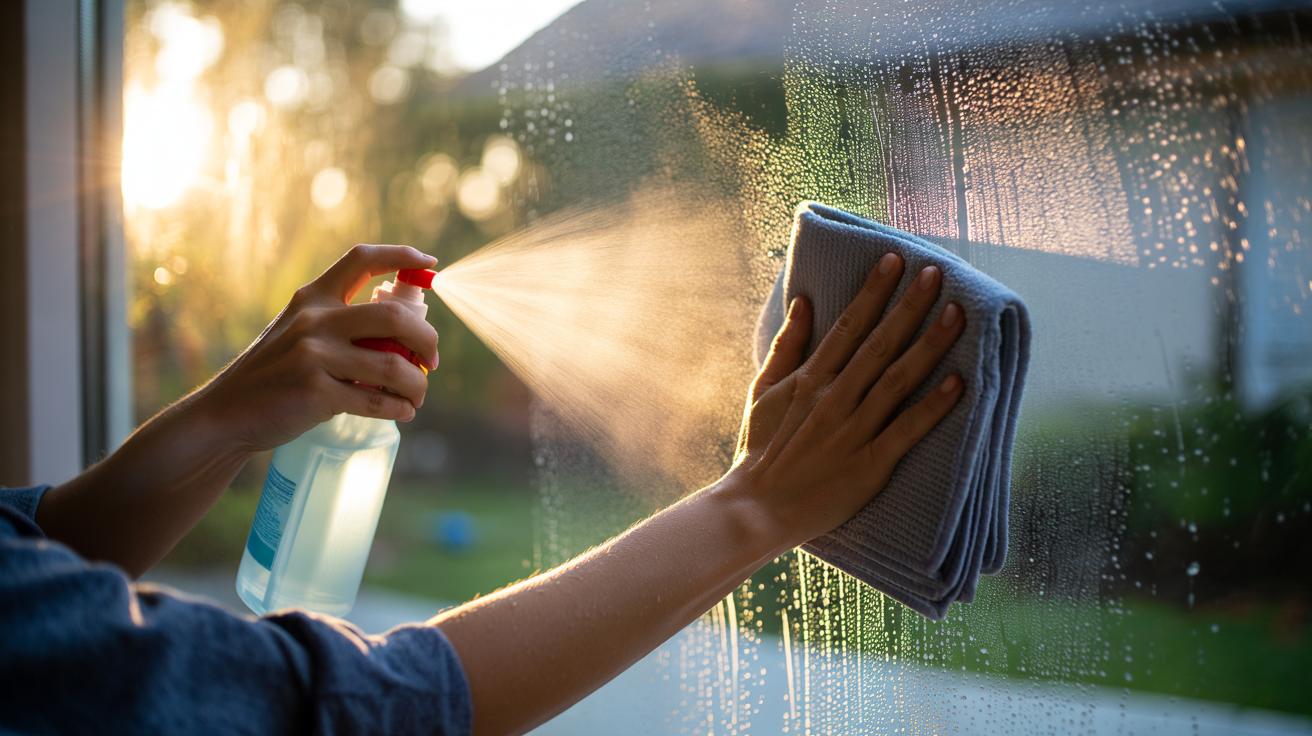
Set your bottle to a fine atomising mist, not a stream. Hold it 20–30 cm from the glass and feather a light, even cloud—one or two pulls for a small pane, three to four for a patio door. Allow 5–10 seconds of dwell for the surfactant to loosen grime, then start wiping before the surface flashes dry, especially in sunlit rooms.
Fold a clean microfibre into quarters to create multiple fresh faces. Wipe with light, controlled pressure: vertical passes first, then a horizontal “polish” to catch any microfilm. Flip to a dry face for a final buff, paying attention to edges and corners where residue collects. Always finish with a dry pass to erase micro smears and static haze. If the cloth drags or leaves tracks, you’ve either used too much liquid or the cloth is saturated—switch to a fresh side or a second dry towel.
Choosing the Right Tools and Solutions
Cloth quality decides the finish. Choose a 300–350 GSM, tight-weave glass microfibre for polish and a plusher towel for initial lift on dirtier panes. Launder without fabric softener or dryer sheets to preserve absorbency. For solution, use distilled water with a measured cleaner: a mild, low-foaming glass spray, or 1–2 drops of washing-up liquid per litre for budget-friendly clarity. Adding up to 10% isopropyl alcohol speeds evaporation in winter; a splash of white vinegar (around 5%) helps on mineral haze but avoid it near natural stone.
| Method | Typical Liquid Volume | Pros | Common Streak Risk | Best For |
|---|---|---|---|---|
| Mist + Wipe | Very low | Fast, low residue, minimal kit | Low if cloths are clean | Indoor panes, mirrors, daily touch-ups |
| Drench + Towel | High | Heavy soil removal | High from runoff and residues | Post-renovation, greasy kitchens |
| Squeegee | Medium–high | Fast on large glass, uniform finish | Edges if detailing is skipped | Patio doors, shopfronts, exteriors |
Pair the mist method with the right cloth and a low-residue mix to achieve a showroom sheen with minimal effort. Keep a second dry glass cloth solely for final buffing; segregating towels by task preserves performance and reduces accidental streaking.
When a Squeegee Still Wins
On big panes or very dirty exteriors, a squeegee still rules for speed and consistency. Pre-wash with a washer and a light detergent solution to float grit, then pull smooth, overlapping strokes. Detail the edges with a dry microfibre. Misting works brilliantly as the final polish after a squeegee pass, erasing any faint trails or water beads. This hybrid approach is fast and reliably streak-free.
Outdoors, wind and sun shorten working time; work in the shade side of a building, or early/late in the day. For builders’ dust or pollen, avoid rubbing dry—lift debris first to prevent hairline scratches. Safety counts, too: use stable platforms rather than overreaching, and opt for extension poles where possible. The rule of thumb is simple: heavy soil, squeegee first; light soil, mist and wipe.
The spray-and-wipe method succeeds because it minimises residue, controls evaporation, and lets good microfibres do the heavy lifting. Use a fine mist, measured chemistry, and a clean cloth rotation, and windows clear in minutes rather than hours. You’ll spend less time chasing smears and more time enjoying the view. Ready to test the difference—where will you try a controlled mist first: the busiest patio door, the bathroom mirror, or the sunniest bay window?
Did you like it?4.3/5 (24)