In a nutshell
- 🔬 The chemistry: citric acid lowers pH, disrupts pigments, performs chelation of metal ions, and neutralises odours; coarse salt adds gentle abrasion and is hygroscopic; allow 3–5 minutes’ contact time.
- 🧽 Step-by-step: scatter coarse salt, scrub with a halved lemon in circles, let it sit, rinse warm, and air-dry upright; for wood, do not soak and condition with food-grade mineral oil.
- 🧪 Stain focus: fades tannins, turmeric/tomato ghosting, and protein films; for plastic, extend contact or repeat; on white boards, a brief hydrogen peroxide follow-up can help.
- 🛡️ Hygiene essentials: use separate boards for raw meat and ready-to-eat foods; always follow with a hot, soapy wash and full dry—lemon–salt cleans and deodorises but is not a disinfectant.
- 🪵 Longevity: inspect for deep cuts, cracks, blackened splits, or “fuzz”; oil wooden boards monthly; replace boards that trap odours or can’t be cleaned effectively.
Forget harsh bleaches and mystery sprays: the simplest way to refresh a tired chopping board is hiding in your fruit bowl and salt cellar. A halved lemon worked over coarse salt creates a gentle yet effective scrub that lifts stains, tames smells, and restores the tactile feel of wood or plastic. The star is citric acid, a kitchen-safe compound that loosens pigments and binds problem minerals while the salt adds grip. Used routinely, this lemon–salt duo keeps boards cleaner, brighter, and less odorous without stripping their surface. Here’s how it works, why it works, and when to use it as part of a broader hygiene routine in a busy home kitchen.
How the Lemon–Salt Scrub Works
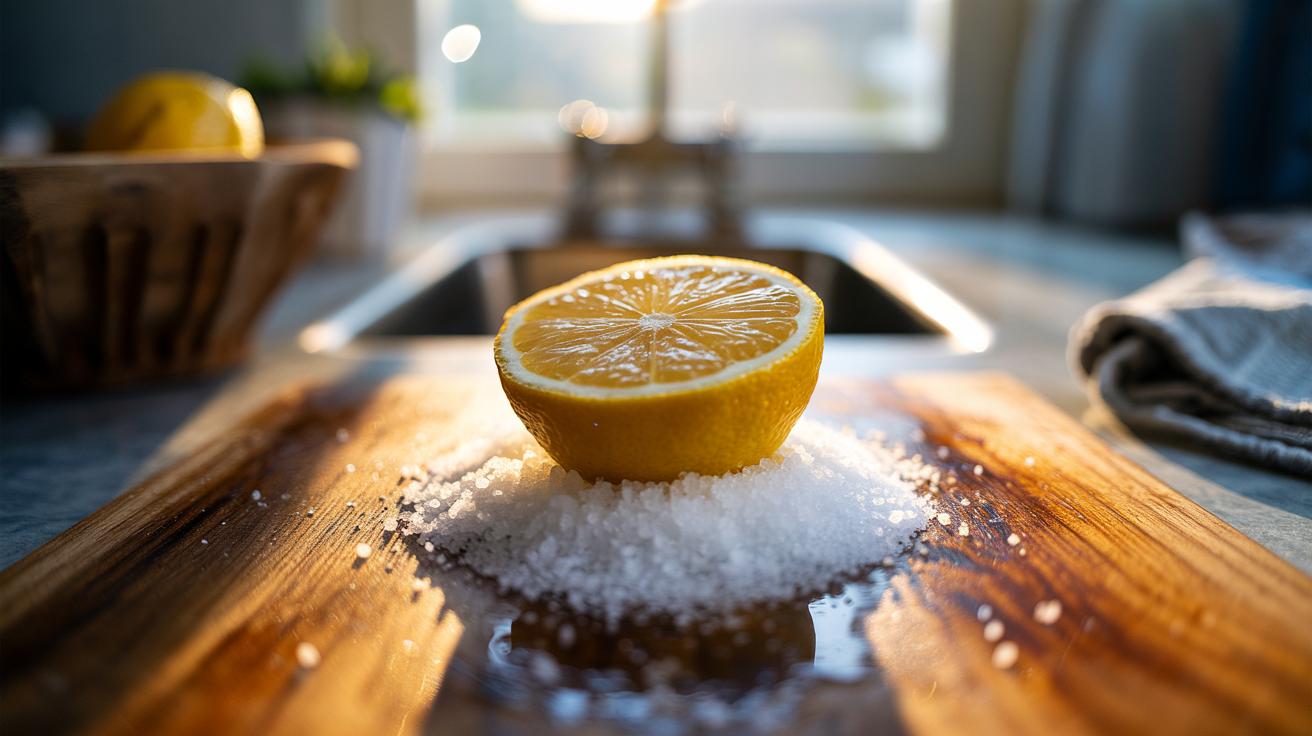
Slice a fresh lemon, scatter a tablespoon of coarse sea salt across the board, then scrub in circles with the cut face. The salt provides a fine, non-scratching grit that helps dislodge stuck-on fibres and dried juices. Meanwhile, the lemon releases citric acid and aromatic oils. This low-pH solution softens organic residues and begins to dissolve surface films that hold stains in place. Allowing the juice to sit for three to five minutes amplifies the effect, as acids need contact time to do their best work. Finish with a hot rinse and thorough air-dry.
There’s a smart synergy at play. Salt is mildly hygroscopic, pulling moisture into the scrub where it can lift grime, while the citric acid helps break the bonds between pigments and the board’s surface. The lemon’s natural oils leave a clean, bright scent and a trace of hydrophobic protection without creating a slick residue. On wood, this method preserves grain while avoiding the swelling that comes with soaking. On plastic, it helps reduce the “shadow stains” that turmeric, beetroot and tomato sauces often leave behind.
The Chemistry of Citric Acid on Stains
Citric acid is a triple-threat cleaner: it’s acidic, it’s a chelator, and it’s volatile-friendly. As an acid, it disrupts the chemical stability of many common colour molecules, including tannins from tea, wine, or greens. Chelation is where it shines: citric acid grabs metal ions such as iron and copper that deepen stains or form faint rust marks, making them water-soluble and easy to rinse. Its low pH also helps neutralise amines and sulphur compounds responsible for lingering fish, garlic, and onion odours. That’s why a lemon rub both fades the mark and quietens the smell.
Salt intensifies this chemistry through gentle abrasion, bringing fresh juice into microgrooves where biofilms can settle. The scrub disrupts those films physically while acid undermines the matrix that holds them. This isn’t sterilisation—citric acid is mildly antimicrobial but not a substitute for proper washing—yet it reduces the foothold that stains and smells rely on. The result is a board that looks cleaner because, at a molecular level, its surface holds on to fewer problem compounds.
| Stain or Odour | What Citric Acid Does | Extra Tip |
|---|---|---|
| Tannins (tea, wine, greens, beetroot) | Acid disrupts pigment stability; salt lifts residues | Rinse with warm water and repeat once for deep stains |
| Protein/fat residues (meat, fish) | Lowers pH, loosens films; aroma oils deodorise | Always follow with hot, soapy wash and full dry |
| Mineral/rust specks | Chelates iron, making it rinse away | For specks, try a brief baking soda paste after lemon |
| Garlic/onion odours | Neutralises sulphur notes; citrus scent masks remnants | Let zest oils sit 10 minutes before rinsing |
Step-by-Step: Cleaning Wooden and Plastic Boards
For wood, sprinkle coarse salt generously, scrub with half a lemon, and leave a glossy film for several minutes. Rinse quickly under warm water, wipe, and air-dry upright so moisture escapes both faces. Do not soak wooden boards—prolonged water exposure encourages warping and splits that harbour bacteria. Once dry, condition with a light coat of food-grade mineral oil to slow future staining and keep fibres supple. Lemon can slightly raise grain; a conditioned board resists that and stays smoother longer.
For plastic, the same scrub works, but allow a longer contact time on turmeric or tomato marks. If ghosting persists, repeat the lemon–salt routine, then wash with hot, soapy water. Stubborn stains set by heat may need a targeted follow-up—such as a brief hydrogen peroxide soak on white boards—before a thorough rinse and dry. Always dry boards fully; water trapped on a flat surface encourages microbial growth and musty odours. Store boards vertically to keep air moving and discourage residual moisture.
Hygiene, Longevity, and When to Retire a Board
The lemon–salt scrub is a stellar maintenance tool, but it sits within a wider hygiene habit. Keep separate boards for raw meat and for ready-to-eat foods to minimise cross-contamination. After handling raw proteins, wash with hot water and detergent, then let the board dry completely. The lemon routine excels between heavy jobs or at day’s end to reduce odour and staining. Think of citric acid as a natural brightener and deodoriser, not a one-step disinfectant. Its gentleness is precisely why your hands and boards tolerate it so well.
As for longevity, inspect surfaces with a critical eye. Deep cuts, raised fibres, blackened cracks, or persistent smells signal that the surface can no longer be cleaned effectively. Plastic that has developed “fuzz” from heavy knife work, or wood that has split, should be replaced. Oiling wooden boards monthly helps delay that day by sealing pores. A clean, dry, well-maintained board is safer, looks better, and makes food prep feel calmer and more precise.
The elegance of the lemon–salt scrub lies in chemistry you can smell and see: citric acid loosens stains, chelation lifts metals, and salt adds the mechanical nudge that restores the surface. Used regularly, it keeps boards fresh without the harshness that ages them. Pair this ritual with thorough washing and proper drying, and your chopping boards will stay serviceable for years. What tweaks will you make to fold this natural method into your kitchen routine—will you reserve it for weekly refreshes, or turn it into a nightly reset that signals the kitchen is truly closed?
Did you like it?4.7/5 (23)