In a nutshell
- 🔬 The steam towel works by delivering latent heat and moisture that penetrate residue, creating micro-fissures in polymerised fats and caramelised sugars so grime lifts easily.
- 🛡️ Safe setup: preheat to 120–150°C, switch the oven off, use a damp (not dripping) cotton towel, wear heatproof gloves, avoid catalytic liners, and keep vents/electrics clear.
- 🕒 What to expect: most enamel and door glass soften in 10–15 minutes; heavy carbon may need a second pass; a touch of washing-up liquid boosts emulsification.
- 🧹 Method at a glance: soak and wring the towel, place on a tray or rack (or against the glass), close the door, steam, then wipe with the warm cloth and finish with a clean, dry one.
- 🌿 Benefits: quicker cleans with fewer chemicals, reduced fumes, less scrubbing, and results that respect modern oven surfaces like enamel and tempered glass.
Britain’s ovens work hard, and the evidence often bakes itself into a stubborn, brown-black crust. A humble steam towel turns that crust into a wipeable film in minutes, using heat and moisture rather than harsh chemicals. The trick is simple: saturate a clean cotton towel, warm the oven, and let steam’s thermal energy infiltrate and loosen the bonds that glue grease and sugar to enamel and glass. Heat plus moisture is the swiftest route to softening baked-on residue without scouring. Below, we unpack the science, the safest method, and what results to expect—so you can reclaim a gleaming cavity with less elbow grease and no eye-watering fumes.
Why Steam Loosens Burnt Residue
Grime inside an oven is a cocktail of polymerised fats, caramelised sugars, and fine soot. When a saturated towel releases steam onto hot metal and glass, condensation delivers a burst of latent heat directly to the surface. This rapid, even warmth softens fatty films, while micro-beads of water seep into pores and seams that a dry cloth can’t reach. The result is tiny expansions and contractions across the residue’s surface, creating micro-fissures that break its grip. This combination of heat transfer and moisture infiltration is precisely why a damp towel outperforms a dry scrub.
Water also acts as a temporary solvent and carrier. Sugary deposits begin to rehydrate, greasy layers emulsify, and brittle Maillard residues lose their rigidity. Because the towel maintains contact, it behaves like a warm compress, retaining heat while continually feeding vapour into the crust. The balance is crucial: enough warmth to soften, enough moisture to penetrate, but not so wet that it pools and cools. You’re effectively reversing the dehydration that turned spatter into varnish, making the mess lift with a gentle wipe.
Setting Up the Steam Towel Method Safely
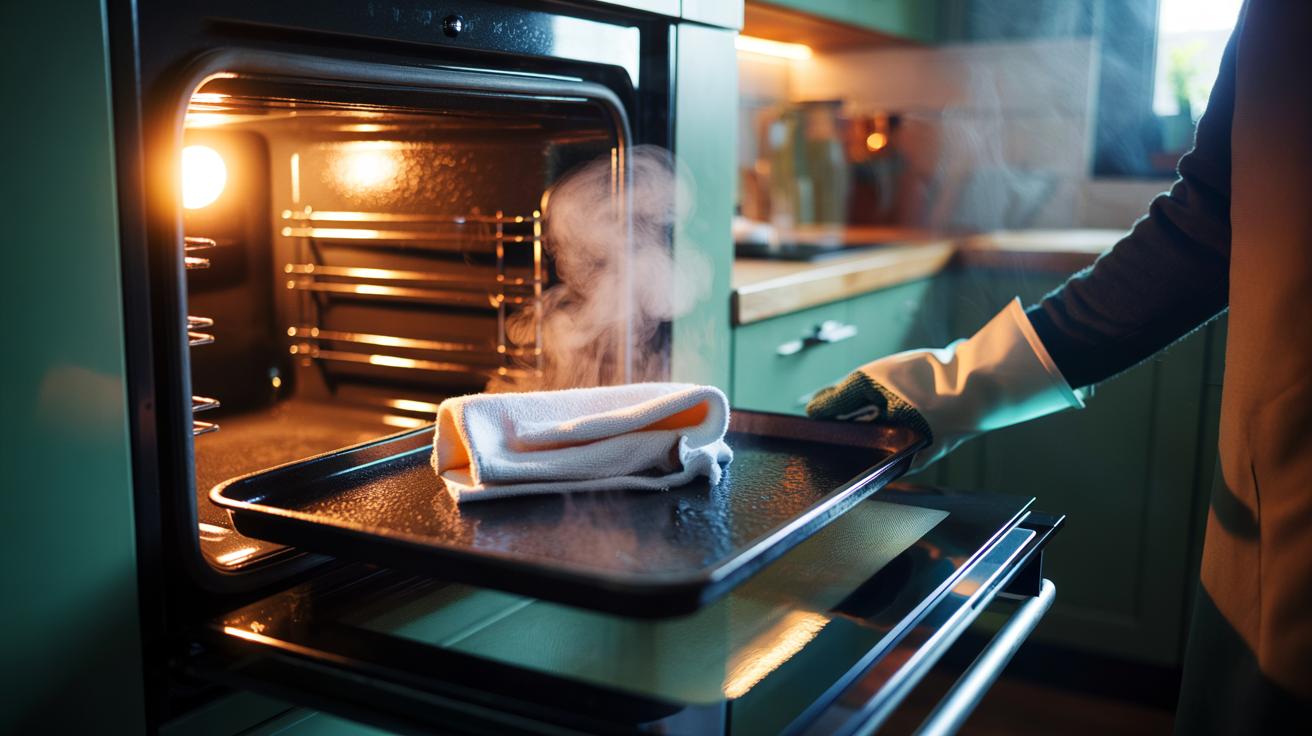
Preheat an empty oven to 120–150°C—warm enough for effective condensation, not so hot that a towel dries out instantly. Soak a clean, lint-free cotton or microfibre towel in hot water, then wring until damp, not dripping. Switch the oven off. Lay the towel flat on a rimmed tray or directly on the middle rack for metal surfaces; for the door, fold the towel and drape it against the glass once the heat is off. Close the door and wait 10–15 minutes to let steam work. A damp—not sodden—towel is vital to prevent scalding drips and thermal shock.
Wear heatproof gloves to remove the towel, and use that same warm cloth to wipe softened residue, following with a second clean cloth to finish. If needed, repeat once. Keep electrics dry and avoid covering vents. For gas ovens, ensure the flame is off and relighting is safe afterwards. Avoid this technique on catalytic liners or PTFE-style coatings unless your manual explicitly allows damp cleaning. Do not leave a towel unattended with the oven switched on; the heat should be off during the steaming phase.
What to Expect: Timings, Temperatures, and Surfaces
On vitreous enamel and tempered door glass, expect baked-on haze to soften within 10–15 minutes, turning into a smear that wipes away with light pressure. Heavy, carbonised corners may need a second pass. Stainless racks respond well, but remove and steam separately for the best result. For thick grease, a drop of mild washing-up liquid on the warm towel improves emulsification; avoid abrasive powders that can scratch glass. Test a discreet patch first if your oven has special liners or non-stick panels.
Some residues tell you how long to steam. Sticky, amber sugars dissolve faster than matte, charcoal-like stains. Keep tools simple: rubber spatula for edges, soft brush for seams. Finish with a damp wipe to remove loosened films, then dry to prevent water spots. If the oven smells, the method helps by lifting scorched fats that cause odours. You’ll also reduce the need for harsh degreasers, cutting indoor fumes and saving on scrubbing time.
| Surface/Residue | Oven Heat (Off During Steam) | Steam Time | Expected Result |
|---|---|---|---|
| Enamel walls, light grease | 120–130°C preheat | 8–12 min | Film softens; wipes clean with one pass |
| Door glass, sugary splatter | 130–150°C preheat | 10–15 min | Residue rehydrates; streaks lift with mild detergent |
| Racks with baked fat | 130–150°C preheat | 12–18 min | Grease loosens; finish with non-scratch pad |
| Heavy carbon in corners | 150°C preheat | 15–20 min | Partially lifts; repeat or spot-scrape gently |
The steam towel is a small, clever intervention that borrows from professional kitchens: controlled heat plus controlled moisture equals quick results and fewer chemicals. It respects the materials in modern ovens while dislodging the stubborn chemistry of burnt food. Used with care, it turns a dreaded deep clean into a short, methodical refresh. As households juggle time, energy bills, and indoor air quality, this approach ticks every box for efficiency. Will you try the steam towel on your next oven clean, and which surface in your kitchen do you think will benefit most from a gentle burst of heat and humidity?
Did you like it?4.6/5 (26)