In a nutshell
- 🌞 Sunlight is a free freshener: UVA/UVB plus warmth and airflow reduce hidden bacteria and odours by damaging DNA and disrupting cell membranes—effective mitigation, not full sterilisation.
- 🧭 Simple routine: shake the mat, hang it so both sides get light, and expose for 60–120 minutes (flip halfway); extend in winter or high humidity, and use bright windows if outdoors isn’t possible.
- ⚠️ Material and colour care: protect heat‑sensitive backings (memory foam, rubber), limit sessions to prevent cracking, and watch colourfastness—reds/neons fade faster; always follow the care label.
- ☁️ Weather workarounds: anchor hygiene with regular washes at 60°C (if allowed) and oxygen-based bleach for whites; use indoor daylight plus a fan or dehumidifier—sun complements, not replaces, laundering.
- 🛁 Smarter bathroom habits: improve ventilation after showers, shake water off feet, rotate mats midweek, choose quick-dry designs, and avoid leaving mats crumpled or trapped under damp towels.
Sunshine is a free disinfectant hiding in plain sight, and your bathroom floor textile might be the perfect candidate for a dose of it. Bath mats accumulate dampness, shed skin cells, soap residue, and the occasional splash from the loo, creating a cosy habitat for microbes. Exposing them to direct sunlight can significantly freshen fibres between washes by reducing the unseen microbial load that makes fabrics smell tired. Think of the sun as a gentle reset button that works with heat, airflow, and light. While it won’t replace a proper launder, a short session outdoors or by a sunny window helps keep mats drier, cleaner, and less hospitable to unwelcome bacteria.
Why Sunlight Works: The Science of UV on Textiles
Sunlight bathes fabric in ultraviolet (UV) radiation. While UVC does not reach the ground, UVA and UVB do—and they matter. UVB can damage microbial DNA, while UVA promotes reactive oxygen species that disrupt cell membranes. Combined with warmth and desiccation, this cocktail knocks back populations hiding in the loops of cotton or microfibre. Sunlight won’t sterilise a bath mat, but it measurably reduces bacterial counts that drive odour and biofilm growth.
Air movement is part of the magic. As the mat dries thoroughly, microbes deprived of moisture lose viability, and odour-causing compounds off-gas. The fibres also relax as humidity falls, making it harder for a sticky biofilm to establish on residues of shampoo, conditioner, and soap scum. That is why a breezy, bright day trumps a hot, still, humid one. The result is a fresher mat, achieved without bleach or heavy fragrance—and no energy use beyond the sun.
A Simple Routine: How to Sun-Dry Bath Mats Properly
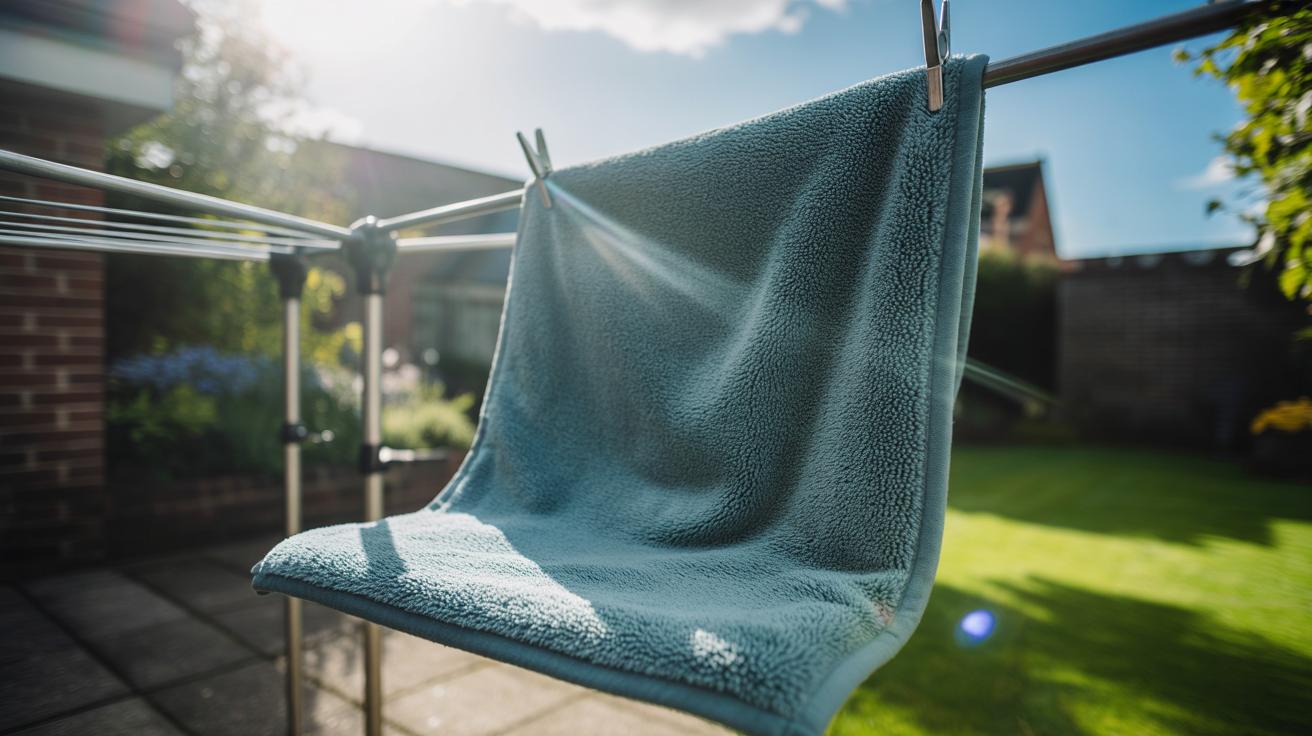
After washing or a morning shower, give the mat a vigorous shake to dislodge lint and loosen fibres. Drape it over a washing line, balcony rail, or drying rack so both sides catch light and air. Aim for 60–120 minutes in direct sun, flipping at the halfway point to expose shaded fibres. Keep it off paving or lawn to avoid soil transfer and insects. If you cannot get full sun, a bright windowsill or glass door with strong daylight still helps—especially with good cross-ventilation from an open window.
Time your routine around the sun’s angle. Midday light is most intense, but even late-morning and early-afternoon UV contributes. Wind is your friend: airflow speeds water evaporation, which enhances the antimicrobial effect of drying. Do not overpack pegs into the pile—pin only at edges to prevent denting. When you bring the mat in, let it cool and dry completely before putting it back on the floor, reducing trapped humidity beneath rubber backings.
| Condition | Suggested Exposure | Notes |
|---|---|---|
| Bright summer sun (UK) | 60–120 minutes | Flip once; strong UV and breeze work best. |
| Clear winter day | 120–180 minutes | Lower UV; position near reflective surfaces or windows. |
| Bright overcast | 180+ minutes | Daylight still helps drying; UV effect reduced. |
| High humidity | Add 30–60 minutes | Prioritise airflow; avoid stacking items on the rack. |
Safety, Materials, and Colour Care
Different mats tolerate sun differently. Cotton terry and many microfibre mats handle regular daylight exposure well, but memory foam and thick rubber-backed designs can trap heat. Do not leave mats baking in full sun all day, especially if they have adhesive bonding. Excess heat can harden or crack the backing and shorten lifespan. If the label mentions heat sensitivity, shorten sessions and use bright shade with strong airflow instead of peak sun.
Colourfastness matters. Vivid dyes can fade under intense UV, particularly reds and neons. Test by sunning a corner first, and rotate which edge faces the sun to prevent uneven light patches. Keep an eye on stitching and trims, which may dry faster than the pile. For bamboo blends, limit exposure time and prioritise breeze, as fibres can become brittle when over-dried. Always read care labels: when a brand specifies gentle drying, use shorter sun intervals and finish indoors on a rack.
When Weather Won’t Play Ball: UV Alternatives and Hygiene Tips
Not every week delivers a cloudless afternoon. Keep hygiene on track by washing mats regularly—ideally at 60°C if the label allows—and using an oxygen-based bleach for whites. Between washes, indoor daylight still helps: hang the mat across a sunny window or glass door, pair with a fan or dehumidifier, and leave the bathroom door ajar after showers to vent steam. Sun is a complement, not a replacement, for proper laundering, so anchor your routine around a wash schedule and let daylight extend freshness.
Small habits reduce the microbial load you bring back to the mat. Squeegee the shower screen, shake water from feet before stepping out, and swap mats more than once a week in busy households. Choose quick-dry designs if your bathroom struggles with condensation, and avoid leaving mats crumpled under towels. Ventilation is non-negotiable: a short blast of open windows or extractor fan after every shower keeps humidity in check and odours at bay.
Harnessing sunlight is an elegant, low-cost trick that taps into physics and biology to keep bath mats fresher for longer. A measured dose of UVA/UVB, together with brisk drying and airflow, trims the microbial population that causes mustiness while respecting the fabric. Think of it as preventive care that stretches the time between machine cycles. With a little attention to exposure time, material sensitivities, and the British weather forecast, any home can make daylight part of its hygiene toolkit. How will you tweak your bathroom routine to put the sun to work on your bath mats?
Did you like it?4.4/5 (22)